"Will Medicaid Take the House?" Two Different Questions
Families ask whether Medicaid will take the house. The question has two parts, and they work on different timelines.
The first question is eligibility. Can you qualify for Medicaid while you still own a home? Florida treats the homestead as an exempt resource, so owning your home does not disqualify you. The home does not count against the asset limit. The issue is whether a deed you signed years ago creates a penalty that delays your eligibility now.
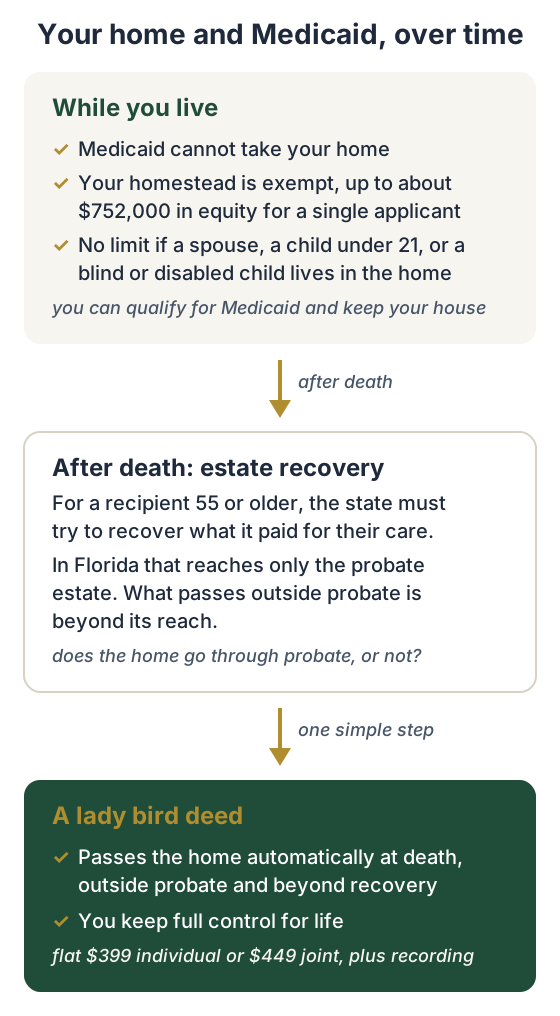
The second question is estate recovery. After a Medicaid recipient dies, Florida can file a claim against that person's estate to recover what it paid. The statute creating this debt says the agency shall file a statement of claim against the estate of a deceased Medicaid recipient. The claim is against the probate estate, though a revocable trust can also be made to pay estate debts when the probate estate is short. Property that passes outside probate, such as property transferred by a lady bird deed, is not part of the probate estate.
The distinction matters because the answers are different. A lady bird deed has no effect on eligibility. The homestead remains exempt whether or not you sign the deed. The deed is not a transfer, so there is no penalty. For estate recovery, the answer depends on who inherits and whether the property is still protected homestead at death. A homestead passing to a spouse or to the heirs who would inherit under Florida law if there were no will is already beyond recovery because Florida law bars enforcement against any property that is exempt from the claims of creditors under the constitution.
A lady bird deed adds something specific. The deed keeps the home out of probate entirely. For children who are already in the protected class, that may be all it adds.
Does a Lady Bird Deed Affect Medicaid Eligibility in Florida?
A lady bird deed does not affect your Medicaid eligibility. The homestead is exempt while you live in it or intend to return, and the deed does not change that status.
Florida Medicaid treats an enhanced life estate (the formal name for a lady bird deed) the same as complete ownership. The state Medicaid manual says the owner of an enhanced life estate has the same rights as complete ownership, including the right to sell without the consent of the remainderman (the person named to receive the property at death). The manual confirms that lady bird deeds and life estates with powers are counted the same as other real property an individual may own and that the property may be excluded if it qualifies as the individual's homestead.
The homestead is one of two primary assets Florida does not count against the asset limit. The Florida Supreme Court, reviewing what steps qualify as Medicaid planning, noted that "[t]he two primary non-countable assets are the homestead and one automobile." The home is exempt whether or not you sign a lady bird deed.
The current program equity standard is $752,000. A home worth more than that may be countable even if it otherwise qualifies as a homestead. The equity standard is a program rule that can change, so confirm the current figure before you apply.
Because the deed keeps all powers in the owner, Medicaid treats the deed as no transfer. There is no change in ownership for eligibility purposes. The property is counted if it is countable and excluded if it qualifies as homestead, exactly as it would be without the deed.
A lady bird deed neither helps nor hurts eligibility. The deed matters later, when the owner dies. The deed keeps the property out of probate and transfers it directly to the named remainderman. For eligibility, the question is whether the home qualifies as a homestead under the program rules, not whether a deed is on record.
Is a Lady Bird Deed a Transfer Under the Five-Year Look-Back?
A lady bird deed is not a transfer under the five-year look-back. Florida Medicaid treats it as no transfer at all.
The look-back rule penalizes transfers for less than fair market value made within five years before a Medicaid application. A transfer inside that window creates a penalty period during which the applicant is ineligible. The penalty is calculated by dividing the value transferred by a divisor that represents the average monthly cost of nursing home care.
A lady bird deed does not trigger this rule because the deed is not a transfer. The Florida Medicaid manual is direct. If an individual retains life estate using a lady bird deed or life estate with powers, no transfer has occurred. The individual retains full ownership powers in the property and it is only upon their death that the property transfers ownership to the remainderman.
The key is what the owner keeps. Under a lady bird deed, the owner keeps the power to sell, the power to mortgage, and the power to revoke the deed and name someone else. The owner can sell the property without asking permission from the person named to inherit. The owner can refinance or take a reverse mortgage. The owner can change beneficiaries by recording a new deed. Because the owner keeps every practical power, Medicaid treats the property as still owned entirely by that person.
A traditional life estate works differently. When someone signs a deed that keeps only a regular life estate (the right to live in the property until death) and gives away the remainder, Florida Medicaid calculates how much was transferred. The state multiplies the fair market value of the property by a remainder interest factor based on the owner's age. The result is the amount of the transfer, and that amount counts under the look-back rule.
A lady bird deed avoids this calculation. The owner can record the deed and apply for Medicaid the next day without creating a penalty period. The deed keeps all ownership powers intact.
Why Is Giving the House to Your Children Different?
A lady bird deed looks like a gift because your children's names go on the deed. Florida's Medicaid agency treats it differently because of what you keep. The owner of a lady bird deed retains full ownership powers in the property, including the right to sell without the consent of the remainderman (the person who will receive the property at death). The agency's manual states that when an individual retains life estate using a lady bird deed or life estate with powers, no transfer has occurred. The property transfers ownership to the remainderman only upon the owner's death.
An outright gift works differently. Transferring ownership interest in a home that could have been excluded as homestead is still subject to a transfer of asset penalty. The agency evaluates all transactions that change an asset from potentially countable to excluded. A homestead is still subject to a transfer of asset penalty, even if it could be excluded prior to the transfer.
Some recipients are exempt. The transfer of a homestead is allowable if the individual transfers the home to a spouse, a child under 21, a blind or permanently disabled adult child, a sibling with an equity interest who resided in the home for at least one year before institutionalization, or an adult son or daughter who resided in the home for at least two years before institutionalization and provided care that delayed institutionalization. If the home is transferred to anyone else, the transfer of assets policy is developed. That policy can result in a penalty period during which the applicant is ineligible for nursing home Medicaid.
A traditional life estate (without the reserved powers) is penalized too. The agency determines the transferred amount by multiplying the fair market value of the property by the remainder interest factor using the individual's age at the time of the transfer. The result is a penalized transfer even though the owner still lives in the house.
| Transfer | Medicaid Treatment |
|---|---|
| Lady bird deed | No transfer has occurred; homestead remains excludable while the owner lives there or intends to return |
| Traditional life estate | The remainder interest is a penalized transfer based on age and fair market value |
| Outright gift | A penalized transfer unless the recipient is a spouse, child under 21, disabled adult child, qualifying sibling, or caregiver child |
Worried the house is the next thing to go?
A No-Cost Phone Consult tells you whether a lady bird deed protects it, before anyone signs a thing.
Book a no-cost consultCan Medicaid Take the House After Death in Florida?
Florida recovers Medicaid payments by filing a claim against the probate estate. The Medicaid Estate Recovery Act requires the agency to file a statement of claim against the estate of a deceased Medicaid recipient as provided in the probate code. The debt is created in the total amount paid to or for the benefit of the recipient for medical assistance after the recipient reached 55 years of age. A revocable trust can also be liable for estate debts when the probate estate is insufficient.
Some families are protected entirely. The debt shall not be enforced if the recipient is survived by a spouse, a child under 21 years of age, or a child who is blind or permanently and totally disabled.
Homestead has its own protection. Florida law provides that no debt under the recovery statute shall be enforced against any property that is determined to be exempt from the claims of creditors under the Florida Constitution or laws. The statute also provides that nonexempt personal property or real property which is not protected homestead shall be sold to satisfy the claim when there are no liquid assets and sale costs do not exceed proceeds. A homestead passing to a spouse or heirs under intestacy (the rules for who inherits without a will) is already beyond recovery because that property remains protected homestead.
The deed's value is avoiding probate. When children inherit a homestead that is still protected homestead at death, the recovery claim cannot reach it. The practical question is how to prove homestead status after years in a facility. A lady bird deed transfers the property outside probate entirely. There is no probate estate for the agency to file a claim against. There is no petition to determine homestead status. The children receive title by recording the death certificate and an affidavit.
A non-heir remainderman gets more protection from the deed. A stepchild, partner, friend, or charity does not inherit under intestacy and would take subject to the claim if the property passed through probate. The lady bird deed puts the property beyond recovery for those remaindermen too.
A revocable living trust does not provide this protection. Florida law provides that any portion of a trust with respect to which a decedent who is the grantor has at death a right of revocation is liable for the expenses of administration and obligations of the decedent's estate to the extent the decedent's estate is insufficient to pay them. The agency's claim can reach trust assets when the probate estate cannot pay.
What About a Married Couple?
A married owner cannot convey homestead without the spouse joining the deed. The Florida Constitution requires the spouse to sign. A deed on homestead naming children to the exclusion of a non-joining spouse is void as to the homestead. The deed would fail entirely.
The spouse who signs may also use the waiver provided by Florida law for the devise restriction on homestead. Homestead cannot be devised away from a surviving spouse or minor child. Florida law provides a safe-harbor statement for this waiver. By signing the deed with the waiver language, the spouse acknowledges that the homestead may pass to someone other than the spouse at the owner's death.
Transfers between spouses do not trigger a penalty. The transfer of a homestead is allowable if the individual transfers the home to a spouse. A husband who transfers his half of the homestead to his wife, or a wife who transfers her half to her husband, does not create a penalty period.
The Florida Supreme Court reviewed what Medicaid planning involves. In its 2015 review of whether certain planning activities constitute the unlicensed practice of law, the Court wrote that "[t]he two primary non-countable assets are the homestead and one automobile." The Court also wrote, "[P]roper Medicaid planning involves providing advice on the purchase and titling of exempt assets and the transfer of countable assets in excess of $2,000 to the community spouse."
Both spouses should attend the no-cost consult. The deed requires both signatures. The planning conversation requires understanding both spouses' goals. A lady bird deed for a married couple is a flat fee from $449, plus recording.
What If You Move Into a Nursing Home or Assisted Living?
Moving into a facility does not disqualify the homestead. The agency's manual confirms that a lady bird deed is counted the same as other real property an individual may own and it may be excluded if it qualifies as the individual's homestead, including under intent to return when absent from the home. An owner who moves into a nursing home or assisted living while intending to return to the house still has an excluded homestead.
A lady bird deed is a forward-looking protection. The deed works best as part of a plan made before someone enters a facility. The owner retains full ownership powers in the property and it is only upon death that the property transfers ownership to the remainderman. An owner who is already in a nursing home, or already receiving Medicaid, can sign a lady bird deed without creating a penalty period because the agency treats it as no transfer.
Crisis Medicaid planning addresses compressed timelines. A family that contacts us after a parent has already entered a facility faces a different situation. The work includes reviewing whether a lady bird deed is appropriate, addressing any spouse or mortgage issues, coordinating with the Medicaid application, and managing the spend-down if assets exceed the limit. Crisis Medicaid for a single applicant is a flat fee from $9,000. A clean Medicaid application when the spend-down is already complete is a flat fee from $3,500.
Do You Own a Second Property or a Rental?
A lady bird deed works for a homestead because the homestead is already exempt from Medicaid's asset limit while you live there or intend to return. A second property or vacation home is different. Non-homestead real property is generally countable as a resource, which means it counts against the current $2,000 asset limit for an individual applicant. A beach condo, a lot you inherited, or a house you moved out of years ago all fall into this category.
Rental property has a narrow exclusion. Florida's Medicaid rules exclude property that is essential to the individual's self-support if it is producing income available to the individual which is consistent with its fair market value. The key phrase is "essential to the individual's self-support." A property rented at market rates may qualify if you can show the income is necessary to support yourself.
A lady bird deed on a second property does not change whether that property counts during your lifetime. The deed avoids probate and keeps the property out of estate recovery after death. The deed does not make a countable asset exempt while you are alive and applying for benefits. Planning for a second property often requires a spend-down, a sale, or a different legal structure. That conversation belongs in a no-cost consult where we can look at your whole picture.
When Is a Lady Bird Deed the Wrong Tool?
A lady bird deed solves a specific problem. The deed keeps a homestead out of probate and can keep it beyond estate recovery when you die. The deed does not protect assets during your lifetime, and certain situations call for a different instrument.
An irrevocable Medicaid asset protection trust can shelter assets from Medicaid's asset limit, but only if you sign it more than five years before you apply. The homestead itself is already excluded while you live in it or intend to return. The trust's protection extends to other assets. A lady bird deed is not irrevocable and does not shelter assets from the spend-down. An irrevocable Medicaid asset protection trust is a flat fee from $6,000. A lady bird deed is a flat fee from $399 ($449 for a couple), plus recording. The trust makes sense when you are planning years ahead and want protection beyond what the deed offers.
A reverse mortgage or other loan does not defeat a lady bird deed, but it does reduce what remains for your family. The owner keeps the power to mortgage the property without the remainderman's consent. The remaindermen take subject to the lien when you die. A property encumbered by a large reverse mortgage may leave nothing after the lender is paid.
Florida's homestead rules limit who can receive the property when you die. A married owner cannot convey or mortgage homestead without the spouse joining the deed. A deed that names children to the exclusion of a non-joining spouse is void as to the homestead. When a spouse and descendants both survive, the homestead passes to the surviving spouse for life with a vested remainder in the descendants, unless the spouse elects to take one-half as a tenant in common. When no spouse survives, the homestead descends to the descendants. The right tool depends on your family situation.
What Florida Courts Have Said
Florida courts have addressed Medicaid planning in cases that shape what works and what does not. Two decisions stand out for what they tell us about transfers and about who may give advice.
Minerva Thomas signed a lifetime contract with her daughter before applying for nursing home Medicaid. The daughter agreed to supervise her health care and provide personal services in exchange for $67,725. The Department of Children and Families denied the application, finding Thomas received less than fair market value. The Fourth District Court of Appeal reversed and remanded. The court wrote, "Both federal law and the Department's own regulations provide that a transfer of assets shall not render a Medicaid applicant ineligible for benefits, if he or she can establish that 'the individual intended to dispose of the assets either at fair market value, or for other valuable consideration.'" The court found, "During the proceedings below, the only evidence presented was that Thomas had in fact paid fair market value for the services contract; thus, the hearing officer's finding that Thomas had not received fair market value for the exchange is without record support." A caregiver contract that reflects fair market value for real services is not a penalized transfer. The decision matters because a child who has been providing care may be paid for that work.
The Florida Supreme Court reviewed in 2015 whether it is the unlicensed practice of law for a nonlawyer to draft personal service contracts, prepare qualified income trusts, or give legal advice on using Florida law to obtain Medicaid. The Court listed the planning steps involved and wrote, "The two primary non-countable assets are the homestead and one automobile." The Court also wrote, "[P]roper Medicaid planning involves providing advice on the purchase and titling of exempt assets and the transfer of countable assets in excess of $2,000 to the community spouse."
Can You Sign From Home?
Florida law allows a deed to be signed and notarized online. An online notary public physically located in Florida may perform an online notarization regardless of whether you or any witnesses are physically located in Florida at the time. The notary confirms your identity through audio-video communication technology and records the session.
A witness appearing remotely must be a resident of and physically located within the United States or a territory of the United States at the time of witnessing.
Wills, revocable trusts with testamentary aspects, health care advance directives, agreements concerning succession or waivers of spousal rights, and certain powers of attorney require extra screening questions when fewer than two witnesses are in your physical presence. The questions ask whether you are under the influence of any drug or alcohol that impairs your ability to make decisions, whether you have a physical or mental condition that impairs your ability to perform normal activities of daily living, and whether you require assistance with daily care. An affirmative answer means your signature may only be validly witnessed by witnesses in your physical presence.
A lady bird deed is not on that list. A deed can be signed with remote witnesses without the extra screening, which makes online signing practical for clients who are homebound, living in another state, or simply prefer not to travel. We arrange online signings through a no-cost consult.
How Medicaid Planning With a Lady Bird Deed Works, Step by Step
A lady bird deed fits into Medicaid planning in a sequence, and each step matters.
The first step is a no-cost consult. During that conversation we confirm your home qualifies as homestead under Florida law, check whether a spouse must join the deed, identify the remaindermen (the people who will own the home at your death), and decide whether the deed alone is enough or whether a larger plan makes sense.
The second step is drafting. Every deed names the current owner with the reserved powers, names the remaindermen, and includes the language that makes it an enhanced life estate. If you are married and the property is homestead, your spouse joins the deed and may sign the waiver provided by Florida law if the home is going to anyone other than the spouse.
The third step is signing. The owner signs the deed in front of a notary and two witnesses. Florida allows online notarization, so you can sign from home if you prefer. Witnesses appearing remotely must be residents of and physically located in the United States.
The fourth step is recording. The deed is filed with the county where the property sits. Recording costs are passed through at cost.
From there, the deed is done. If a Medicaid application follows, the deed does not trigger a penalty because the state treats it as no transfer. The homestead remains exempt while you live there or intend to return, currently up to $752,000 in equity. At death the property passes directly to the remaindermen, outside probate.
If you need help with the application itself, a Medicaid application when assets have already been spent down is a flat fee from $3,500. Crisis Medicaid, when someone is already in a nursing home or assisted living, is a flat fee from $9,000.
Common Mistakes
The most common mistake is giving the house to the children outright. An outright gift triggers the look-back penalty if a Medicaid application is filed within five years. The state adds up the fair market value of the home, divides by the monthly penalty divisor, and sets a penalty period during which Medicaid will not pay for care. A lady bird deed avoids that penalty because the owner keeps full powers and the state treats it as no transfer.
The second mistake is a married owner signing alone. A deed on homestead is void if the spouse does not join it. The home then passes at death under the default rules, giving the surviving spouse a life estate and the children a remainder. That outcome may be the opposite of what the family intended. The spouse must sign the deed and may include the statutory waiver if the home is going to anyone other than the spouse.
The third mistake is assuming the deed protects a second property. A lady bird deed on a vacation home or a rental does not make that property exempt for Medicaid. Non-homestead property is countable unless it is property that is essential to the individual's self-support and producing income consistent with its fair market value. The deed protects the home where you live.
The fourth mistake is waiting. A lady bird deed works even after someone moves into a nursing home because it is not a transfer. An irrevocable Medicaid asset protection trust works only when signed more than five years before an application. Waiting closes options.
What Does Medicaid Planning With a Lady Bird Deed Cost?
A lady bird deed on its own is a flat fee from $399 for one owner, or $449 for a married couple, plus recording. Recording costs are passed through at cost.
When a Medicaid application is part of the picture, the application fee depends on where things stand. A Medicaid application when assets have already been spent down or are otherwise within the program limits is a flat fee from $3,500. Crisis Medicaid, when someone is already in a nursing home or about to enter one and assets still need attention, is a flat fee from $9,000. Crisis work moves quickly because care costs are running.
If the goal is to protect assets beyond the homestead years before any need for care, an irrevocable Medicaid asset protection trust is a flat fee from $6,000. That trust works only when signed more than five years before an application.
The no-cost consult answers which combination fits your situation. During that call we review your home, your other assets, your family, and your timeline. You leave with a clear picture of what the work will cost before any commitment.
Frequently Asked Questions
Does a Lady Bird Deed Avoid Medicaid Estate Recovery in Florida?
A lady bird deed keeps the home out of probate. Florida's Medicaid estate recovery reaches the probate estate (and a revocable trust when the estate is short). When children inherit a homestead, the home is already beyond recovery if the property still qualifies as protected homestead at the owner's death. A deed helps when a non-heir remainderman (a stepchild, partner or charity) takes, or when homestead status at death might be disputed after years in a facility.
Will a Lady Bird Deed Help My Mom Qualify for Medicaid?
A lady bird deed does not change Medicaid eligibility. Florida's Medicaid rules exclude the homestead as a resource while the applicant lives there or intends to return, subject to the current $752,000 equity limit. The deed adds no eligibility advantage because it is treated the same as other real property she owns. What the deed does is keep the home out of probate when she passes.
Will My Heirs Have to Sell the House to Pay the Nursing Home?
Florida law bars enforcement of the Medicaid recovery claim against property exempt from creditors under the Florida Constitution, and bars any forced sale of protected homestead. A lady bird deed keeps the home out of probate entirely. The heirs receive the property at death without a probate proceeding. Nursing home costs during life are a separate question from recovery after death. Whether the heirs must sell depends on whether the property qualifies as protected homestead when it passes.
Does a Lady Bird Deed Trigger the 5-Year Look-Back Penalty?
A lady bird deed does not trigger a look-back penalty. Florida's Medicaid manual states that when an owner retains a life estate using a lady bird deed or life estate with powers, no transfer has occurred. The owner keeps full ownership powers in the property, and transfer happens only at death. A traditional life estate is different. With a traditional life estate, the state multiplies the fair market value by a remainder interest factor to calculate a penalized transfer amount.
Can I Just Deed My House to My Kids to Protect It From the Nursing Home?
An outright gift of the homestead triggers a transfer-of-asset penalty under the five-year look-back. Florida's Medicaid manual says that if the home is transferred to anyone not listed in the exempt categories (spouse, child under 21, blind or disabled adult child, qualifying sibling, or caregiver child), the transfer penalty applies. A lady bird deed avoids this because the manual says no transfer has occurred when the owner keeps full powers. Giving the house away today is the mistake that triggers a penalty.
What Is the Florida Medicaid Home Equity Limit in 2026?
Florida's Medicaid home equity limit is currently $752,000. The equity standard is a program rule, not a permanent statutory figure, and it can change. If the applicant's equity in the home exceeds that amount, the home may not qualify for the exemption. A lady bird deed does not change the equity calculation. The equity counts toward the limit whether or not the deed is in place.
Can Medicaid Take My House if My Spouse Still Lives There?
Florida law provides that the recovery debt shall not be enforced if the recipient is survived by a spouse. A lady bird deed adds another protection by keeping the home out of probate entirely. When a spouse survives, the home passes outside probate and the state has no probate estate to file against.
Is a Lady Bird Deed Better Than an Irrevocable Medicaid Trust for the Home?
A lady bird deed works for probate avoidance and can be signed at any time because it is not considered a transfer. An irrevocable Medicaid asset protection trust can shelter assets from Medicaid's asset limit, but it must be signed more than five years before a Medicaid application or a penalty applies. The homestead itself is already excluded while you live in it. A deed is a flat fee from $399 plus recording. A Medicaid asset protection trust is a flat fee from $6,000. The trust offers protection for assets beyond the homestead when there is time to plan ahead.
I Already Put Mom in a Nursing Home: Is It Too Late for a Lady Bird Deed?
A lady bird deed can be signed after nursing home placement because it is not considered a transfer under Florida's Medicaid rules. The owner keeps full powers, so the state treats the deed as if no transfer occurred. Mom can sign from the nursing home using online notarization if she is competent. The deed keeps the home out of probate when she passes. Crisis Medicaid services, for someone already in care, are a flat fee from $9,000.
Do I Need My Spouse to Sign the Lady Bird Deed?
A married owner of Florida homestead property cannot convey the home without the spouse joining the deed. The Florida Constitution requires both signatures. A deed signed by one spouse alone on homestead is void. The spouse who joins may also sign a waiver under Florida law if the deed names someone other than the spouse as the remainderman (the person who takes at death). The waiver allows the homestead to pass to children or others instead of the surviving spouse.
Does a Lady Bird Deed Work if I Have a Reverse Mortgage?
A reverse mortgage does not cancel or defeat a lady bird deed. The owner signs under the reserved power to mortgage, and the remainder survives. The remaindermen take the property subject to the lien. The reverse mortgage balance becomes due at death, and the remaindermen decide whether to pay it off or let the lender take the property. A later conveyance of the property (a sale or a new deed to someone else) does cut off the remainder, but a mortgage does not.
If My Home Has a Lady Bird Deed and I Apply for Medicaid Long-Term Care, Do I Have to Sell It?
Florida's Medicaid rules exclude the homestead as a resource when the applicant lives there or intends to return. The home equity limit is currently $752,000. A lady bird deed does not change the exclusion because Florida's Medicaid rules treat an enhanced life estate the same as other real property the applicant owns. The applicant does not have to sell the home to qualify. After death, the home passes outside probate to the remaindermen named in the deed.
Does a Lady Bird Deed Have to Be Signed Five Years Before a Nursing Home?
A lady bird deed does not have to be signed five years in advance. Florida's Medicaid manual says that when an individual retains a life estate using a lady bird deed, no transfer has occurred. The owner keeps full ownership powers and the property transfers only at death. Because there is no transfer, the five-year look-back period does not apply. Someone can record the deed and apply for Medicaid the next day without a penalty.
Can Someone Already on Medicaid Sign a Lady Bird Deed?
A person already receiving Medicaid can sign a lady bird deed. The deed is not a transfer under Florida's Medicaid rules because the owner keeps full powers over the property, including the power to sell or revoke. Recording a lady bird deed while on Medicaid does not trigger a penalty or affect continued eligibility. The homestead remains excluded as long as the recipient lives there or intends to return. Crisis Medicaid planning is a flat fee from $9,000.
Does a Lady Bird Deed Help With Medicare?
Medicare is a different program from Medicaid. Medicaid is the needs-based program that pays for long-term nursing home care. A lady bird deed is a Medicaid planning and probate avoidance tool.
If I Move Into Assisted Living or a Nursing Home, Does the Home Still Count?
Florida Medicaid excludes the homestead when the applicant intends to return. The homestead exclusion applies while the owner is in a nursing home or assisted living as long as intent to return exists. The lady bird deed is treated the same as other real property and may be excluded if it qualifies as the individual's homestead, including under intent to return. The home does not become a countable asset because the owner moved into a facility.
Is a Lady Bird Deed a Trap for Medicaid Planning?
A lady bird deed is not a trap. Florida's Medicaid manual states that when someone retains a life estate using a lady bird deed, no transfer has occurred. The owner keeps full powers, and the property transfers only at death. The deed does not trigger the five-year look-back or create a penalty period. The trap is gifting the home outright or using a traditional life estate, both of which Florida treats as transfers and penalizes.
Should My Parent Just Put My Name on the Deed Instead?
Adding a child to the deed as a co-owner is a transfer that triggers the five-year Medicaid look-back unless the child is an exempt recipient (under 21, blind or disabled, or a caregiver child who lived in the home and provided care that delayed institutionalization). If your parent applies for nursing home Medicaid within five years of a non-exempt transfer, the transfer creates a penalty period during which Medicaid will not pay for care. A lady bird deed avoids this problem because Florida's Medicaid manual says no transfer has occurred when the owner keeps an enhanced life estate. The home passes at death, and your parent keeps full control until then.
Common Situations
A woman in her late seventies wanted her daughter to inherit the family home and worried about nursing home costs. She had lived in the home for decades, owed nothing on it, and had savings below the $2,000 asset limit. She recorded a lady bird deed naming her daughter as the remainderman. Two years later she applied for Medicaid long-term care. The state treated the deed as no transfer and approved her application. At her death the home passed directly to her daughter without probate.
A couple in their sixties asked about protecting their home well before either needed care. They both signed a lady bird deed naming their two adult children as remaindermen, with the statutory waiver so the home could pass to the children after both spouses die. Their equity was below $752,000, and the deed did not change the Medicaid home exclusion. The home will pass outside probate at the second death, and they paid $449 plus recording.
Chapter 13 of Kevin D. Klagge’s free book, Are Florida Lady Bird Deeds Just for Women?, covers this question with every statute and case cited to its source.
Sources of Law
- 42 U.S.C. §1396p: Medicaid liens (a), estate recovery (b), transfers/60-month look-back (c), home-equity disqualification (f). law.cornell.edu
- Fla. Stat. §409.9101: Florida Medicaid Estate Recovery Act (recovery from the probate estate via ch. 733; survivor and creditor-exempt-property bars; hardship waiver). flsenate.gov
- Fla. DCF ESS Policy Manual §1640.0613.01 (“no transfer has occurred”) & §1640.0305.03 (homestead/enhanced life estate exclusion).
- Fla. Const. Art. X §4; Fla. Stat. §732.4015, §732.7025; §731.201. IRC §1014, §2036(a). Aronson v. Aronson, 81 So. 3d 515 (Fla. 3d DCA 2012). (retrieved 2026-06-05)
- Medicaid estate recovery rules and the treatment of a house passing by lady bird deed, transfer on death deed, joint tenancy or revocable trust in all 50 states and DC are in the 50-state Medicaid estate recovery table (verified 2026-09-28).
The Question Families Ask Me About the Look-Back
In 14 years of law practice, the fear arrives before the facts do. Somebody has read that Medicaid looks back five years at anything you gave away, they own a house, and they want to know whether recording a deed has just cost them the nursing home coverage they may need next year.
A common question I hear, almost word for word, is, "Is a lady bird deed less than five years old still protected from Medicaid?" The answer is yes, and the reason is worth understanding rather than taking on faith. Florida treats a lady bird deed as no transfer at all, because the owner keeps the power to sell the property, mortgage it, or revoke the deed entirely without asking anyone. Nothing left the owner's hands, so there is nothing for the look-back to count.
The ordinary life estate deed is where that reasoning stops. I have come across a case where a widow held exactly that kind of deed on the marital home. Her husband had died, she signed a contract to sell, and she could not close, because a plain life tenant cannot convey more than a life estate. She was ordered to turn over $281,435.35 in sale proceeds. The two deeds look nearly identical on the page and differ by one sentence, and that sentence is also what decides whether Medicaid counts the deed as a gift.
Practice pointer. Ask which deed is actually recorded before assuming the look-back is clear. An owner who tells me they have a life estate deed is describing two very different documents about half the time, and the one that avoids a transfer penalty is the one that kept the power to sell.
Avoid signing a deed to a child in the hope of qualifying sooner. An outright transfer of a house is a gift, the penalty runs from the month the applicant is otherwise eligible and broke, and a family that gave the house away has usually removed the one asset that could have funded the wait.
One honest limit belongs here. The deed protects the house from estate recovery and keeps it out of probate, and it does nothing about countable assets in the bank. A family with the house handled and $180,000 in savings still has the harder half of the problem in front of them.
Kevin D. Klagge, Esq., admitted in Florida since 2012. Any case described above is a decision of a Florida court rather than a matter handled by this firm. Past results do not guarantee a similar outcome.
Updated on October 27, 2026. Reviewed by Kevin D. Klagge, Esq., Fla. Bar No. 99502. This is general information about Florida law, not legal advice, and does not create an attorney-client relationship; please don’t send confidential information until we’ve connected. Medicaid figures are 2026 and change annually; the transfer-penalty divisor and nursing-home costs are set by the state and confirmed at application.
More Guides on Florida Lady Bird Deeds and Deeds
- Florida Lady Bird Deed Tax Consequences
- Lady Bird Deed After Death
- Lady Bird Deed With Multiple Beneficiaries
- Can a Lady Bird Deed Be Contested in Florida?
- Lady Bird Deed vs. Living Trust in Florida
- Lady Bird Deed vs Will in Florida: Which Controls?
- Lady Bird Deed vs Transfer on Death Deed
- Florida Transfer on Death Deed: Does It Exist?
Try the Florida Deed Selector.