
Frequently Asked Questions
When Is Probate Not Needed in Florida?
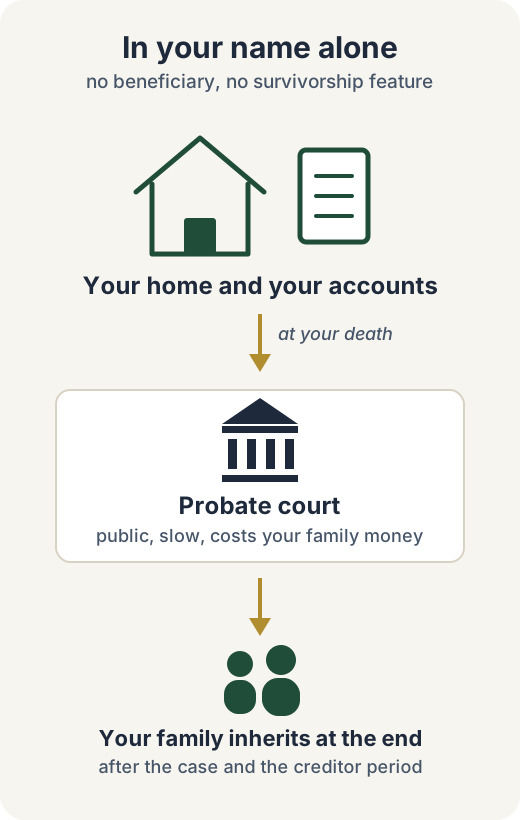
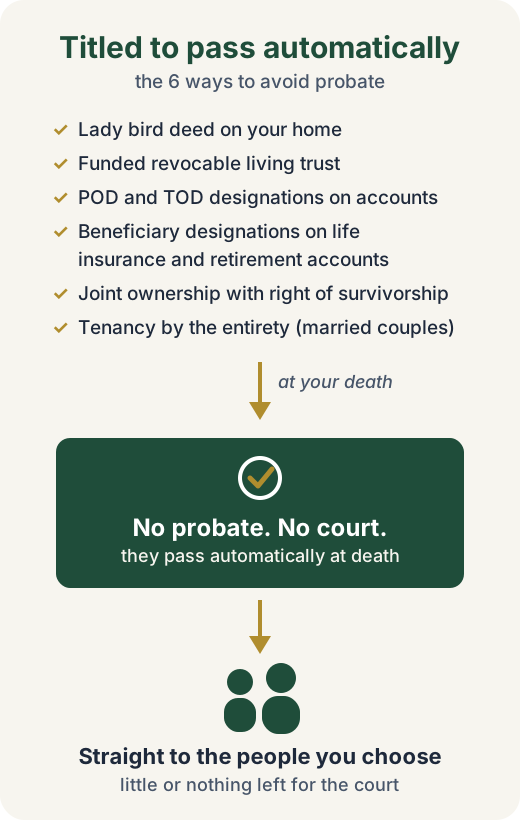
When everything the person owned passes outside their probate estate. Assets with a named beneficiary (life insurance, retirement accounts), pay-on-death or transfer-on-death accounts, jointly owned property with survivorship, a home that passed by a lady bird deed, and anything in a funded trust all skip probate. If the entire estate is made up of those, no probate is usually needed, just death certificates and some paperwork to retitle.
What Is the Difference Between Summary and Formal Administration?
Summary administration is a shortened probate for estates worth $150,000 or less, not counting the protected homestead (a new Florida law raised the cap from $75,000 on July 1, 2026), or when the person died more than two years ago; no personal representative is appointed and it often closes in weeks. Formal administration is the full process for larger or more recent estates: a personal representative is appointed, creditors are noticed, and it usually runs 6 to 12 months. Disposition without administration is an even simpler path for the very smallest estates with no real estate.
Does the Homestead Count Toward the $150,000 Limit?
No. The protected Florida homestead is generally excluded when measuring the summary-administration threshold ($150,000, raised from $75,000 on July 1, 2026), and it often passes outside probate by its own descent rules (or by a lady bird deed). That is why a family with a valuable home but modest other assets can still qualify for the faster, cheaper summary administration. We confirm how the homestead is treated in your specific case.
How Much Does Each Type Cost?
Our flat fees start at $1,500 for disposition without administration, $2,500 for summary administration, and $3,500 for routine formal administration; larger formal estates are estimated at the consult. Government costs, the county filing fee, publication, and certified copies, are additional and passed through at cost. This tool gives you a likely path; we confirm it and quote a flat fee at a free consult.
What Assets Are Exempt From Probate in Florida?
Two different things go by that name. First, assets that skip probate entirely: anything with a named beneficiary (life insurance, IRAs, 401(k)s), pay-on-death or transfer-on-death accounts, property held jointly with survivorship or as tenancy by the entirety, a home that passed by a lady bird deed, and anything titled in a funded trust. Second, "exempt property" under Florida law: even when an estate does go through probate, the surviving spouse (or the children if there is no spouse) can set aside certain assets free from most creditors, including up to $20,000 of household furniture and appliances, two vehicles in regular use, and qualified college-savings (529) accounts. The homestead has its own separate protection. We sort out which of your assets fall into each bucket at the consult.
Sources of Law
- Fla. Stat. §735.201 to §735.206 (summary administration), §735.301 (disposition without administration), ch. 733 (formal administration). Florida probate guide → · estimate the cost → (retrieved 2026-06-09)
Updated July 11, 2026. Reviewed by Kevin D. Klagge, Esq., Fla. Bar No. 99502. Attorney Kevin Klagge represents families, businesses, and international clients in estate planning and international law, with a focus on Florida legal tools. He litigates estate and business issues in court. General information about Florida law, not legal advice. Do not send confidential information until we have agreed to represent you.