
What a Florida Revocable Living Trust Is, and What It Does
A revocable living trust is a trust you create, control, and can change or revoke at any time during your life. Usually you serve as your own trustee, so day to day nothing changes. What it does well: it avoids probate on the assets you put into it, manages things if you become incapacitated, keeps your plan private, and lets you change everything while you’re alive.
Be clear about what it does not do. Because you keep full control, a revocable trust gives no creditor protection during your life (your assets stay reachable), no estate-tax savings by itself, and no help qualifying for Medicaid. And it does nothing at all if it is never funded. We would rather tell you that up front than sell you a document that sits in a drawer.
Trust vs. Will: The Real Difference in Florida
A will controls only your probate estate and has to go through probate to take effect, after you die. A revocable living trust works during your life too: it handles incapacity, keeps the plan private, and avoids probate on assets titled in it. The two aren’t rivals; a trust plan still includes a short pour-over will. Which do you need, a will or a living trust? → · compare a deed and a trust →
How a Revocable Living Trust Avoids Probate
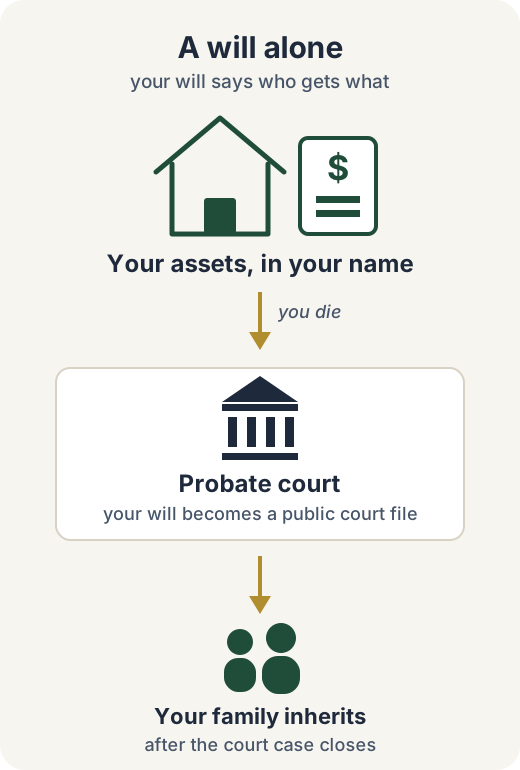
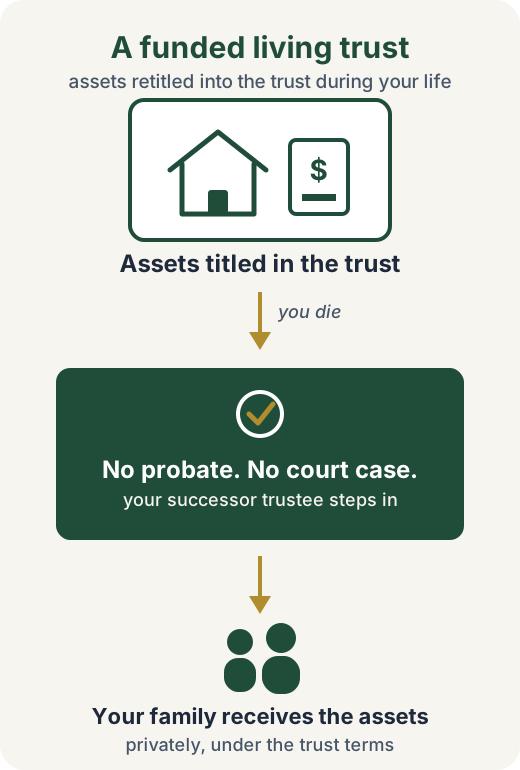
The trust avoids probate only for the assets actually titled in it. At your death, the successor trustee distributes those assets under the trust terms without opening a probate case. Assets you leave out can still require probate, which is the single most common failure (see funding, below). See what Florida probate actually costs and takes →
Here is the difference in one picture. With a will alone, your assets pass through the courthouse before your family inherits. With a funded trust, they never go near it.
Incapacity: The Successor Trustee Steps In
If you become unable to manage your affairs, the successor trustee you named takes over the trust assets without a guardianship court proceeding. This is the under-sold reason couples in their 50s and 60s choose a trust over a will. We pair it with a durable power of attorney that includes the separately-initialed superpowers (gifting, trust funding, and beneficiary changes), so your agent can fund or adjust the trust if needed. At death, that same successor trustee handles trust administration (settling the trust).
Privacy: Your Plan Stays Out of the Public Record
A will, once probated, becomes a public court filing anyone can read. A funded trust keeps your dispositive plan private. At death the trustee files only a short notice of trust with the court in your county of domicile, not the trust terms. Banks and title companies receive a certification of trust rather than the full document, so your plan stays between your family and your attorney.
Funding the Trust: The Step Everyone Skips
This is the part that makes or breaks the plan. A trust controls only the assets you actually re-title into it. An unfunded trust controls nothing, and your family ends up in probate anyway. See how to set up a living trust, step by step → Funding means:
- Real property: deed the home into the trust (homestead needs your spouse to join), and record an affidavit so the trustee’s authority sits in the chain of title.
- Accounts and securities: retitle them to you “as Trustee of the [Trust] dated [date],” using a certification of trust for the institution.
- Beneficiary designations: coordinate retirement accounts and life insurance carefully (these usually pass by beneficiary, not into the trust).
A “Schedule A” list does not transfer titled assets by itself; you have to retitle them. Our trust-based plan includes one funding deed, and we walk you through the rest.
A trust only works if it’s funded right.
We build the trust and handle the funding deed, so it actually does its job.
Book your free consultThe Pour-Over Will: Your Safety Net
Every trust plan includes a short pour-over will. It catches anything you never retitled and directs it into the trust at death. One honest caveat: assets caught by the pour-over still pass through probate first, so funding the trust during life is still the goal. The pour-over is a backstop, not a substitute. More on how a pour-over will works →
Your Florida Homestead in a Revocable Trust (It Stays Protected)
Holding your homestead in a revocable trust preserves its protections: the homestead tax exemption, the Save Our Homes assessment cap, and the constitutional creditor and devise protections. Florida law expressly extends homestead protections to a home held in a revocable trust, consistent with Florida case law.
Two rules still apply. If you are married, your spouse must join the funding deed. The homestead devise restrictions also remain: you cannot leave the homestead away from your spouse without a valid written spousal waiver, and if you have a minor child the homestead generally cannot be left away from the family at all. How to fund your trust (and put the house in) →
When You Do Not Need a Trust
Sometimes the cheaper tool is the right tool. For a single Florida home passing to adult children, a lady bird deed avoids probate on that one asset for a fraction of the cost. A revocable trust earns its fee when you have multiple assets, out-of-state property, incapacity-management needs, minor or special-needs beneficiaries, a blended family, or conditions on inheritance. We tell you when a deed is enough. When the goal is protection rather than control, that calls for an irrevocable trust instead. And if you are a married couple sitting on highly appreciated assets, ask us about a Florida community property trust, which can wipe out the capital-gains tax through a double step-up in basis.
Sub-Trusts: Minors, Special Needs, and Blended Families
A revocable trust can hold continuing sub-trusts built for specific needs. A staggered-age trust lets a young beneficiary inherit over time instead of all at once. A special-needs sub-trust protects a disabled beneficiary’s public benefits. Blended-family provisions can provide for a surviving spouse while protecting children from a prior marriage.
Special-needs, minors’, or spendthrift provisions add $750 to the plan.
Taxes: The Trust Is Tax-Neutral
During life, the trust uses your Social Security number, files no separate return, and all income flows onto your 1040. At death, most assets receive a full basis step-up for your heirs, meaning they inherit at today's market value and avoid capital gains on appreciation that occurred before your death (retirement accounts work differently and get no step-up). Florida has no estate tax, and federal estate tax reaches only very large estates. A revocable trust neither raises your taxes nor lowers them by itself.
Cost, and How We Work
Our trust-based plan is a flat fee from $3,200 (individual) / $4,500 (couple). That includes the revocable trust, a pour-over will, a durable power of attorney, health-care directives, HIPAA authorization, and one funding deed. Special-needs, minors’, or spendthrift provisions add $750. Government recording costs are additional, at cost.
We work with clients across Florida by phone and video. See the full cost breakdown → · full pricing →
Frequently Asked Questions
Do I Need a Trust in Florida, or Is a Will Enough?
It depends on what you own and your goals. A will alone still goes through probate and does nothing if you become incapacitated. A funded revocable living trust avoids probate and lets a successor trustee manage things if you can’t. For a single home passing to your kids, a lady bird deed may be all you need. We talk through both at your free consult.
What Is the Difference Between a Revocable Living Trust and a Will in Florida?
A will controls only your probate estate and takes effect at death after a court case. A revocable living trust works during your life too: it manages incapacity, keeps your plan private, and avoids probate on assets titled in it. You still pair a short pour-over will with the trust as a backstop.
How Does a Revocable Living Trust Avoid Probate in Florida?
The trust avoids probate only for assets actually re-titled into it. When you die, your successor trustee distributes those assets under the trust terms without opening a probate case. Anything left out of the trust can still require probate, which is why funding matters.
What Does It Mean to “Fund” a Trust, and What Happens if I Don’t?
Funding means re-titling your assets into the trust: deeding real estate in, retitling accounts, and coordinating beneficiary designations. An unfunded trust controls nothing, and your family ends up in probate anyway. Our trust-based plan includes one funding deed, and we walk you through the rest.
Can I Put My Florida Homestead in a Revocable Living Trust?
Yes. Florida’s property-tax statutes preserve your homestead tax exemption and Save Our Homes cap when your homestead is held in a revocable trust, and the Trust Code (Fla. Stat. §736.1109) plus Florida case law keep the constitutional creditor and devise protections intact. If you’re married, your spouse must join the funding deed.
Does a Revocable Living Trust Protect My Assets From Creditors or Medicaid?
No. Because you keep full control, the assets stay reachable by your creditors during life and are countable for Medicaid. A revocable trust is about probate avoidance and incapacity, not asset protection. Shielding assets from creditors or qualifying for Medicaid takes different, irrevocable tools (see our Florida irrevocable trust guide).
Do I Still Need a Will if I Have a Living Trust?
Yes, a pour-over will. It catches any asset you didn’t retitle into the trust and directs it into the trust at death. It’s a safety net, not a substitute for funding the trust during life. Assets caught by the pour-over still pass through probate, so funding during life is still the goal.
Does a Revocable Trust Save on Taxes?
Not by itself. It’s tax-neutral: during life it uses your own Social Security number with no separate return, and at death most assets get a full basis step-up (retirement accounts do not). Florida has no estate tax, and federal estate tax applies only to very large estates.
How Much Does a Revocable Living Trust Cost in Florida?
Our trust-based plan is a flat fee from $3,200 for an individual and $4,500 for a couple, including the trust, a pour-over will, durable power of attorney, health-care directives, HIPAA, and one funding deed. Government recording costs are additional, at cost.
Can You Set Up a Florida Living Trust if I Live Out of State?
Yes. We serve clients throughout Florida remotely, by phone and video, including snowbirds and out-of-state owners of Florida property. Most of the process happens online; signing is coordinated to meet Florida formalities (two witnesses and a notary).
How Do I Change or Revoke My Living Trust?
Because the trust is revocable, you can change or cancel it anytime while you are alive and have capacity, without anyone’s permission. A small change is done with a signed amendment; for bigger changes we usually do a full restatement, which replaces the terms while keeping the same trust, so you do not have to re-title your assets. Either one is signed with the same formalities as the original (two witnesses and a notary). Do not just cross things out or write in the margins, which invites a dispute. We prepare a clean amendment or restatement so the change holds up.
Common Situations
The couple with a condo, accounts, and a daughter in college. A Miami couple in their late 50s owned their condo and two investment accounts and wanted their daughter’s share held until she turned 25. A single deed couldn’t cover the accounts or the age condition. A revocable trust with a staggered-age sub-trust held everything, named each spouse as successor trustee for incapacity, and kept the plan private.
The unfunded trust that went to probate anyway. A widower had paid for a trust years earlier but never deeded his home in or retitled his accounts. When he died, the family found a trust that controlled nothing and a probate case they thought they had avoided. The fix for the next family is simple: fund the trust, and pair it with a pour-over will as a backstop.
The blended family that needed control, not just speed. A retiree remarrying wanted his current spouse cared for during her life, with the remainder going to his children from his first marriage. A lady bird deed couldn’t do that. A revocable trust with marital provisions provided for the spouse and protected the children’s inheritance, with a successor trustee ready if his health declined.
The single retiree with no one nearby. A St. Petersburg woman in her 70s, unmarried, with her only niece living out of state, worried about who would step in if her health failed. Her revocable trust named the niece as successor trustee, so when a stroke left her unable to manage her accounts, the niece took over the trust assets within days, with no guardianship case (the court process for appointing someone to manage an incapacitated person’s affairs). Her bills got paid and her home stayed kept up without a judge ever being involved.
Sources of Law
- Florida Trust Code, Fla. Stat. ch. 736: §736.0505 (settlor’s creditors reach a revocable trust), §736.05055 (notice of trust), §736.1017 (certification of trust), §736.1109 (homestead in trust: invalid devise passes per §732.401; power of sale does not expose it to creditors); §196.041(2) (homestead tax exemption for beneficial owners). flsenate.gov
- Homestead: Art. X §4, Fla. Const.; §732.7025 (spousal waiver); Engelke v. Estate of Engelke. Durable POA superpowers §709.2202. Tax: IRC §2038 (estate inclusion), §1014 (basis step-up). (retrieved 2026-06-07)
Updated July 12, 2026. Reviewed by Kevin D. Klagge, Esq., Fla. Bar No. 99502. Attorney Kevin Klagge represents families, businesses, and international clients in estate planning and international law, with a focus on Florida legal tools. He litigates estate and business issues in court. General information about Florida law, not legal advice, and no attorney-client relationship is created. Whether a trust fits depends on your specific facts.