The Short Answer
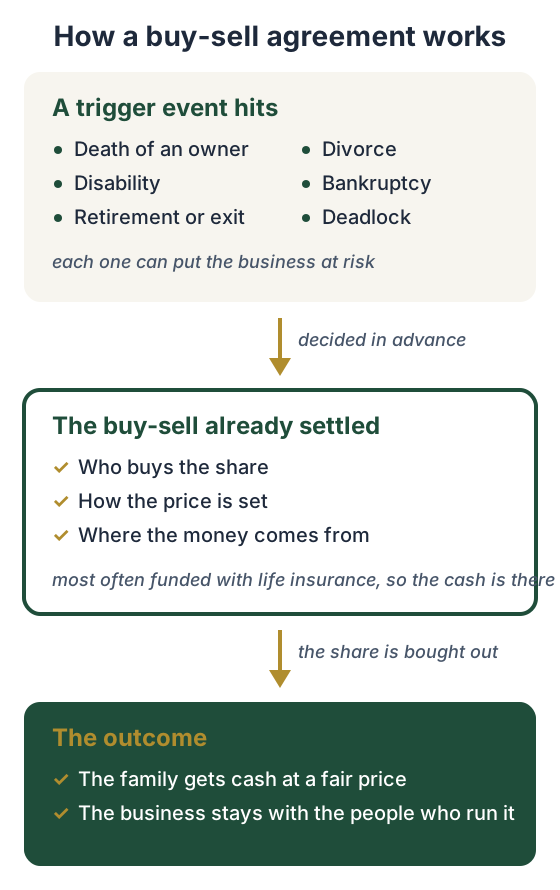
A buy-sell agreement is a contract among business co-owners that settles, in advance, what happens to an owner’s share when life changes, whether death, disability, retirement, divorce, bankruptcy, or someone wanting out. It names who buys the share, sets how the price is determined, and arranges where the money comes from. It is, in plain terms, a prenuptial agreement for the business, written while everyone is healthy and on good terms, so a crisis does not become a war.
The Nightmare It Prevents
Without a buy-sell, ownership can change hands in ways no one intended. When a co-owner dies, their share usually passes to their heirs, so you could find yourself in business with their spouse or adult children, who may want to sell, to draw a salary they did not earn, or to second-guess every decision. A co-owner’s divorce can hand a stake to an ex-spouse; a bankruptcy can hand it to a creditor. A buy-sell shuts all of those doors. The share is bought out at a fair, pre-agreed price, the departing owner’s family gets cash, and the business stays with the people who actually run it. For the full picture of the default rules a missing buy-sell leaves behind, see what happens to a business when the owner dies in Florida.
The Events to Cover
A strong agreement plans for each moment that can put the business at risk.
- Death of an owner (the most common trigger).
- Disability that keeps an owner from working.
- Retirement or a voluntary exit. The buyout price usually purchases more than the shares; a non-compete from the departing owner is standard, and Florida gives sale-of-business covenants its longest enforcement runway.
- Divorce, so a spouse cannot claim an ownership stake.
- Bankruptcy or a creditor reaching an owner’s interest.
- Deadlock, when owners simply cannot agree.
How the Buyout Gets Funded
An agreement is only as good as the money behind it. Most buy-sells are funded with life insurance, so when an owner dies the cash to buy their share is there immediately, without draining the company. Disability insurance can fund a disability buyout. Where insurance does not fit, the agreement can provide for an installment buyout, paid to the departing owner or their family over time with interest. Deciding how to fund it is as important as the agreement itself, and we plan that with you.
How It Fits Your Estate Plan
This is where a buy-sell and estate planning meet, and why it belongs with the rest of your plan. For the owner who dies, the agreement turns an illiquid business interest into cash their family can actually use, and the value it sets can help establish the business’s worth for estate-tax purposes. It has to be coordinated with your will or trust so they do not contradict each other, and often with putting the business interest into a trust. When co-owners have no agreement and an owner dies, the result is frequently a dispute that lands in court, which is exactly the kind of fight we also handle, and would rather help you avoid. See business partner disputes →
Own a business with someone else?
Book a No-Cost Phone Consult with Attorney Kevin D. Klagge, Esq. We will draft a buy-sell that protects the business and your family, and coordinate it with your estate plan.
Book a no-cost consultWhat It Costs
A buy-sell is custom work, so we quote it at the consult once we understand the business, how many owners there are, and which triggers you want covered. Whatever it costs, it is a fraction of the value lost when co-owners have no plan and an owner dies, leaves, or divorces. We also coordinate it with your overall plan, including a trust for the business interest where that fits. See our pricing →
Frequently Asked Questions
What Is a Buy-Sell Agreement?
It is a contract among the owners of a business that decides, ahead of time, what happens to an owner’s share when something changes, whether a death, disability, retirement, divorce, bankruptcy, or simply someone wanting out. It says who has the right (or the duty) to buy that share, how its price is set, and how the purchase is paid for. Think of it as a prenuptial agreement for the business, written while everyone is healthy and getting along.
Why Do I Need One?
Because without it, control of your business can fall into the wrong hands overnight. If a co-owner dies, their share usually passes to their heirs, so you could suddenly be in business with their spouse or children, people who may know nothing about the company and want very different things. A divorce or bankruptcy can do the same. A buy-sell agreement keeps ownership among the people who actually run the business and gives a departing owner’s family fair value in cash instead of a fight.
What Events Should a Buy-Sell Cover?
The big ones are death and disability, but a good agreement also addresses retirement, divorce (so an ex-spouse cannot claim a stake), bankruptcy or a creditor coming after an owner’s interest, a voluntary exit, and deadlock between owners who cannot agree. Each of these is a moment where the business and the family need a clear, pre-agreed answer rather than an emotional negotiation at the worst possible time.
How Is the Buyout Paid For?
Most often with insurance. For the death trigger, the owners or the company hold life-insurance policies so the money to buy the deceased owner’s share is there immediately, without draining the business. One caution comes from a 2024 U.S. Supreme Court case, Connelly v. United States. When the company itself owns the insurance and redeems the shares, the payout can inflate the company’s value for estate tax with no offset for the buyout obligation, which is part of why the ownership structure matters. Disability buyouts can be funded with disability insurance. Where insurance is not available, the agreement can provide for an installment buyout, the buyer paying the departing owner or their family over time with interest. Funding is what turns a promise on paper into cash when it is needed.
What Are the Main Types of Buy-Sell Agreement?
There are two basic structures and a hybrid. In a cross-purchase agreement, the remaining owners buy the departing owner’s share directly. In an entity (or redemption) agreement, the company itself buys it back. A "wait-and-see" hybrid keeps both options open until the triggering event, then chooses the better one. Which fits depends on the number of owners, the tax picture, and how the insurance is held. Since the Supreme Court’s 2024 Connelly decision, company-owned insurance funding a redemption can raise the deceased owner’s estate-tax value, so the cross-purchase structure has become the safer default for many families, and that is part of what we work out with you.
How Is the Price Set?
By a method you agree on in advance, whether a fixed price the owners update periodically, a formula tied to the business’s financials, or an independent appraisal at the time of the event. The key is to pick a method and keep it current. A stale or arbitrary price is what the fight is usually about, and a value set in a real buy-sell can also help establish the business’s value for estate-tax purposes.
How Does a Buy-Sell Fit With My Estate Plan?
Closely. A buy-sell turns an illiquid business interest into cash for your family at your death, which is often exactly what they need, and it sets a value the IRS may respect for your estate. It has to be coordinated with your will or trust so the pieces do not contradict each other. We draft the buy-sell and align it with your overall estate plan, including putting the business interest in a trust where that makes sense.
What Does a Buy-Sell Agreement Cost?
It is custom work, so we quote it at the consult after understanding the business, the number of owners, and the triggers you want covered. It is far less expensive than the litigation and lost value that follow when co-owners have no agreement and an owner dies or leaves. The phone consult costs nothing, and we will tell you what your situation actually needs.
Common Situations
The two-partner company. Two friends build a business with no buy-sell. One dies, and his widow inherits half the company. She wants to sell; the surviving partner cannot afford to buy her out and has no agreement forcing the issue. A funded buy-sell would have given her cash and left him in control.
The divorce that split the business. A co-owner divorces, and without a buy-sell restricting transfers, a portion of her interest becomes entangled in the divorce. A buy-sell with a divorce trigger would have kept the ownership inside the company.
The planned, funded transition. Three owners sign a cross-purchase buy-sell funded by life insurance. When one dies, the policy pays, the others buy his share at the agreed value, and his family receives cash within weeks. No probate fight, no outside owner, no disruption.
The partner who couldn’t return. One of two owners has a stroke and can never come back to work. He still owns half the company, so half the profit walks out the door while the healthy partner carries all of the work, and nothing in writing forces a buyout or sets a price. His family needs income, the partner wants full ownership, and the resentment builds in both directions. A buy-sell with a disability trigger, funded by disability insurance, would have turned his share into cash at a pre-agreed price and let both families move forward.
Sources of Law
- A buy-sell agreement is a contract; it is governed by Florida contract law and coordinated with the entity’s statute, the Florida Revised LLC Act (Fla. Stat. ch. 605) or the Business Corporation Act (ch. 607), and the company’s operating or shareholder agreement. (retrieved 2026-06-07)
- Valuation set in a buy-sell may be relevant for federal estate-tax purposes under IRC §2703 when the agreement meets its requirements. Connelly v. United States, 602 U.S. 257 (2024) (company-owned life insurance funding a redemption increases the company’s estate-tax value, with no offset for the redemption obligation). Florida has no state estate tax.
What Owners Discover After a Partner Dies
In 14 years of law practice, the buy-sell agreement is the document everyone means to write and few finish, and the gap shows up at the worst possible moment.
A common question I hear is, "Do I now own the business with his wife?" Often yes. Without an agreement the interest passes under his estate plan, and the surviving owner finds themselves in partnership with a widow who never worked there and did not choose this either.
What decides whether the agreement works is funding rather than drafting. An obligation to buy at a price nobody can pay is a lawsuit with a number attached, and the usual answer is insurance sized to the actual valuation rather than to a figure agreed years ago.
Practice pointer. Re-read the valuation clause every few years and check the insurance still matches it. A price fixed in a document from 2015 is not a price anybody will honour in 2026.
Avoid leaving the tax treatment of the insurance to chance. How the policy is owned changes what the company is worth for estate tax purposes, and that is a question for your CPA before the policy is bought rather than after somebody has died.
Kevin D. Klagge, Esq., admitted in Florida since 2012. Any case described is a decision of a court rather than a matter handled by this firm. General information rather than advice on your situation.
Updated on September 1, 2026. Reviewed by Kevin D. Klagge, Esq., Fla. Bar No. 99502. General information about Florida law, not legal or tax advice, and no attorney-client relationship is created. The right structure and tax treatment depend on your business and facts. Do not send confidential information until we have agreed to represent you.
More Guides on Florida Estate Planning
This guide is part of Florida Estate Planning.