What Is an Enhanced Life Estate Deed in Florida?
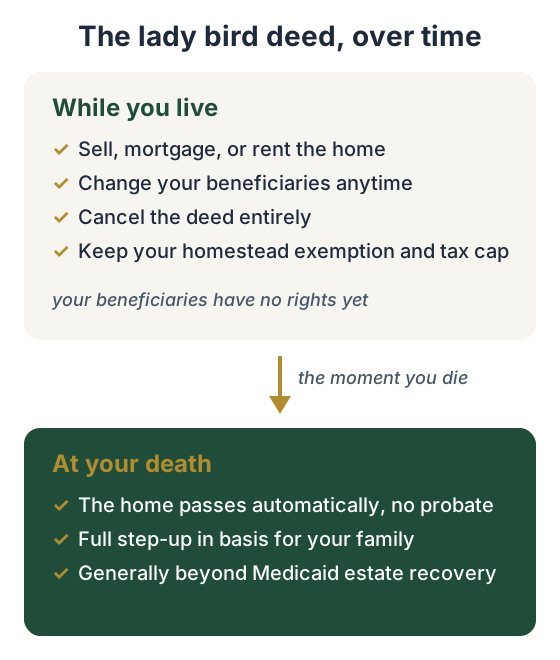
An enhanced life estate deed is a deed that splits ownership of real property into two parts. The first part is an enhanced life estate, which stays with the current owner. The second part is a remainder (the interest that passes at death), which goes to named beneficiaries. The key word is enhanced. The owner keeps the right to sell the property, mortgage it, lease it, change the beneficiaries, or revoke the deed entirely, all without asking anyone's permission.
The deed is sometimes called a lady bird deed. Both names refer to the same instrument under Florida law. The formal name, enhanced life estate deed, describes the legal structure. The informal name appears in title work and estate planning offices. The terms are interchangeable, and you will see them used side by side in court opinions and the Florida Bar's title standards.
Florida has no transfer-on-death deed statute, so the enhanced life estate deed is the primary way to pass Florida real property outside probate using a recorded deed. When the owner dies, the remainder becomes possessory (meaning the beneficiaries can take possession) by operation of law. The beneficiaries record a certified death certificate and a survivorship affidavit and take title without a court filing. The home never enters the probate estate.
No present transfer of ownership happens when the deed is signed and recorded. The owner remains on title and in full control. The beneficiaries have an expectancy, not a present ownership interest. They cannot sell or mortgage the property, and they have no say over what the owner does with it during life. Because the remainder can be wiped out at any moment, the beneficiaries have no enforceable claim while the owner is alive. For a detailed guide to the deed's requirements, Medicaid treatment, and tax consequences, see the main lady bird deed page on this site.
What Makes a Life Estate Enhanced?
A life estate deed becomes enhanced when it expressly reserves powers to the owner that an ordinary life tenant does not have. Those reserved powers are what separate an enhanced life estate deed from a traditional life estate deed, and they matter for control, taxes, and Medicaid eligibility.
A traditional life estate gives the owner (called the life tenant) the right to live on the property and use it until death, but the life tenant cannot sell the property alone. The remainder holders (the people who inherit at death) must join any sale. Their consent is required for a mortgage, too. The life tenant's interest is limited, and the remainder is fixed from the moment the deed is recorded.
An enhanced life estate changes that picture. The deed reserves to the owner the full power to sell, lease, mortgage, encumber, give away, or otherwise dispose of the property in fee simple (full ownership), without joinder (signature) of the remainder beneficiaries. The owner also keeps the right to retain all sale proceeds. Most important, the deed reserves the power to diminish, terminate, or completely divest any remainder interest by recording a new deed or by revoking the original deed. In plain terms, the owner can change the beneficiaries or undo the deed whenever the owner wants.
Title companies look for specific language when insuring a later sale or mortgage. The deed should expressly reserve the power to divest the remainder holders. If that language is missing, the title company may treat the instrument as a traditional life estate deed and require the remainder holders to sign. The language should also reserve possession, use, and enjoyment of the property without liability for waste.
One way to think of it is that an enhanced life estate deed is fully revocable. The owner has the same practical control as if the deed had never been recorded. The remainder interest exists on paper, but the owner can wipe it out at will. That revocability is what makes the deed work for Medicaid planning, gift-tax avoidance, and the step-up in basis at death.
What Is the Difference Between a Traditional Life Estate and an Enhanced Life Estate?
The difference comes down to control and its consequences. A traditional life estate deed locks in the remainder at recording. An enhanced life estate deed keeps the remainder subject to the owner's lifetime powers.
Under a traditional life estate deed, the owner gives up the ability to sell, mortgage, or revoke the remainder without the beneficiaries' consent. The remainder vests immediately and is fixed. Because the owner has parted with control, the transfer is a completed gift for federal gift-tax purposes. A Form 709 gift-tax return is required if the value of the remainder exceeds the annual exclusion ($19,000 per donee in 2026). A completed gift also means the remainder is a countable transfer for Medicaid purposes. If the owner applies for long-term care Medicaid within five years of recording the deed, the state treats the remainder as a disqualifying transfer and imposes a penalty period.
Under an enhanced life estate deed, none of those consequences follow. The owner keeps the power to sell the property alone, mortgage it without the beneficiaries signing, and revoke the deed at any time. The beneficiaries' interest is vested but divestible (it exists unless and until the owner takes it away). Because the owner retains full control, no completed gift occurs. There is no Form 709 and no Medicaid penalty.
A June 2025 decision from the Fourth District Court of Appeal shows what happens when the deed lacks enhanced language. The undistributed sale proceeds of $281,435.35 went to a remainder beneficiary's trust because the deed did not reserve the power to sell alone. The full story appears in the courts section below.
Swipe the table sideways to compare both versions.
| Feature | Enhanced life estate | Traditional life estate |
|---|---|---|
| Owner can sell or mortgage alone | Yes | No, beneficiaries must join |
| Beneficiaries' interest | Vested but divestible (can be revoked) | Fixed when recorded |
| Change or revoke later | Yes, record a new deed | No, without consent |
| Completed gift at signing | No | Yes (Form 709) |
| Step-up in basis at death | Yes | Yes |
| Probate avoided | Yes | Yes |
Who Controls the Property Under an Enhanced Life Estate Deed?
The owner controls everything. The people named as beneficiaries have no say during the owner's life, and no enforceable interest they can sell, pledge or borrow against.
An enhanced life estate deed reserves to the owner the full power to sell, mortgage, lease, manage and collect every dollar of proceeds. The owner can renovate the kitchen without asking anyone's permission. The owner can change the locks. The owner can refinance to pay off a credit card, take a reverse mortgage or sell and move to a condo. The beneficiaries learn about the property only if the owner decides to tell them.
The beneficiaries' interest under an enhanced life estate deed is divestible (the owner can take it away). The owner can record a new deed tomorrow naming different beneficiaries, or record a revocation that returns the property to the owner outright. No signature from any beneficiary is needed. No notice is required. The owner can add a grandchild or remove a child who stopped calling. The owner can change the plan every year and undo every change. Nothing vests in the beneficiaries until the owner dies.
During the owner's life the beneficiaries cannot force a sale, cannot interfere with a closing, and have no right to direct how the property is used. The owner's control is identical to the control the owner had before signing the deed.
A common question is who pays for repairs and insurance while the deed is in effect. The owner does. The owner holds the enhanced life estate, receives the benefit of the property, owes the property taxes and keeps the homestead exemption. Nothing changes in day-to-day ownership. The beneficiaries have no obligation to contribute to maintenance and no right to direct how the owner spends money on the home.
Is There a Florida Statute for Enhanced Life Estate Deeds?
Florida has no statute that uses the words "enhanced life estate" or "lady bird deed." A search of all 638 chapters of the 2026 Florida Statutes returns no result. The deed rests on Florida case law and on the Florida Bar's Uniform Title Standards, not on a statute.
The deed statute sets the signing rules for any conveyance of real property in Florida. A deed must be signed in the presence of two subscribing witnesses. The statute allows those witnesses to be present by audio-video communication technology, which means a deed can be signed from home with remote witnesses. Recording requires a notary acknowledgment or proof by a witness. These rules govern how a deed is signed. They do not create the power to reserve an enhanced life estate.
The power to reserve an enhanced life estate and later convey full ownership comes from Florida case law. In 1917 the Florida Supreme Court decided that a life tenant who reserves the right to sell can later convey full title without the remainder holder joining. In 1942 the Florida Supreme Court reached the same result when a will gave a widow a life estate with language granting her the power to sell. Both decisions are discussed in the courts section below.
The Florida Bar's Real Property, Probate and Trust Law Section publishes Uniform Title Standards 6.10 through 6.12. These standards represent the consensus view of Florida real estate attorneys on how to draft and interpret enhanced life estate deeds. Title companies rely on them. The standards are guidance, not statute, yet they shape how every title search treats the deed.
Can the Owner Sell, Mortgage or Take a Reverse Mortgage Alone?
The owner can sell alone, mortgage alone, refinance alone and take a reverse mortgage alone. The beneficiaries do not sign. The difference between a sale and a mortgage is what happens to the remainder interest.
A later deed cuts off the remainder. When the owner exercises the reserved power to sell or convey full ownership, the beneficiaries lose whatever interest they had. The property passes to the new buyer outright. The lady bird deed no longer applies. The owner keeps the proceeds. If the owner later wants the home to pass outside probate, the owner must sign a new deed naming new beneficiaries.
A mortgage, refinance or home equity line of credit does not cut off the remainder. The owner signs alone under the reserved power to mortgage. The remainder survives. When the owner dies, the beneficiaries receive the property subject to the lien. They inherit both the home and the debt secured by it. If the loan balance exceeds the home's value, the beneficiaries inherit an underwater property. Families should understand that a reverse mortgage taken late in life can consume most of the equity.
A 2023 case involving a lady bird deed signed to facilitate a reverse mortgage shows what a drafting error can cost. One paragraph said "grantor" where it meant "grantee." After the owner died the lender foreclosed, and fixing that single wrong word took a bench trial with competing experts and an appeal. The full story appears in the courts section below.
Revoking and re-recording a lady bird deed is sometimes necessary when a particular lender will not close with the deed on record. The flat fee for that revision is $250, plus recording.
What Does It Do for Probate, Taxes and Medicaid?
An enhanced life estate deed does four things at once. The property skips probate because the remainder (the part that passes at death) was already conveyed when you signed the deed. At your death the life estate simply ends and the beneficiaries' existing interest becomes possessory (they can take possession). No petition, no court order, no personal representative ever touches the home. The parcel stays out of the probate estate entirely, which means it is insulated from will contests, creditor claims in probate and the delays that can freeze an estate for months.
The deed preserves the step-up in basis. Because you keep a retained life interest, the home stays in your taxable estate under federal tax rules, and that is a good thing here. Your beneficiaries receive a basis equal to the fair market value at your death. A home bought for $90,000 and worth $300,000 at death gives the beneficiaries a $300,000 basis. A sale soon after owes little or no capital gains on the $210,000 of appreciation. A lifetime gift, by contrast, passes your original $90,000 basis to the recipient, and a later sale can cost $40,000 or more in combined taxes.
The deed triggers no gift tax. Because you keep full control and can revoke at any time, there is no completed gift for federal purposes. You file no Form 709 and use none of your $19,000 annual exclusion or lifetime unified credit.
Your homestead exemption stays in place during your life. Signing the deed is not a change of ownership for property tax purposes, so the appraiser does not reassess. You keep the current $50,000 homestead exemption, the Save Our Homes cap and any senior or veteran exemptions you already have. At your death the home is reassessed to market value, and the beneficiaries must apply for their own homestead exemption by March 1 if they qualify.
For Medicaid, the deed creates no transfer. Florida's Medicaid manual states that when an owner keeps a lady bird deed or life estate with powers, no transfer has occurred. You can record the deed and apply for Medicaid the next day with no penalty period.
Want the enhanced version, drafted right?
Book a no-cost 30-minute consult. We confirm it fits, check your homestead and marital status, and word the reserved powers so the deed holds up.
Book a no-cost consultCan You Do It Yourself, and What Goes Wrong?
You can draft and record a deed yourself. Florida law does not require an attorney. The question is whether you will get all six requirements right, because an error usually cannot be fixed after you lose capacity or die.
An enhanced life estate deed needs a grantor (the current owner), enhanced life estate language that expressly reserves the power to sell, convey, mortgage, lease and divest the remaindermen (remainder beneficiaries) without their consent, named remainder beneficiaries with survivorship or contingent language, a legal description copied verbatim from the prior recorded deed (not the tax bill), homestead language when the property is your homestead, and proper execution with two subscribing witnesses plus a notary acknowledgment followed by recording.
The most common failure is omitting the reserve powers clause. Without the language that lets you divest the remaindermen, the deed is a traditional life estate. You lose the power to sell alone. The remainder becomes a completed gift on the day you sign. The beneficiaries must join any sale. In a June 2025 decision, Florida's Fourth District Court of Appeal affirmed a trial court order transferring $281,435.35 from the undistributed sale proceeds to the trust for a remainder beneficiary because the deed lacked the enhanced language.
Other mistakes include taking the legal description from a tax bill instead of the prior deed, which title companies reject. A married owner who signs alone on homestead property creates a deed that is void as to the homestead. When a minor child survives, homestead cannot pass by deed to anyone, including a spouse, because the minor child's protection cannot be waived.
A predeceased beneficiary whose share has no survivorship language can force probate through the beneficiary's own estate. Co-beneficiaries who disagree may end up in partition litigation. Each of these mistakes can be avoided by reviewing the deed before recording, but they cannot always be fixed after the owner dies.
How Do You Sign an Enhanced Life Estate Deed From Home?
Florida law allows you to sign an enhanced life estate deed from home using video witnesses and online notarization. The statute requires two subscribing witnesses and a notary acknowledgment, but both may appear by audio-video communication technology rather than in person. The witnesses must be located in the United States.
- Confirm title, any existing mortgages and liens, and whether the property is your homestead.
- Confirm your marital status and whether you have minor children. A married owner on homestead property needs the spouse to join the deed.
- Prepare the deed with the full legal description from the prior recorded deed, named beneficiaries with survivorship or contingent language, and the enhanced powers clause reserving the right to sell, convey, mortgage, lease and divest the remaindermen.
- Schedule the signing with an online notary public. Under Florida law, an online notary public physically located in Florida may perform the notarization regardless of where the owner is located.
- Sign electronically while the notary and both witnesses observe through the audio-video session. The witnesses hear you acknowledge that you have signed the record. Florida law permits witnessing an electronic signature when the witness is present through audio-video communication technology at the time you sign.
- The notary confirms your identity through the audio-video session and records the two-way conference.
- Record the deed in the county where the property is located. Recording makes the deed part of the public land records.
- Keep a copy of the recorded deed in your file and review it every three to five years or when your family or plan changes.
The process works for owners who travel or have mobility limitations. You do not need to leave home, and the witnesses and notary do not need to be in the same room as you or each other.
What Florida Courts Have Said
Florida courts have recognized enhanced life estate deeds for more than a century. The decisions show how the reserved powers work in practice.
In 1917 a father in feeble health deeded land to his daughter, reserving a life interest and the right to resell. He later sold the parcel she was supposed to inherit. She sued to quiet title. The Florida Supreme Court ruled against her. "The conveyance to Mary E. Gamble was a gift from the father to the daughter and the reservation therein that is quoted above clearly contemplated and reserved to the grantor the right to sell the land. As the father conveyed the land as contemplated and provided for in the deed of gift to the daughter she has no title to be clouded by the conveyances complained of."
In 1942 a husband's will gave his wife his property for life "as I now hold it," with the rest to his siblings. She sold lots in Bonifay to a buyer. After she died the husband's siblings sued the buyer. The Florida Supreme Court ruled for the buyer. The court read the will as giving her the power to sell and found "the will in question shows a clear intent on the part of the testator to give his wife a life estate in the estate of the testator with power to convey any portion of the estate during her life, such conveyance to carry a fee simple title in the grantee."
In 2023 a son was both grantor and remainder beneficiary under a lady bird deed to his mother, made for her reverse mortgage. One paragraph said "grantor" where it meant "grantee." After she died the bank foreclosed. The trial court reformed the deed after a bench trial with competing experts and the Third District Court of Appeal affirmed. The son lost and the foreclosure went ahead. A footnote in the opinion quoted a Florida Bar treatise: "The holder of an enhanced life estate retains the power to sell, convey, mortgage, and otherwise manage the property without liability for waste". One wrong word cost years of litigation.
On June 11, 2025 the Fourth District Court of Appeal decided a case involving a second marriage. Husband and wife had deeded themselves a life estate in their homestead, half the remainder to her children and half to a trust for his son. The deed was an ordinary life estate without the enhanced language. After he died she tried to sell. The court noted that "Significantly, the deed did not contain any language granting the widow the authority to sell the home after the decedent's death." The court stated: "The widow did not have a fee simple interest to sell. All that she had was a life estate. No more. No less." And the rule followed: "A life tenant cannot convey an interest greater than what she owns." The trial court ordered $281,435.35 in undistributed sale proceeds transferred to the trust for his son, and the appeals court affirmed.
Does Amendment 3 Change Anything?
Amendment 3 is a proposal on the ballot for the November 3, 2026 general election. The amendment would increase the homestead exemption for all taxes except school levies to $150,000 in 2027 and $250,000 in 2028, with inflation adjustments after that. Passage requires 60 percent voter approval.
An enhanced life estate deed preserves the owner's homestead exemption during life because signing the deed creates no change of ownership for property tax purposes. The deed preserves whatever exemption the owner qualifies for under current law. If Amendment 3 passes and raises that exemption, the deed will preserve the higher amount. If it fails, the deed preserves the current exemption. The deed works the same way either way.
The reset at death is also unchanged. When the owner dies, death is a change of ownership and the property is reassessed at market value as of January 1 of the year after the death. The beneficiary who lives there and qualifies must apply for their own homestead exemption by March 1. Amendment 3, if it passes, would affect the size of that new exemption but would not eliminate the reassessment. The reassessment happens regardless of how the homestead exemption is calculated, and the deed does not change that outcome.
What Does an Enhanced Life Estate Deed Cost?
A lady bird deed (the common name for an enhanced life estate deed) is a flat fee from $399 for one owner or $449 for a married couple, plus recording. Revoking or amending an existing deed is a $250 flat fee, plus recording. Government recording costs are additional and passed through at cost.
The Secure Will Estate Plan includes a lady bird deed on your home along with your will, durable power of attorney, health care surrogate designation, living will and HIPAA authorization. The plan is $1,200, or $1,950 for a couple, with recording additional. For most families who want a complete set of documents, the plan is the better value because it covers both the deed and the incapacity documents in a single package.
We start with a no-cost 30-minute consult. The consult confirms whether the deed fits your situation, whether homestead rules apply, whether your title is clear, and whether there are mortgage or lien issues to address first. You can book the consult online or call the office. The consult is an opportunity to ask questions, and there is no obligation to proceed. Most families leave with a clear sense of what documents they need and what those documents will cost.
Frequently Asked Questions
What is an enhanced life estate deed in Florida?
An enhanced life estate deed splits ownership into two parts. The owner keeps a life estate with full powers to sell, mortgage, lease or revoke. Named beneficiaries receive the remainder (the interest that passes at death), which becomes theirs only at the owner's death. The deed passes the property outside probate while the owner keeps complete control during life. Florida has no transfer-on-death deed statute, so an enhanced life estate deed is the primary deed-based tool for avoiding probate on a home.
Is an enhanced life estate deed the same as a lady bird deed?
An enhanced life estate deed and a lady bird deed are the same instrument under two names. The formal name describes the legal structure. The informal name appears in title work and estate planning. Both names appear in Florida court opinions and the Florida Bar's Uniform Title Standards. The deed works the same way regardless of the label. The distinguishing feature is the reserve-powers clause, which lets the owner sell, mortgage or revoke without the beneficiaries' consent.
What does "enhanced" add over an ordinary life estate?
The word "enhanced" refers to powers the owner keeps that an ordinary life tenant does not have. An ordinary life tenant cannot sell, mortgage or change beneficiaries without the remainder holder's consent. An enhanced life tenant keeps the right to sell, convey, mortgage, lease and completely divest the remainder interest without anyone's signature or permission. The owner can also revoke the deed entirely by recording a new one. Without the enhanced language, the deed becomes an ordinary life estate and the owner loses those powers.
How is an enhanced life estate deed different from a regular life estate deed?
A regular life estate deed fixes the remainder (the interest that passes at death) when the deed is recorded. The owner loses the right to sell alone, mortgage alone or change beneficiaries. A sale requires the remainder holder's signature. The transfer is a completed gift at signing, which may require a federal gift tax return. An enhanced life estate deed keeps all those powers with the owner. The owner can sell the property, refinance it or name new beneficiaries without consent. Recording the deed creates no completed gift.
Does an enhanced life estate deed avoid probate?
An enhanced life estate deed keeps the property out of probate. Title vests in the beneficiaries at the moment of death by operation of law. The beneficiaries record a certified death certificate and a survivorship affidavit. No court petition, no personal representative appointment and no administration are required for the home. The property is not part of the probate estate. A properly drafted deed also insulates the home from the delays of will contests and creditor claims that can freeze a probate estate for months.
Does an enhanced life estate deed keep the tax step-up?
An enhanced life estate deed preserves the step-up in basis. Because the owner keeps a retained life interest, the home stays in the owner's taxable estate under federal tax law. That inclusion is what triggers a full step-up to the fair market value at death. A home bought for $90,000 and worth $300,000 at death gives the beneficiaries a $300,000 basis. A near-term sale owes little or no capital gains on the $210,000 of appreciation. A lifetime gift gets no step-up.
Is there a Florida statute for enhanced life estate deeds?
Florida has no statute that mentions the words "enhanced life estate" or "lady bird deed." The deed rests on Florida case law and on the Florida Bar's Uniform Title Standards. A 1917 Florida Supreme Court decision held that a life tenant who keeps the right to sell can convey full ownership without the remainder holder joining. The deed follows the same signing rules as any Florida deed, meaning two subscribing witnesses and a notary acknowledgment, then recording in the property's county.
How much does an enhanced life estate deed cost?
Our firm prepares an enhanced life estate deed for a flat fee from $399 for one owner, or $449 for a married couple, plus recording. Revoking or amending a deed is a $250 flat fee, plus recording. The Secure Will Estate Plan costs $1,200, or $1,950 for a couple, and includes a will, durable power of attorney, health-care surrogate designation, living will, HIPAA authorization and a lady bird deed on your home with recording additional. The no-cost consult covers your situation.
Can an individual set up their own enhanced life estate deed?
An individual can draft a deed, but most problems come from missing or unclear language. A valid deed requires the full legal description from a prior recorded deed, express enhanced-powers language including the right to divest the remainder beneficiaries, survivorship wording for beneficiaries, and homestead language when a spouse or minor child is involved. A married owner on homestead property must have the spouse join. A deed without the enhanced language becomes an ordinary life estate and loses the owner's control. Review with an attorney before recording.
Who has control of the property under an enhanced life estate deed?
The owner keeps complete control under an enhanced life estate deed. The owner can live in the home, rent it, renovate it, sell it, mortgage it or revoke the deed without the beneficiaries' consent or even their knowledge. The beneficiaries have no enforceable interest during the owner's life. The remainder is fully divestible (the owner can take it away), meaning the owner can record a new deed and name different beneficiaries at any time. Only at death does the remainder become possessory (the beneficiaries can take possession) and the beneficiaries gain rights.
Is an enhanced life estate deed only used at the end of life?
An enhanced life estate deed works at any age. The deed keeps full control with the owner, so signing it early costs nothing and protects the home from probate whenever death comes. The deed can be revoked or changed at any time, so there is no reason to wait. Recording early means one less step for the family later and avoids the risk of forgetting or losing capacity before the deed is signed.
Can you do an enhanced life estate deed with a reverse mortgage?
An enhanced life estate deed can be in place while a reverse mortgage is on the property. The owner signs alone under the reserved power to mortgage, and the beneficiaries take subject to the lien at death. Recording the deed does not affect an existing reverse mortgage, and obtaining a reverse mortgage later does not defeat the remainder. The beneficiaries inherit the property with the loan balance still owed. A no-cost consult confirms how the two instruments work together.
What are the conditions for doing an enhanced life estate deed?
An enhanced life estate deed requires Florida real property, a current owner as the grantor, reserve-powers language including the power to divest the beneficiaries, named beneficiaries with survivorship language, and a legal description from the prior recorded deed. The deed must be signed before two witnesses and a notary, then recorded. A married owner of homestead must have the spouse join. When a minor child survives, homestead cannot pass by deed to anyone, including a spouse, because the minor child's protection cannot be waived.
Can an enhanced life estate deed be used for a condo or a timeshare?
An enhanced life estate deed works on Florida real property, including a condominium unit held by deed. The deed handles a condo the same way it handles a single-family home, transferring the unit outside probate to the named beneficiaries at the owner's death. Whether a timeshare qualifies depends on whether the interest is a deeded real property interest. The ownership form is checked at the no-cost consult.
Does Amendment 3 change anything for an enhanced life estate deed?
Amendment 3 is a proposal on the November 2026 ballot that would increase the homestead exemption to $150,000 in 2027 and $250,000 in 2028 for non-school taxes. The enhanced life estate deed keeps the owner's homestead exemption during life either way because signing the deed creates no change of ownership. Amendment 3 does not affect how the deed transfers the property at death or how probate is avoided. The deed would preserve whatever exemption is in place, whether the current amount or a larger one if voters approve the amendment.
Who is in charge of repairs and renovations under a life estate deed?
Under an enhanced life estate deed, the owner keeps full control during life, including repairs and renovations. The owner can make improvements, maintain the property, or even tear down and rebuild without the beneficiaries' permission. The beneficiaries have no enforceable interest until the owner dies, so they cannot direct how the property is kept. The owner also keeps all proceeds from any refinance or sale. An enhanced life estate deed differs from an ordinary life estate, where the life tenant may owe the remainder holders for waste.
What happens to my mortgage under an enhanced life estate deed?
An existing mortgage stays in place after the enhanced life estate deed is recorded. The deed does not affect the loan or its payments. At the owner's death, the beneficiaries inherit the property subject to the mortgage balance still owed. A refinance or new mortgage during life does not defeat the remainder. The owner signs alone under the reserved power to mortgage. The beneficiaries later take the property with the lien attached and decide whether to pay it off, refinance or sell.
Can the people named in the deed stop the owner from selling?
The beneficiaries named in an enhanced life estate deed cannot stop the owner from selling. The deed reserves the owner's power to sell, convey, mortgage or revoke without the beneficiaries' consent or knowledge. The beneficiaries hold only a divestible interest (one the owner can take away), meaning the owner can cut it off at any time by recording a new deed. A sale by the owner conveys full title to the buyer and ends the remainder entirely. The beneficiaries have no claim to the proceeds.
How can I tell whether my deed is an enhanced life estate deed or a regular life estate deed?
The language matters. An enhanced life estate deed reserves the owner's power to sell, mortgage, lease and divest the beneficiaries without their consent. An ordinary life estate deed grants only a life interest with no power to sell alone. Look for language reserving the power to diminish, terminate, or completely divest the remainder interest. If the deed lacks that reserve-powers language, the beneficiaries must join any sale. The deed itself should state the powers. A no-cost consult can confirm.
Common Situations
A widow in her seventies wanted her home to pass to her two adult children without probate. Her home was worth $410,000 and she had bought it for $95,000. She signed an enhanced life estate deed naming her children as remainder beneficiaries. She kept full control, kept her homestead exemption, and avoided a $40,000 or more capital gains hit that would have followed a lifetime gift. When she dies, her children will record a certified death certificate and the home will pass to them at its stepped-up value, outside probate.
A couple in a second marriage wanted the home to pass to her children after both spouses died. They signed a life estate deed without consulting an attorney and without the language reserving the power to sell or change beneficiaries. After the husband died, the wife tried to sell. Because the deed lacked the enhanced clause, she could convey only her life estate, and the remainder beneficiaries had to join the sale before title could pass. The plan they thought would simplify things instead required signatures from people on both sides of a blended family before any buyer could close.
Where the Power to Sell Actually Comes From
In 14 years of law practice, the question underneath this deed is always the same one. Can a person hold an interest for life and still sell the whole property?
Florida answered that a long time ago, and I point clients to it when they doubt this deed really works. I have come across a case from 1942 where a husband’s will left everything to his wife to be held and owned by her during her lifetime, with whatever remained at her death going to his brothers and sisters. She sold part of it. The people named to take at her death sued the buyer, and they lost. The will was read as giving her a life estate together with the power to convey, so her deed carried full title to the buyer.
I think the reasoning is worth understanding, because it explains the whole instrument. Where a document gives somebody the use of property for life and then leaves only what remains to the next person, the power to sell is part of what was given. When I draft an enhanced life estate deed it does that same work deliberately, in a deed rather than a will, and says so expressly instead of leaving a court to construe it years later.
I see cases where that express language is the only thing standing between an owner and a lawsuit. Written plainly, nobody has to litigate what the owner meant.
Avoid relying on implication. In my practice the reserved powers get spelled out in the deed itself, because the alternative is asking a judge, years later, to decide what your document was trying to say.
Kevin D. Klagge, Esq., admitted in Florida since 2012. Any case described above is a decision of a Florida court rather than a matter handled by this firm. Past results do not guarantee a similar outcome.
Chapter 2 of Kevin D. Klagge’s free book, Are Florida Lady Bird Deeds Just for Women?, covers this question with every statute and case cited to its source.
Sources of Law
- Enhanced life estate (lady bird) deeds are recognized by Florida common law and title-underwriting practice; Florida has no statute creating them.
- IRC §1014: step-up in basis at death. (retrieved 2026-06-07)
- Fla. Stat. §409.9101: Medicaid estate recovery, limited to the probate estate. flsenate.gov
- Fla. Stat. §689.01: execution of deeds (notary plus two subscribing witnesses). flsenate.gov
Updated on October 27, 2026. Reviewed by Kevin D. Klagge, Esq., Fla. Bar No. 99502. General information about Florida law, not legal advice, and no attorney-client relationship is created. Do not send confidential information until we have agreed to represent you.
More Guides on Florida Lady Bird Deeds and Deeds
- What Is a Life Estate in Florida?
- What States Allow Lady Bird Deeds?
- Lady Bird Deed States: the 50-State Chart (Dataset)
- Florida Lady Bird Trust
- Is a Lady Bird Deed Legal in Florida?
- What Is a Living Deed?
- Why Is It Called a Lady Bird Deed?
- What Is a Remainderman?
Try the Florida Deed Selector.