The Short Version
When a married Florida homeowner dies, the home does not simply pass to the spouse the way most people expect. If there are also children or grandchildren, the surviving spouse gets a life estate, the right to live there for life, while the home’s ownership (the "remainder") goes to the descendants. Or the spouse can choose a one-half ownership share outright instead. And here is the part that catches families. A will cannot take the home away from the spouse. A will can validly leave the homestead outright to the spouse (when there is no minor child); anything else, and Florida law decides, not the will.
If the House Is Only in My Spouse’s Name, Do I Get It?
People ask me whether a surviving spouse gets the house when the deed was only in the other spouse’s name, and the honest answer is that the name on the deed is not the deciding fact. A house titled to one spouse alone is still the family homestead if the couple lived in it, and Florida homestead passes under its own rules rather than by the deed. Two facts decide the outcome, whether the owner left descendants and what the will says.
- A will leaves the home to the surviving spouse, and there is no minor child. The spouse takes the whole house. A court order confirming that the property was protected homestead is still needed to clear the title, and the order comes from the probate court.
- No will, or a will that leaves the home to someone else, and there are descendants. The spouse takes a life estate, or elects the one-half share within 6 months of the death, and the descendants take the rest.
- No will, or a failed devise, and no descendants. The spouse takes the whole house.
- A minor child survives. The will cannot leave the home to anyone, including the spouse, and the life-estate-or-half rule applies.
The deed in one name is exactly the situation these rules were written for. The fix while both spouses are alive is a deed putting the home in both names as tenants by the entirety, which passes the whole house to the survivor by operation of law with no election and no order.
The Spouse’s Two Choices
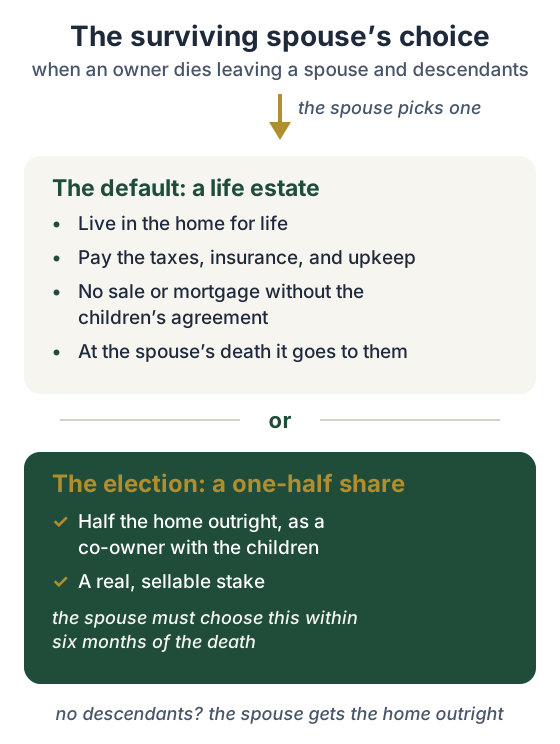
When the owner is survived by a spouse and descendants, the spouse picks between two options.
- A life estate. Live in the home for life, but pay the taxes, insurance, and upkeep, and you cannot sell or mortgage it without the children’s agreement. At your death it goes to them.
- A one-half ownership share. Take half the home outright as a co-owner with the children, a real, sellable stake. The spouse must choose this within six months of the death.
The half-share option often wins when the spouse cannot carry the costs alone, wants to be able to sell, or does not get along with the remaindermen. Because of the deadline, it is a decision to make promptly. If there is a spouse but no descendants, the spouse simply gets the home outright.
Lost a spouse, or planning so your spouse is protected?
Book a No-Cost Phone Consult with Attorney Kevin D. Klagge, Esq. We will explain your options, the election deadline, and how to plan around all of it.
Book a no-cost consultIf the Surviving Spouse Elects the Half Interest, Is Probate Needed?
A common question I hear is, “If I elect the half interest, do I still need probate?” The election itself is not a court filing. Florida law makes it by a signed notice of election, carrying the legal description of the home, recorded in the official records of the county where the home sits within 6 months of the death, and once recorded the election cannot be undone. No judge approves it unless the spouse’s attorney-in-fact or guardian is the one making it, and then a petition has to be filed inside the same 6 months.
What the family usually still needs is an order determining that the property was protected homestead, and that order comes from a probate judge in a focused proceeding rather than a full administration of the house. The homestead never becomes an estate asset, which is the upside. It passes outside the probate estate and is shielded from the deceased owner’s creditors, even if the estate has more debts than assets, so the home flows to the spouse and family rather than being sold to pay bills. We handle that determination for families, and it is far simpler than probating the house.
How to Avoid the Whole Tangle
Plan ahead and none of this has to happen. Married couples often hold the home as tenants by the entirety, so it passes automatically to the survivor with full ownership, no life estate, no election. A lady bird deed can pass the home cleanly when used within the rules, and a valid spousal waiver lets couples, especially in blended families, agree on a different outcome in advance. The fix is almost always easier than the cleanup.
Frequently Asked Questions
What Does a Surviving Spouse Get From a Florida Homestead?
It depends on who else survives. If the owner leaves a spouse and descendants (children, grandchildren), the spouse automatically receives a life estate in the home, the right to live there for life, with the remainder passing to the descendants. Or, within a set window, the spouse can choose instead to take a one-half ownership share outright, with the descendants taking the other half. If the owner leaves a spouse and no descendants, the spouse gets the home outright. These defaults apply whenever the home was not validly left to the spouse. A will can leave the homestead outright to the spouse (if there is no minor child), but it cannot leave the home away from the spouse.
What Is the "Life Estate or Half Interest" Choice?
When an owner dies survived by a spouse and descendants, Florida gives the spouse two options. Option one (the default) is a life estate, so the spouse can live in the home for the rest of their life, but is responsible for the taxes, insurance, and upkeep, and cannot sell it without the descendants’ agreement. Option two is to elect a one-half undivided ownership share as a tenant in common with the descendants, which the spouse can do within six months of the death. The half-interest option often makes sense if the spouse cannot afford the upkeep or wants the ability to sell.
Can a Will Override a Surviving Spouse’s Homestead Rights?
No. This surprises people constantly. If you are survived by a spouse or a minor child, you cannot freely leave your Florida homestead in your will, and a will that tries to is simply ignored as to the home. The spouse’s rights, the life estate or the half-interest election, control regardless. Three moves get around the default. Leave the home outright to your spouse in the will or trust (valid when there is no minor child), get a valid spousal waiver signed in advance, or hold title in a way (like tenancy by the entirety) that passes the home automatically.
Does the Home Go Through Probate?
Generally the homestead passes outside the probate estate and is protected from the deceased owner’s creditors, even if the estate is insolvent. That is a powerful benefit, because the home flows to the spouse and family rather than being sold to pay debts. But the transfer still has to be confirmed, often through a court order determining that the property was protected homestead, which is a focused proceeding, not a full probate. We handle that determination for families.
Why Would a Spouse Choose the Half Interest Over the Life Estate?
A life estate sounds generous, but it comes with burdens. The spouse pays the taxes, insurance, and maintenance, cannot sell or mortgage without the remaindermen, and the home eventually goes to them. Electing a one-half ownership share instead gives the spouse a real, sellable stake, which can be the better choice if the spouse wants to downsize, cannot carry the costs alone, or does not get along with the remaindermen. The election has a deadline, so it is a decision to make promptly with advice.
How Do I Avoid This Whole Situation?
Planning ahead. Married couples often hold the home as tenants by the entirety, so it passes automatically to the survivor with full ownership, no life estate, no election, no court determination. A lady bird deed can also pass the home cleanly when used within the spouse and minor-child rules. And a valid spousal waiver lets couples, especially in blended families, agree in advance on a different outcome. We sort out the right approach at the consult.
Common Situations
The second marriage. A husband leaves everything to his second wife, but he has adult children from his first marriage. Because they are his descendants, his wife takes a life estate (or elects half), and the children get the remainder, regardless of the will. Knowing this in advance, the couple could have signed a waiver or held title differently.
The spouse who couldn’t afford to stay. A widow inherits a life estate but cannot cover the taxes and upkeep on her own. Within the six-month window, she elects the one-half ownership share so she can sell and downsize.
The estranged spouse. A husband and wife separated years ago but never filed for divorce. His will leaves the home to the brother who cared for him at the end. Under Florida law, only a divorce ends spousal rights, so his wife is still his surviving spouse. The gift of the home fails, and she takes a life estate or elects the half interest. The fix was available in advance; a divorce, or a signed waiver of spousal rights, would have let the home pass as he intended.
Sources of Law
- Fla. Const. Art. X §4(c) (homestead devise/descent). Fla. Stat. §732.401 (surviving spouse takes a life estate with remainder to descendants per stirpes, or elects an undivided one-half tenancy-in-common interest under §732.401(2)); §732.4015 (devise restriction). Foundational case: Lorraine v. Grover, Ciment, 467 So. 2d 315 (Fla. 3d DCA 1985). flsenate.gov (retrieved 2026-06-08)
- The election mechanics: §732.401(2)(b) (within 6 months of the death and during the spouse’s lifetime; no extension except under paragraph (c)), (2)(c) (a petition by the spouse’s attorney in fact or guardian, itself filed within the 6 months, extends the time at least 30 days after the order), (2)(d) (irrevocable once made), (2)(e) (made by a recorded notice of election with the legal description). The election option was added effective October 1, 2010, ch. 2010-132. Case: Samad v. Pla, 267 So. 3d 476 (Fla. 2d DCA 2019) (a trial court may not extend the 6 months for excusable neglect under the probate rules, because the deadline is the statute’s). Read in full from the official opinion text (retrieved 2026-09-03).
What a Missed Six-Month Election Cost One Widow
I see this most often in second marriages, where the first-marriage children and the surviving spouse both have a claim. The house is the one asset both sides can see, Florida splits it between them, and the split carries a deadline that nobody mentions at the funeral.
Cases with this shape keep coming up, and it is usually a widow who learns about the 6-month election after the 6 months have run. In one case I have reviewed, decided by a Florida appellate court in 2019, a husband in Lee County died owning the home, leaving a wife and descendants who took the remainder. By default she held a life estate. About seven and a half months after his death she asked the probate court for more time to elect the one-half share instead, saying her delay was excusable, and the trial judge agreed and treated her election as timely. Another party to the estate objected and appealed, representing himself, and the appellate court reversed. The probate rule that allows a judge to extend a deadline for excusable neglect covers deadlines set by the rules or by a court order, and this deadline is set by the statute. The only extension the statute allows belongs to a guardian or attorney in fact who files a petition inside the 6 months, and she had filed nothing in that window. She was left with the life estate, which means the right to live in the house for life while paying the taxes, insurance and upkeep, with no power to sell it on her own, and the remainder in the descendants.
In reading that opinion against the statute, I have a few take-home points.
The first is the calendar, and it is the one I check before anything else when a married owner dies with children from an earlier marriage. The 6 months runs from the date of death, and the election is a one-page notice signed by the spouse and recorded in the county records, which means it can be done in a week. The practice pointer is to decide the election in the first 90 days, with the numbers in front of the spouse, because the trial court that gave the widow six extra weeks was reversed, and a spouse who waits past the 6 months has no court to ask.
Second, the election is a choice between two different lives in the same house, and it cannot be taken back. A life estate is a home for life with every bill attached, and it ends with the spouse. The half share is a sellable interest that outlives the spouse and passes under the spouse’s own will. The practice pointer is to run the arithmetic before signing anything, the taxes, insurance and repairs the spouse would carry alone against one half of what the house would bring on the market, because the statute makes the recorded election irrevocable and the default cannot be recovered afterward.
Third, the owner decides this in life, and most owners never know they are deciding it. An owner who wants the spouse to have the whole house can say so, by a will leaving the homestead to the spouse where there is no minor child, or by a deed placing the home in both names as tenants by the entirety, which passes the whole house to the survivor with no election, no deadline and no order. An owner who wants the children to keep a stake can leave the default alone and tell the spouse what it means. The practice pointer is that the split in the statute is the answer only for the owner who has not chosen, and I ask every married owner with children from a first marriage which of the three outcomes they actually intend. Avoid treating the 6 months as a guideline, because the court that extended it was reversed, and the widow who relied on that extension kept only the life estate. The deed that would have kept her out of court entirely, putting the home in both names as tenants by the entirety, is a flat fee from $399 plus recording, and on her side of the case the same result was available for the cost of recording a one-page notice inside the 6 months.
The opinion does not say what the house was worth or what the widow did next, and no Florida court has read an exception into the 6 months, so nobody can promise that one will.
Kevin D. Klagge, Esq., admitted in Florida since 2012. Each case described above is a decision of a Florida court rather than a matter handled by this firm. Past results do not guarantee a similar outcome.
Updated on September 3, 2026. Reviewed by Kevin D. Klagge, Esq., Fla. Bar No. 99502. General information about Florida law, not legal advice, and no attorney-client relationship is created. Outcomes and deadlines depend on your facts. Do not send confidential information until we have agreed to represent you.
More Guides on Florida Homestead Law
- Can You Leave Your Florida Home to Anyone in a Will?
- Florida Homestead Exemption for Non-US Citizens
- Florida Spousal Waiver of Homestead Rights
- Florida Save Our Homes Cap, and What Resets It
- Florida Save Our Homes Savings by County (Dataset)
- What Is Homestead Property in Florida?
- How Much Does Homestead Exemption Save in Florida?
- How to File for Homestead Exemption in Florida
Try the Which Estate Plan Do I Need? (quiz).