The Short Version
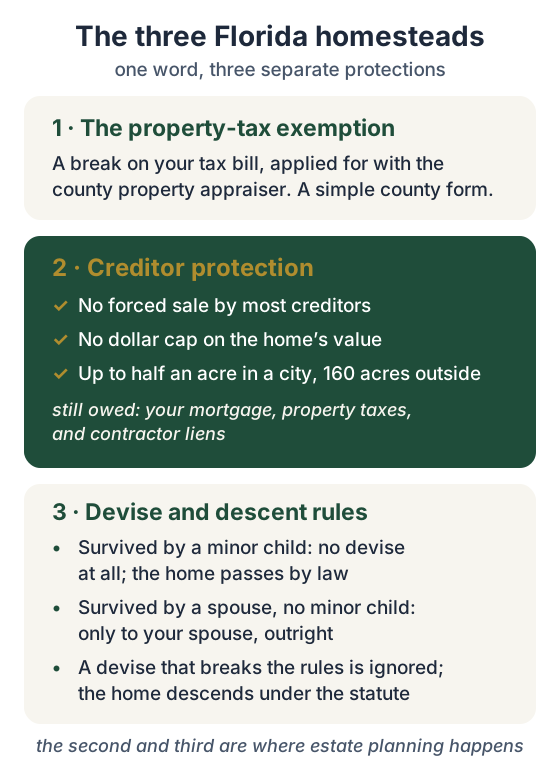
Florida’s constitution protects your primary residence from forced sale by most creditors, with no dollar cap. Most states protect only a slice of your home equity; Florida protects the whole thing (within generous size limits). If a creditor wins a money judgment against you, a lawsuit, a credit card, a medical bill, a business debt, they generally cannot take your home. It is automatic for a qualifying primary residence, and it is one of the strongest asset protections in the country. Nothing has to be filed to get it, which is what separates it from the county property-tax exemption, where a March 1 application decides whether you get the break at all.
What Can Still Reach Your Home (the Exceptions)
The protection covers most creditors, but not debts tied to the property itself.
- Your mortgage.
- Property taxes.
- Construction or mechanic’s liens (a contractor you did not pay for work on the home).
- A federal (IRS) tax lien is also not defeated by the exemption.
And it protects only a primary residence, not a rental, second home, or investment property. For everyday creditors, though, the home is safe.
Worried a lawsuit could reach your home?
Book a No-Cost Phone Consult with Attorney Kevin D. Klagge, Esq. We will confirm your protection and build the rest of your asset-protection plan around it.
Book a no-cost consultThe Size Limit, and the Bankruptcy Wrinkle
The protection covers up to half an acre in a city or 160 acres outside one, with no dollar limit on value inside those bounds, so a multimillion-dollar home on a city lot is fully protected. There is one federal wrinkle. In bankruptcy, the exemption is capped (currently $214,000) for a home you acquired within roughly the last three years and four months. Own your homestead longer than that, and the unlimited state protection generally applies even in bankruptcy. Timing matters.
Does Florida Homestead Protect 160 Acres From a Lawsuit?
Yes, up to 160 contiguous acres when the land sits outside a municipality, and a judgment creditor cannot force the sale of any of it. Inside a city the protected area is half an acre of contiguous land, and there the exemption reaches the residence of the owner or the owner’s family. Neither limit carries a dollar cap, so a working ranch and a waterfront house can both be protected in full.
One clause in the constitution matters if you own acreage near a growing town. The 160 acres cannot be reduced without the owner’s consent because the land is later taken into a municipality. Annexation by itself therefore does not shrink a protected homestead to half an acre. Acreage beyond the stated limit is the real exposure, because the protection runs to that extent and no further, which is a question about the surplus land rather than about the house you live in.
How You Can Lose It
The protection rewards a genuine primary residence held over time. Rent the home out or move your permanent residence elsewhere, and it can lose homestead status, and the creditor protection with it. Florida courts have protected even last-minute moves of cash into the home, but bankruptcy law can claw that value back with a 10-year look-back, and money obtained by fraud can support a lien against the house. Real protection comes from planning early, not from a last-minute move. Titling the home in a company ends the protection too, because the constitution shields only a homestead owned by a natural person, and Florida’s Second District refused it in 2018 to a woman living in a house her own corporation owned, as we explain in does an LLC get homestead protection in Florida.
Frequently Asked Questions
Is My Home Protected From Creditors in Florida?
Yes, and unusually well. Florida’s constitution protects your primary residence from forced sale by most creditors, with no dollar cap, unlike most states that protect only a limited amount of equity. A creditor who wins a money judgment against you generally cannot take your home to satisfy it. This protection is one of the main reasons Florida is considered among the most debtor-friendly states, and it is automatic for a qualifying primary residence; you do not have to file anything for the creditor protection (that is separate from the property-tax exemption).
What Are the Exceptions? What Can Still Take My Home?
The protection covers most creditors but not debts tied to the property itself. The three main exceptions are your mortgage, property taxes, and construction or mechanic’s liens (a contractor you did not pay for work on the home). Those can still force a sale. The exemption also does not defeat a federal tax lien from the IRS. And it protects only a primary residence, not a rental, second home, or investment property. For ordinary creditors, lawsuit judgments, credit cards, medical debt, business debts, the home is generally safe.
Is There a Size Limit on the Florida Homestead Exemption?
Yes, but it is generous. The creditor protection covers up to one-half acre within a municipality, or up to 160 acres outside a municipality. There is no dollar limit on the value within those size limits, a multimillion-dollar home on a half-acre in the city is fully protected. The size caps mainly matter for large rural properties, where acreage beyond 160 acres may not be protected.
Does the Protection Survive in Bankruptcy?
Largely, but federal bankruptcy law adds one wrinkle. Federal law caps the homestead exemption ($214,000 for cases filed through early 2028, adjusted every three years) for a home acquired within roughly 1,215 days, about three years and four months, before filing bankruptcy. If you have owned your Florida homestead longer than that, the unlimited state protection generally applies even in bankruptcy. This is a key reason timing and planning matter, and why moving assets into a home right before filing can backfire.
Can I Lose My Homestead Protection?
Yes, mainly by no longer using the property as your primary residence. If you rent it out, move away, or establish your permanent home elsewhere, the property can lose its homestead status, and with it the creditor protection. Florida courts have protected even last-minute conversions of cash into homestead equity, but federal bankruptcy law can claw that converted value back (a 10-year look-back), and money that was itself obtained by fraud can support a lien against the home. The protection rewards a genuine primary residence held over time, not a last-minute shield.
Does Homestead Protection Continue After I Die?
Yes. The homestead’s protection from the deceased owner’s creditors generally continues as it passes to a surviving spouse or heirs, so the home flows to the family rather than being sold to pay the estate’s debts, even if the estate is insolvent. That makes it one of the most valuable assets to plan around. The catch is the separate devise restriction. Who you can leave it to is limited if you have a spouse or minor child, which we plan for alongside the creditor side.
Can Creditors Take a House With a Lady Bird Deed?
A lady bird deed neither adds nor removes creditor protection while the owner is alive, because the owner keeps full ownership. A Florida homestead is protected from most creditors by the Florida Constitution, and that protection comes from the homestead itself rather than from the deed. A creditor’s judgment lien still attaches to the home and has to be cleared before a sale. A judgment against the owner that is never enforced during life generally does not follow the home to the beneficiaries after the owner dies.
Common Situations
The lawsuit judgment. A retiree loses a car-accident lawsuit for more than his insurance covers. The plaintiff cannot force the sale of his Florida home to collect; his homestead is protected.
The unpaid contractor. A homeowner refuses to pay a roofer for completed work. That contractor, unlike an ordinary creditor, can place a mechanic’s lien and pursue the home, because the debt is tied to the property.
Sources of Law
- Fla. Const. Art. X §4(a)-(b) (homestead exemption from forced sale; size limits of ½ acre municipal and 160 acres non-municipal; exceptions for taxes, obligations on the property, and improvements). Bankruptcy cap: 11 U.S.C. §522(p) ($214,000 effective April 1, 2025, adjusted every three years, for homesteads acquired within 1,215 days). (retrieved 2026-06-10)
- Intent is the element that decides it: Matter of Cooke, 412 So. 2d 340, 341-43 (Fla. 1982) (certified question from the former Fifth Circuit; a Canadian citizen in Florida as a tourist claimed a Fort Myers residence under art. X, §4; "although it is not necessary that the head of the family reside in the state or intend to make the property in question his permanent residence, he must establish that he intended to make this property his family’s permanent residence"; the exemption failed because he could not legally formulate that intent), reproducing art. X, §4(a)(1) including the clause that the 160 acres "shall not be reduced without the owner’s consent by reason of subsequent inclusion in a municipality"; In re Mendoza, 597 B.R. 686, 692-93 (Bankr. S.D. Fla. 2019) (declining to require a green card to establish a permanent intention, while agreeing that an immigrant living here illegally or "under a temporary visa, such as a tourist or business visa with an expiration date" cannot form it). (Opinions read 2026-09-08.)
What I Have Learned About the Homestead Shield
In 14 years of law practice, the creditors who go after a Florida home are usually the ones who never read the constitution before they filed. The second group is smaller and more dangerous, and it is made up of the ones who read it carefully and found the sentence that lets them in anyway.
The protection is not a filing and it is not a form, which is the first thing I explain, because owners arrive expecting to sign something. Florida’s shield attaches to the relationship between an owner and a house rather than to the house itself, and that is why two neighbors on identical lots can get different answers.
In one case I have reviewed, a Canadian realtor who owned a house in Fort Myers filed for bankruptcy in 1979 and claimed that house as his homestead. He owned it, he was living in it, and none of that was in dispute. The trustee refused the claim, he objected, and the question travelled far enough that a federal appeals court stopped and asked the Florida Supreme Court to answer one thing, which was whether a foreign visitor could put a Florida residence beyond the reach of his creditors. The answer came back in 1982, and it was no. What decided it was nothing he had done with the house. He had entered the country as a tourist without a permanent visa, so on the court’s reasoning he had no legal power to intend to stay, and an owner who cannot form that intention cannot claim the shield. His creditors reached the house.
A common question I hear is, “Do I have to file something to protect my house?” The answer is no, and I still ask to see the deed, the date of purchase and where the mail goes, because the protection rests on facts that a creditor’s lawyer will test years later when nobody remembers them clearly.
Practice pointer. Before I tell an owner the home is safe, I check when it was bought. A house acquired within roughly three years and four months of a bankruptcy filing is capped at $214,000 in that bankruptcy, whatever the Florida constitution says about having no dollar limit, and the owners most confident about unlimited protection are often the ones who bought recently.
Avoid reading a homestead decision about the property tax exemption as though it settled the creditor question. Florida uses one word for three different protections sitting in two different articles of its constitution, and a case about the break on your tax bill decides nothing about whether a judgment can force a sale.
An honest limit belongs here. A federal bankruptcy court in Florida has since declined to make a green card the test, reasoning that someone residing here indefinitely while an application is pending stands in a different position from someone holding a visa with an expiration date on its face. So the 1982 answer is not the whole answer now, and where an owner’s status sits between those two positions I say the true thing, which is that the result turns on facts no court has yet weighed in that exact combination.
Kevin D. Klagge, Esq., admitted in Florida since 2012. General information rather than advice on your situation.
Updated on September 8, 2026. Reviewed by Kevin D. Klagge, Esq., Fla. Bar No. 99502. General information about Florida law, not legal advice, and no attorney-client relationship is created. Homestead protection depends on your facts and timing; no result is guaranteed. Do not send confidential information until we have agreed to represent you.
More Guides on Florida Homestead Law
This guide is part of Florida Homestead Law.
- Florida Homestead & the Surviving Spouse (After Death)
- Can You Leave Your Florida Home to Anyone in a Will?
- Florida Homestead Exemption for Non-US Citizens
- Florida Spousal Waiver of Homestead Rights
- Florida Save Our Homes Cap, and What Resets It
- Florida Save Our Homes Savings by County (Dataset)
- What Is Homestead Property in Florida?
- How Much Does Homestead Exemption Save in Florida?
Try the Which Estate Plan Do I Need? (quiz).