The Short Answer
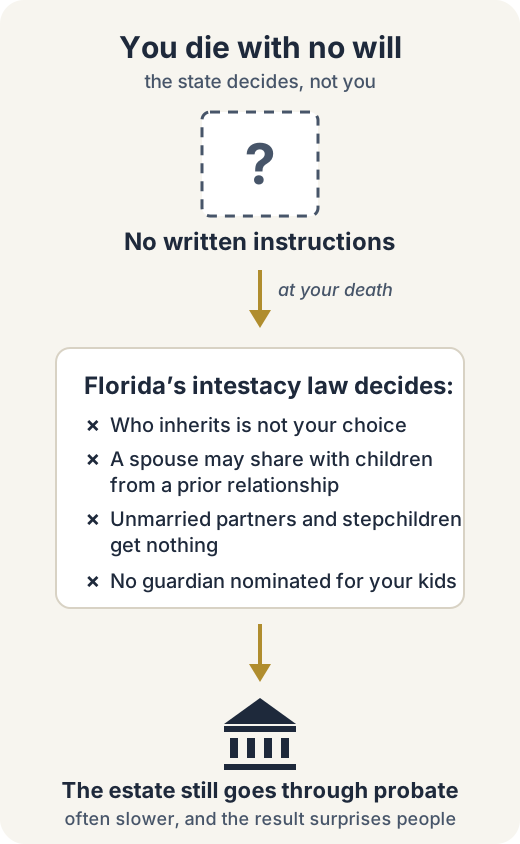
When you die with no last will and testament, Florida’s intestate succession law decides who inherits, in a fixed order that starts with your spouse and children and works outward to parents, siblings, and beyond. It is a rigid formula, and it ignores everyone you did not happen to be related to by blood or marriage, including unmarried partners, stepchildren, close friends, and charities. One reassurance up front is that "no will" does not mean the state takes your money. The state inherits only in the rare case where no living relative can be found.
Who Gets What
Florida pays out in a fixed order, and your spouse comes first. With no descendants, or when every child is a child of you both (and your spouse has no children from anyone else), your spouse inherits everything. The moment there is a child from another relationship, on either side, your spouse takes half and your descendants split the other half. With no spouse, your descendants inherit by representation, children first, with a deceased child’s share passing down to that child’s own children. From there the law works outward to your parents, then your brothers and sisters and their descendants, then grandparents and their descendants (aunts, uncles, cousins). The State of Florida inherits only if no living relative can be found at all.
The Florida Intestate Succession Chart
People go looking for a Florida intestacy chart, or a flowchart, because the order is easier to see than to read. Here it is, every survivor scenario in one place.
| Who survives you | Who inherits, and how much |
|---|---|
| Spouse only (no descendants) | Spouse gets everything |
| Spouse + children, all of both of you (and spouse has no others) | Spouse gets everything |
| Spouse + a child of yours from another relationship | Spouse gets 1/2, your descendants split 1/2 |
| Spouse + shared children, but the spouse also has a child from another relationship | Spouse gets 1/2, your descendants split 1/2 |
| Descendants, no spouse | Descendants take everything, by representation (per stirpes) |
| No spouse or descendants, a parent living | Your parents |
| No spouse, descendants, or parents | Your brothers and sisters, and the descendants of any who died before you |
| None of the above | Grandparents, then their descendants (aunts, uncles, cousins) |
| No living relatives at all | The State of Florida (escheat), which is genuinely rare |
"By representation" (per stirpes) means a deceased child’s share passes to that child’s own children. The chart covers only the probate estate, and the home follows its own homestead rules (see The Home Is Different below).
To see the chart applied to your own family, run the Florida intestacy calculator. A few questions, and it shows who inherits your estate and in what shares.
What Happens if a Parent Dies Without a Will in Florida?
Florida’s intestacy law decides who inherits, and the children’s share turns on whether the surviving spouse is the other parent of every child. With no surviving spouse, the children share the entire probate estate equally, and a child who died earlier passes that share to his or her own children.
When the parent leaves a spouse, there are two outcomes. If the spouse is the parent of all the children and has no children from anyone else, the spouse inherits the entire probate estate and the children receive nothing from it at that first death. If either parent has a child from another relationship, the spouse takes half and the children split the other half. An adopted child counts exactly like a biological child, and a stepchild the parent never adopted is not an heir at all.
A probate case is still needed for anything in the parent’s sole name. With no will, the surviving spouse has first priority to serve as personal representative, then the person chosen by a majority of the heirs, then the heir nearest in relationship, and a son or daughter who lives in another state can serve because a child is a close relative. An estate of $150,000 or less, not counting the protected homestead, can use the faster summary administration, flat fee from $2,500, and formal administration starts at $3,500. Our page on what to do when a parent dies in Florida covers the first weeks.
The family home follows its own rules. With a surviving spouse, the spouse receives a life estate with the remainder to the children, or can elect a half interest within six months. With no surviving spouse, the children take the homestead equally, and a court order confirming its homestead status is usually needed before a title company will insure a sale.
Practice pointer. The share of a child who died before the parent goes to that child’s own children, who are often minors, and an inheritance that passes outright to a minor is usually managed under court supervision until the child comes of age. Families in that position should raise it at the start of the case.
The Blended-Family Trap
This is where intestacy hurts the most. A couple assumes that if one of them dies, the survivor gets everything. That is true only if every child is the child of both spouses. The moment there is a child from a prior relationship, on either side, the surviving spouse gets just half, and the children split the rest. A husband who meant to leave everything to his wife can instead leave her sharing the estate with his adult kids from a first marriage, often the exact outcome he wanted to avoid. A simple will fixes it. See who would inherit your estate →
The Home Is Different
Your Florida homestead does not follow the chart above; it has its own rules. If you leave a spouse and descendants, your spouse usually gets a life estate (the right to live there for life) with the remainder to your descendants, or can elect a half interest instead. And if you have a spouse or a minor child, the homestead cannot be freely left away from them at all. Because the home is most families’ biggest asset, it deserves its own plan, often a lady bird deed, regardless of what your will says. Our guide to Florida homestead and the surviving spouse walks through exactly what a widow or widower receives.
What Intestacy Does Not Touch
Intestate succession controls only your probate estate, assets in your name alone with no other instruction. Anything that already says where it goes passes outside it, including life insurance and retirement accounts with named beneficiaries, pay-on-death accounts, property in a trust, jointly owned property with survivorship, and a home that passed by a lady bird deed. So part of your estate can follow your beneficiary designations while the rest follows the state’s formula, which is exactly the kind of mismatch a real plan prevents.
Don’t let the state write your will for you.
Book a No-Cost Phone Consult with Attorney Kevin D. Klagge, Esq. We will make sure your estate goes where you want, your spouse is protected, and you choose who raises your kids.
Book a no-cost consultOne consequence of the formula is worth naming, because it causes more litigation than any other. When several children inherit a house in equal shares, they own it as tenants in common, and any one of them can later force the issue through a partition action. Since 2020 the siblings who want to keep the property can buy out the one who wants a sale, at a price the court sets, but the window to elect that runs 45 days.
The Fix Is Simpler Than You Think
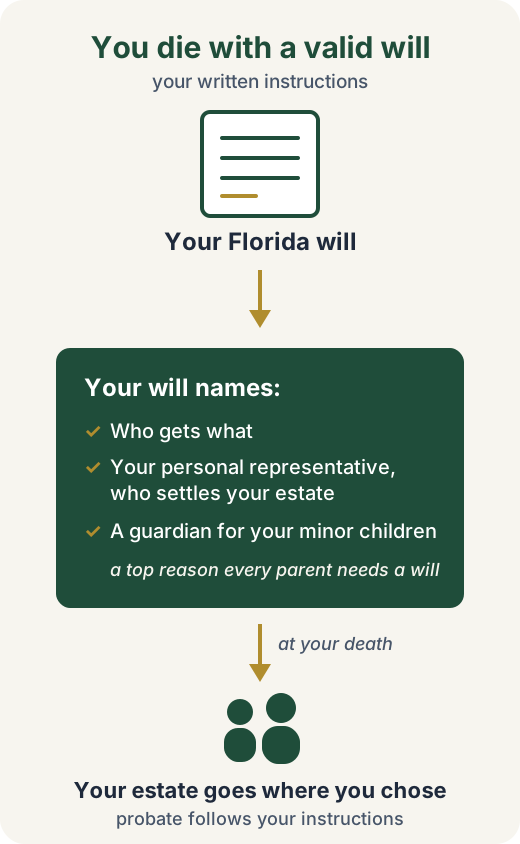
A will lets you decide who inherits, name who is in charge, and (for parents) nominate a guardian for your minor children, which intestacy can never do. A will-based plan starts at $1,200, and for many families a lady bird deed on the home and beneficiary designations do much of the rest. It is far cheaper than the delay and conflict intestacy can cause. Be aware that a handwritten will without witnesses does not count in Florida, so writing something yourself can leave you right back in the state’s formula. See what probate costs →
Frequently Asked Questions
What Happens if You Die Without a Will in Florida?
When you leave no last will and testament, Florida’s intestate succession law writes one for you. It sets a fixed order of who inherits, starting with your spouse and children, then parents, then siblings, and outward from there. The catch is that this state-written plan may not match what you actually wanted, and it ignores friends, unmarried partners, stepchildren, and charities entirely. "No will" does not mean the state takes your money; the state inherits only if you truly have no living relatives at all.
Who Inherits if I’m Married With Children?
It depends on whose children they are, which surprises people. If all of your children are also your spouse’s children, and your spouse has no children from anyone else, your spouse inherits everything. But if you have a child from another relationship, or your spouse does, then your spouse gets half and your descendants split the other half. This is why blended families are the most at risk under intestacy. The default split is often the opposite of what the couple intended.
Who Inherits if I’m Single or Have No Children?
Florida follows a set order. With no spouse, your descendants inherit (children, then grandchildren, and so on, by representation). With no descendants, it goes to your parents; then to your brothers and sisters and their descendants; then to grandparents and their descendants (aunts, uncles, cousins). Only if no living relative can be found does the estate pass to the State of Florida, which is rare.
What Happens to My House if I Have No Will?
Your Florida homestead follows its own special rules, separate from the rest of your estate. If you are survived by a spouse and descendants, the spouse typically receives a life estate (the right to live there for life) with the remainder to your descendants, or the spouse can elect to take a half interest instead. And if you have a spouse or a minor child, the homestead cannot be freely left away from them at all. These rules override a will, so the home is worth planning for specifically.
Does Intestate Succession Cover Everything I Own?
No, and this is important. Intestacy controls only your "probate estate," the assets in your name alone with no other instruction. It does not touch assets that already say where they go, such as life insurance and retirement accounts with named beneficiaries, pay-on-death bank accounts, property in a trust, jointly owned property with survivorship, or a home that passed by a lady bird deed. Those pass outside intestacy regardless of whether you had a will.
Who Raises My Minor Children if I Die Without a Will?
A court decides. Without a will, you have not nominated a guardian for your minor children, so a judge chooses who raises them, possibly after a family dispute, and possibly not the person you would have picked. Naming a guardian is the reason young parents most often have a will, and it is something intestacy simply cannot do for you.
Is Dying Without a Will Cheaper or Easier?
No, usually the opposite. Your estate still goes through probate either way, and without a will there is often more delay, more cost, and more room for family conflict, because the law’s rigid formula may not fit your family and there is no one you chose to lead. A will (and often a trust or a lady bird deed) gives you control, names who is in charge, and can make the whole process faster and cheaper for the people you leave behind.
Is There a Florida Intestate Succession Chart or Flowchart?
Yes, and there is one on this page. The chart above lays out every survivor scenario side by side, from spouse takes all, through the half-and-half split that catches blended families, down to the rare case where the State of Florida inherits. If you would rather have it worked out for your own family than read a flowchart, the Florida intestacy calculator asks a few questions and shows who inherits and in what shares. Two cautions go with any chart. It covers only the probate estate, and the homestead follows its own separate rules.
Who Is "Next of Kin" Under Florida Law?
Next of kin means your closest living relatives, the people who inherit when you die without a will. Florida’s order generally runs from spouse, to children and other descendants, then parents, then siblings, and outward from there. It is not always who you would expect, an unmarried partner, a stepchild you never adopted, or a close friend is not next of kin and inherits nothing under the statute, no matter how close you were. Naming your own beneficiaries in a will or estate plan overrides this default entirely.
What Happens if a Spouse Dies Without a Will in Florida?
The surviving spouse inherits the entire probate estate when the deceased spouse left no descendants, or when every descendant is also the survivor’s and the survivor has no children from anyone else. In a blended family the survivor takes half and the deceased spouse’s descendants take the other half. A home owned as tenants by the entirety passes to the survivor outside probate, while a homestead in the deceased spouse’s name gives the survivor a life estate with the remainder to the descendants, or a half interest if the survivor elects it within six months. The surviving spouse also has first priority to serve as personal representative.
What Does Die Intestate Mean?
To die intestate means to die without a valid will. Florida’s intestate succession law then decides who inherits the probate estate, starting with the spouse and descendants, then parents, then brothers and sisters and their descendants. Assets with a named beneficiary, survivorship rights or a trust still pass outside intestacy. A person can also die partially intestate when a will fails to dispose of everything, and the leftover property follows the same statutory order.
Common Situations
The second marriage. A man remarries and assumes his wife will inherit everything if he dies. He has two adult children from his first marriage, so under intestacy his wife gets half and his children split the other half. A one-page will would have given his wife what he intended.
The unmarried partner. A couple lived together for fifteen years but never married. When one died without a will, the survivor inherited nothing under intestacy, and the estate went to a sibling the deceased was not close to. Intestacy does not recognize partners.
The young parents. A married couple with two small children die in an accident with no will. A court has to decide who raises the children and who manages their money, with no guidance from the parents. A will naming a guardian and a trust for the kids would have spared everyone.
The share that skipped a generation. A Lakeland widow died without a will, survived by her daughter and by two young grandchildren whose father, her son, had died the year before. The daughter assumed that as the only living child she inherited everything. Florida’s formula says otherwise. The son’s half passed straight down to his children by representation. That put a meaningful inheritance in the hands of minors, with a court, not the family, overseeing how it is managed until they come of age. A will or a trust would have let her choose who holds each share, and until what age.
Sources of Law
- Fla. Stat. §§732.101 to 732.111: intestate succession (the share of the spouse and the order of heirs). flsenate.gov (retrieved 2026-06-08)
- Fla. Stat. §732.104 (per stirpes); §732.108(1) (an adopted person is a descendant of the adopting parent); §733.301(1)(b) (order of preference for personal representative with no will); §733.304 (nonresident relatives who may serve); §735.201(2) (summary administration at $150,000 after July 1, 2026). Read from the 2026 Florida Statutes (retrieved 2026-10-01).
- Fla. Stat. §732.102 (spouse’s share) and §732.103 (heirs other than the spouse).
- Homestead descent: Fla. Const. Art. X, §4(c) and Fla. Stat. §732.401. Non-probate transfers (beneficiary, POD, trust, survivorship) pass outside intestacy.
Updated on October 1, 2026. Reviewed by Kevin D. Klagge, Esq., Fla. Bar No. 99502. General information about Florida law, not legal advice, and no attorney-client relationship is created. How an estate passes depends on your specific facts. Do not send confidential information until we have agreed to represent you.