
The Short Answer
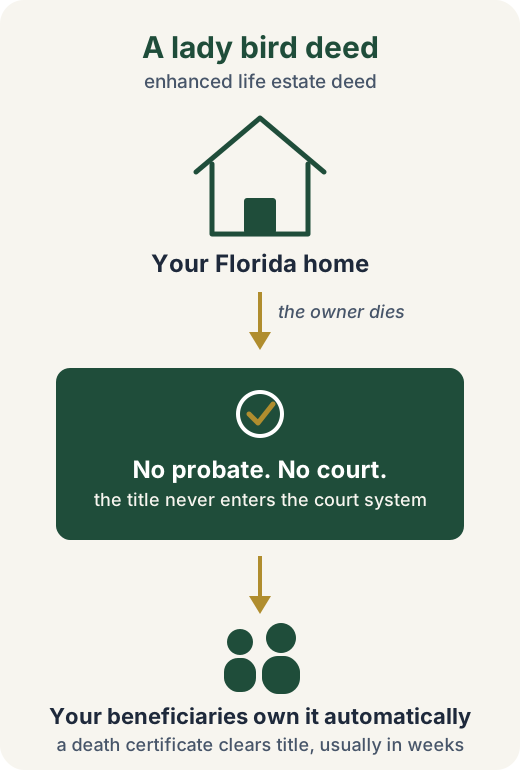
When the owner of a lady bird deed dies, the property passes to the remainder beneficiaries automatically, outside probate. You are already the owner. What is left is a short, paperwork-only step: clearing the public record so a title company can confirm the transfer and insure a future sale. It is not a court case, and it is not probate. It is usually a couple of recorded documents.
The Steps to Clear the Title
In the county where the property sits, you record:
- A certified copy of the owner’s death certificate.
- An affidavit (commonly a continuous-marriage or survivorship affidavit, and sometimes a no-lien affidavit) that states the facts a title company needs: that the owner has died, who the beneficiaries are, and that no claims attach to the property.
Once those are on record, the beneficiaries hold clean, insurable title and can sell or refinance. We prepare and record these documents for you, so when you go to closing later, nothing snags.
You Do Not Open Probate for the Home
Skipping probate on the house is the whole reason the lady bird deed exists, and it delivers at death. The only time probate still comes up is for other assets the person owned in their own name that the deed did not cover. For the home itself, the recorded death certificate and affidavits do the job that a probate would otherwise do, in a fraction of the time and cost. If you are wondering what else needs handling, see what to do when a parent dies in Florida.
Inherited a home through a lady bird deed?
Book a free 30-minute consult. We will clear the title for you, the right way, so you can sell or keep it without a hitch.
Book your free consultThe Tax and Medicaid Payoff
Because the home passed outside probate, it is beyond Florida Medicaid estate recovery, which only reaches the probate estate, and Florida has no estate or inheritance tax. You also get a stepped-up tax basis to the home’s value on the date of death, so if you sell soon after, you usually owe little or no capital-gains tax. This is the lady bird deed doing exactly what it was set up to do.
If a Beneficiary Died First
Check the deed’s wording. A well-drafted lady bird deed has contingent or "per stirpes" language so a deceased beneficiary’s share passes to the survivors or that person’s children. Without it, that share can fall back into probate, the one outcome the deed meant to avoid. We review the deed and tell you precisely how title now stands and whether anything needs cleaning up before you sell.
Frequently Asked Questions
What Happens to a Lady Bird Deed When the Owner Dies?
The property passes automatically to the remainder beneficiaries named in the deed, outside probate, the moment the owner (the life tenant) dies. The beneficiaries become the legal owners. But "automatic" does not mean "nothing to do": before they can sell or refinance, they have to clear up the public record so a title company can confirm the transfer and insure it. That clean-up is a short, paperwork-only process, not a probate.
Do I Have to Open Probate After a Lady Bird Deed?
No, not for the property the deed covers. Avoiding probate on the home is the entire point of a lady bird deed, and it works at death. The only time probate still comes up is for other assets the deceased owned in their own name that the deed did not cover. For the home itself, you clear the title with a few recorded documents instead of a court case.
How Do I Clear the Title After the Owner Dies?
Two main steps in the county where the property sits: record a certified copy of the owner’s death certificate, and record an affidavit (often a continuous-marriage or survivorship affidavit, and sometimes a no-lien affidavit) that confirms the facts a title company needs, such as the owner’s death, the identity of the beneficiaries, and that no claims attach. Once those are recorded, the beneficiaries hold clean, insurable title. We prepare and record these for you so a future sale goes smoothly.
Can I Sell the House Right Away?
Generally yes, once the title is cleared. After the death certificate and affidavits are recorded, the beneficiaries own the home and can list and sell it, and a title company can insure the sale. Doing the clean-up promptly matters, because trying to sell before the record is squared away causes delays at closing. If you plan to sell, it is worth handling the title work first.
What if One of the Beneficiaries Died Before the Owner?
It depends on the deed’s wording. A well-drafted lady bird deed includes contingent or "per stirpes" language so a deceased beneficiary’s share passes to the surviving beneficiaries or that person’s own children. Without it, that share can fall back into probate, the one scenario the deed was meant to avoid. We review the deed and tell you exactly how title now stands and what, if anything, needs to be cleaned up.
Does Medicaid or Estate Tax Take the Home After Death?
No, in the typical case. Because the home passed outside probate, it is beyond Florida Medicaid estate recovery, which only reaches the probate estate. And Florida has no estate or inheritance tax. The beneficiaries also receive a stepped-up tax basis to the home’s value on the date of death, which usually means little or no capital-gains tax if they sell soon after. These are the payoffs of the lady bird deed doing its job.
What Does It Cost to Have You Handle It?
We quote the title-clearing work at the consult, because it depends on the deed, the number of beneficiaries, and whether anything needs correcting, but it is a modest, paperwork-only matter, far less than a probate. The 30-minute consult is free, and we will tell you exactly what your situation needs and what it will cost before you commit.
Do I Keep My Parent’s Homestead Exemption and Low Taxes?
Only if you qualify on your own and apply on time. The homestead exemption and the Save Our Homes cap your parent had do not transfer with the home. If you move into the house as your permanent residence, apply for your own homestead exemption with the county property appraiser by March 1 of the year after you inherit. Do that and you get a fresh exemption and your own assessment cap going forward. Skip it, or use the home as a rental or second home, and the property is reassessed at full market value, which on a home that has been in the family a long time can mean a noticeably higher tax bill. It is the one post-death deadline worth putting on the calendar.
Common Situations
The quick sale. A daughter inherits her mother’s Naples home through a lady bird deed and wants to sell. We record the death certificate and a survivorship affidavit, the title company insures the sale, and she closes within weeks, no probate.
The title that was not cleared. A son tries to sell a home he inherited by lady bird deed but the closing stalls because the record was never updated after his father died. We record the missing documents and the sale proceeds.
The predeceased beneficiary. One of three named children had died before the parent. Because the deed used per-stirpes language, that child’s share passed to the grandchildren, and we cleared title to all of them without a probate.
The refinance in the chain of title. Two brothers bring their father’s lady bird deed and death certificate to a closing, and the title examiner finds a refinance recorded after the deed. Because the owner keeps full power over the property for life, a later conveyance can override the remainder, so the examiner has to confirm the deed was still in effect at his death. A review of the chain shows the refinance added a new mortgage but no superseding deed, so the transfer stands. The brothers take the home subject to the loan, pay it off from the sale proceeds, and close.
Sources of Law
- A lady bird (enhanced life estate) deed passes the property to the remainder beneficiaries at the life tenant’s death by operation of the recorded deed, outside probate (recognized by Florida common law and title-underwriting practice). (retrieved 2026-06-08)
- Fla. Stat. §409.9101: Medicaid estate recovery, limited to the probate estate. IRC §1014: step-up in basis at death. Florida has no state estate or inheritance tax.
Updated on July 12, 2026. Reviewed by Kevin D. Klagge, Esq., Fla. Bar No. 99502. Attorney Kevin Klagge represents families, businesses, and international clients in estate planning and international law, with a focus on Florida legal tools. He litigates estate and business issues in court. General information about Florida law, not legal advice, and no attorney-client relationship is created. Title requirements depend on your deed and the county. Do not send confidential information until we have agreed to represent you.