
The Short Answer
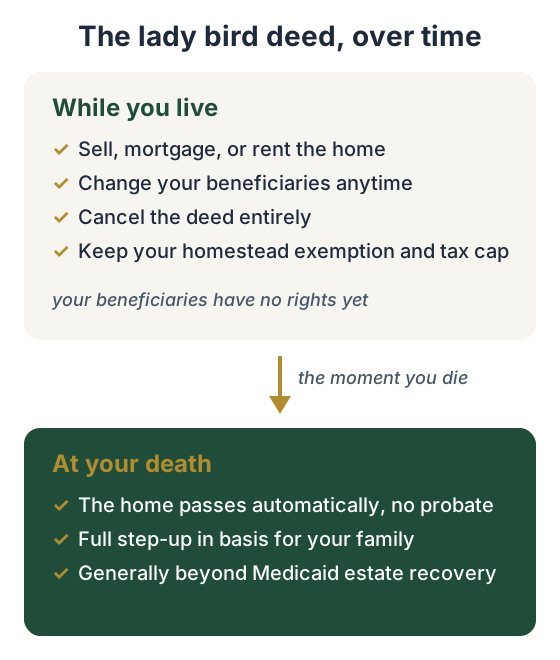
A lady bird deed is one of the most tax-friendly ways to pass a Florida home, precisely because it is not a completed gift while you are alive. That one fact avoids almost every tax trap that comes with deeding your home away outright. Your heirs get a full step-up in basis, you owe no gift tax, there is no documentary stamp tax beyond the minimum, and your homestead and Save Our Homes cap stay intact for life. Florida has no state income, estate, or inheritance tax, so only the federal rules matter, and they fall in your favor.
1. Step-Up in Basis (the Big One)
Because you keep control and make no completed gift, your home passes at death with a basis stepped up to its date-of-death value. Your heirs can sell shortly after for little or no capital-gains tax, even if you bought it decades ago for a fraction of today’s value. Deeding the home to your children outright instead gives them your old low basis and can cost them tens of thousands in capital-gains tax. More on the step-up →
2. No Gift Tax
Reserving the right to sell, mortgage, or revoke makes the transfer incomplete, so there is no gift while you are alive, nothing to report on a gift-tax return, and none of your lifetime exemption used. A plain deed to your kids, by contrast, is a completed gift the day you sign. See how gifts are taxed →
3. No Documentary Stamp Tax (Beyond the Minimum)
Florida’s documentary stamp tax is based on consideration, and a lady bird deed transfers nothing for no consideration during your life, so it typically owes only the nominal minimum (about $0.70), plus the usual recording fee. We check for a wrinkle if the home is mortgaged, but for most homeowners the deed is inexpensive to record. See the full cost →
4. Your Property Taxes Don’t Change
Recording a lady bird deed is not a change of ownership for property-tax purposes, so your homestead exemption and your Save Our Homes assessment cap stay exactly as they are while you live there. Reassessment only becomes a question after your death, when the home passes to your heirs, and whether they keep a cap depends on whether they qualify for the homestead exemption themselves.
Want the tax-friendly way to pass your home?
Book a free 30-minute consult. We will set up the deed correctly so every one of these benefits actually applies.
Book your free consult5. No Medicaid Transfer Penalty
One tax-adjacent benefit worth knowing: because nothing is transferred during life, a lady bird deed does not trigger Florida’s five-year Medicaid look-back the way a gift would. See how it protects the home for Medicaid →
Frequently Asked Questions
What Are the Tax Consequences of a Lady Bird Deed in Florida?
Almost all of them are good. Because a lady bird deed is not a completed gift while you are alive, it avoids the tax problems that come with deeding your home away outright. Your heirs get a full step-up in basis, so capital-gains tax is minimized; you owe no gift tax and use none of your lifetime exemption; there is no documentary stamp tax beyond the minimum; and your homestead exemption and Save Our Homes cap stay in place for the rest of your life. Florida also has no state income, estate, or inheritance tax, so the federal rules are all that apply.
Does a Lady Bird Deed Preserve the Step-Up in Basis?
Yes, and this is its biggest tax advantage. Because you keep full control and make no completed gift during life, your home passes at your death with a stepped-up basis equal to its fair-market value on the date you die. Your heirs can sell shortly after for little or no capital-gains tax, even if you bought the home decades ago for a fraction of its current value. Compare that to deeding the home to your children outright, which gives them your old low basis and can cost them tens of thousands in capital-gains tax.
Is a Lady Bird Deed a Gift for Tax Purposes?
No. Because you reserve the right to sell, mortgage, or revoke during your life, the law treats the transfer as incomplete, so there is no gift while you are alive and nothing to report on a gift-tax return. You do not use any of your lifetime gift and estate tax exemption, and there is no gift tax. This is a key difference from an ordinary deed to your children, which is a completed gift the day you sign it.
Do I Owe Documentary Stamp Tax on a Lady Bird Deed?
Generally only the minimum. Florida charges documentary stamp tax on deeds based on the consideration paid, and a lady bird deed transfers nothing during your life for no consideration, so it typically owes only the nominal minimum (about $0.70). Recording fees still apply (usually $18 to $30). There can be a wrinkle if the home is mortgaged, which we check, but for most homeowners the deed is inexpensive to record from a tax standpoint.
Will a Lady Bird Deed Raise My Property Taxes?
No, not during your life. Recording a lady bird deed does not count as a change of ownership for property-tax purposes, so your homestead exemption and your Save Our Homes assessment cap stay exactly as they are while you live there. The reassessment question only comes up after your death, when the home passes to your heirs, and whether they keep a homestead cap depends on whether they qualify for the exemption themselves. Your own taxes are untouched.
Are There Any Tax Downsides?
Very few. The main thing to understand is what happens after death: your heirs receive the home with a stepped-up basis (good), but they take on the property going forward, including property taxes at whatever assessment applies to them. There is no Medicaid transfer penalty, because no transfer occurred. For the owner, a lady bird deed is about as tax-clean as a probate-avoidance tool gets in Florida, which is a big part of why we use it so often.
Can My Heirs Keep My Low Save Our Homes Tax Bill?
Not automatically. The Save Our Homes cap that held your assessed value down belongs to you, not to the house, so it does not pass to whoever inherits. Neither does Save Our Homes portability, which a homeowner can carry to their next home but cannot hand to an heir. After your death, the beneficiary who lives in the home can apply for their own homestead exemption with the county property appraiser by March 1 of the following year and start a fresh cap from that point. If they do not qualify or miss the deadline, the home is reassessed at full market value. On a long-held, appreciated Florida home, that reset can be a real jump, so it is worth warning the family in advance.
Common Situations
The appreciated home. A widow bought her home for $60,000; it is worth $500,000. With a lady bird deed, her children inherit it at the stepped-up $500,000 basis and sell with almost no capital-gains tax. Deeding it to them now would have handed them a $440,000 taxable gain.
The "will my taxes go up?" worry. A retiree fears recording the deed will reset his Save Our Homes cap. It does not; his assessment and exemption stay put for life.
Sources of Law
- IRC §1014 (step-up in basis at death); the lady bird deed is an incomplete gift (no completed lifetime transfer). Fla. Stat. §201.02 (documentary stamp tax on consideration). Fla. Const. Art. VII §4/§6 (Save Our Homes assessment cap and homestead exemption). Florida has no state income, estate, or inheritance tax. (retrieved 2026-06-08)
Updated on July 11, 2026. Reviewed by Kevin D. Klagge, Esq., Fla. Bar No. 99502. Attorney Kevin Klagge represents families, businesses, and international clients in estate planning and international law, with a focus on Florida legal tools. He litigates estate and business issues in court. General information about federal and Florida tax law, not tax or legal advice, and no attorney-client relationship is created. Tax outcomes depend on your facts; consult a tax professional for your situation. Do not send confidential information until we have agreed to represent you.