
The Short Version
A lady bird deed works fine on a mortgaged home. Because the deed transfers nothing while you are alive, your loan is untouched, your lender has no say, and you do not owe documentary stamp tax on the balance. You keep paying the mortgage just as you do today. At your death, the home passes to your beneficiary outside probate, and it passes with the mortgage still on it.
Why the Mortgage Does Not Get in the Way
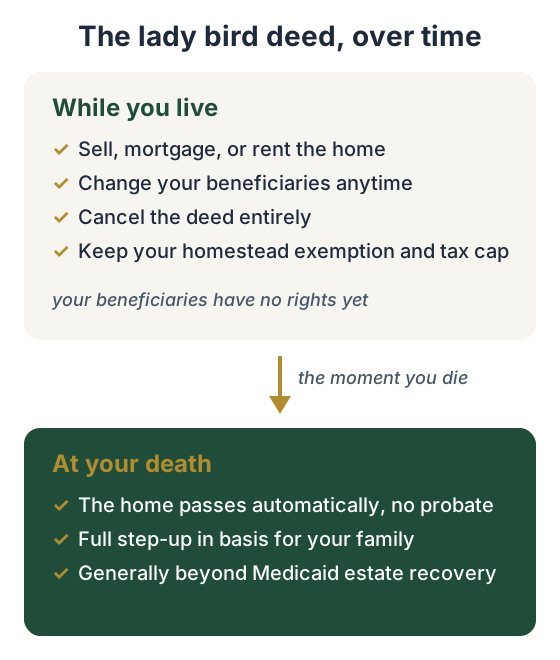
Most homeowners assume any kind of estate-planning deed needs a free-and-clear house. That comes from a real fear: the due-on-sale clause in your mortgage, which lets the lender demand full payoff if you transfer the property. A lady bird deed never sets it off, for a simple reason. Nothing transfers while you live. You still own the home outright, with full power to sell it, refinance it, or change your mind. There is no present conveyance for the lender to react to.
That same feature spares you a tax. If you deeded your mortgaged home to your children during your life with an ordinary deed, Florida would charge documentary stamp tax on the loan balance you handed off, which can run into the hundreds or thousands. A lady bird deed transfers nothing now, so only the minimum $0.70 stamp applies. You get the probate-avoidance result without the lifetime-gift tax bill.
What Happens to the Loan When You Die
Your beneficiary inherits the home subject to the mortgage. The equity is theirs; so is the remaining debt. They have three normal paths: keep making the payments, refinance the loan into their own name, or sell the home and pay the mortgage off from the proceeds. Federal law (the Garn-St. Germain Act) lets a relative who inherits and moves into a one-to-four-unit home keep the existing loan in place rather than being forced to pay it off, so your beneficiary is usually not pushed into a corner.
The honest planning question is whether your beneficiary can actually carry that payment. If the answer is no, leaving them a house with a loan they cannot afford is not a gift, it is a problem. That is something to solve now, with the right structure or a little life insurance to cover the balance, rather than leaving it for a grieving family to figure out.
Red flags: talk to us before you record
A lady bird deed on a mortgaged home is simple in the easy case. These situations are not the easy case, and the wrong move here is expensive:
- You plan to refinance or take a reverse mortgage. A later loan can silently revoke or override the deed, so the home does not pass as you intended. The deed often will not even show up on a title search, so no one at the closing catches it. This is the most common way a lady bird deed quietly fails.
- There is already a reverse mortgage. The balance grows and comes due at your death; your beneficiary faces a payoff deadline or foreclosure. This needs a real plan.
- Your beneficiary cannot afford the payment. Inheriting a house with an unaffordable loan can force a rushed sale. A revocable living trust with a trustee and a power of sale, or insurance to clear the debt, may fit better.
- You have a spouse or a minor child. Florida homestead law can void a deed of your home away from a surviving spouse or minor child, mortgage or not. The spousal signature has to be handled correctly.
Book a free consult and we will tell you whether the deed, a trust, or a combination is right, before you spend a dollar.
When a Trust Fits Better Than a Deed
If the mortgage comes with complications, several beneficiaries who must agree on the debt, a beneficiary who needs their share protected, or a refinance on the horizon, a revocable living trust can name a trustee to manage or sell the home and settle the loan in an orderly way, instead of leaving co-owners to sort it out. Many Florida families use both: a lady bird deed for a simple homestead, a trust when the picture is more complicated. Compare a lady bird deed vs. a living trust →
Have a mortgage and want to keep the house out of probate?
That is a common, solvable situation. In a free 30-minute consult we will map the loan, your beneficiaries, and the cleanest way to pass the home.
Book your free consultWhat It Costs
If a lady bird deed fits, our flat fee is $399 individual / $449 joint, plus recording (about $18 to $30) and the $0.70 doc stamp. The mortgage does not change the price. If a trust fits your situation better, we will tell you and quote it up front. The consult is free either way. See the full cost breakdown →
Frequently Asked Questions
Does My Home Have to Be Paid Off for a Lady Bird Deed?
No. You can record a Florida lady bird deed on a home that still has a mortgage, a home equity line, or any other loan against it. The deed does not move ownership while you are alive, so it changes nothing about your loan. You keep paying it exactly as before, and you keep every benefit of owning the home.
Will a Lady Bird Deed Trigger the Due-on-Sale Clause?
No. A due-on-sale clause lets a lender demand full payoff when you transfer the property. A lady bird deed makes no present transfer, so there is nothing for the clause to act on while you are alive. Even at your death, federal law (the Garn-St. Germain Act) protects a transfer of a home to a relative who moves in, so your beneficiary can keep the loan in place rather than being forced to pay it off.
Does My Beneficiary Inherit the Mortgage Too?
They inherit the home subject to the mortgage. The debt does not vanish at your death. Whoever receives the home keeps making the payments, refinances into their own name, or sells the home and pays the loan off from the proceeds. The equity passes to them; so does the obligation. If your beneficiary could not afford the payments, that is worth planning for now, not leaving as a surprise.
Can I Refinance or Get a Reverse Mortgage After Recording the Deed?
You can, because you keep full control, but this is the single most dangerous moment for a lady bird deed. A later refinance, home equity line, or reverse mortgage can quietly override or revoke the deed, so the home no longer passes the way you intended. A lady bird deed often does not even show up on a routine title search, so a closing agent may never flag it. Tell us before you refinance or take a reverse mortgage so the deed is preserved or re-recorded.
Do I Owe Documentary Stamp Tax on a Mortgaged Home?
Normally, deeding a mortgaged Florida home to someone during your life triggers documentary stamp tax on the loan balance, which can be hundreds or thousands of dollars. A lady bird deed generally avoids that, because there is no present transfer: only the minimum $0.70 stamp applies when it is recorded. That is one of the quiet advantages of using a lady bird deed instead of an ordinary deed. The one caveat is the mortgage itself: in some situations the state can compute stamp tax on the unpaid balance, so we review the loan and confirm the exact cost before anything is recorded.
What If There Is a Reverse Mortgage Already on the Home?
A reverse mortgage comes due when the last borrower dies or permanently leaves the home, and the balance grows over time. A lady bird deed can still pass the home, but your beneficiary inherits a loan that must be paid off or refinanced, usually within a set window, or the lender forecloses. When a reverse mortgage is involved, the plan needs real thought, and that is a conversation to have before you record anything.
Is a Lady Bird Deed Still the Right Tool If I Have a Mortgage?
Often yes, for a single Florida home passing to an adult who can handle the loan. But the mortgage adds moving parts: a beneficiary who cannot afford it, a planned refinance or reverse mortgage, or several beneficiaries who must agree on what to do with the debt. Those are the situations where a trust may fit better. We sort out which one is right in the free consult.
Common Situations
The paid-down homestead. A retiree in Sarasota owes $40,000 on a home worth $400,000 and wants her daughter to have it without probate. A lady bird deed does exactly that. Her daughter inherits the home, keeps paying the small balance or pays it off, and never sees a courtroom.
The refinance that almost broke the plan. A homeowner recorded a lady bird deed, then refinanced two years later without mentioning it. The new loan documents would have overridden the deed. Because he called first, we re-recorded the deed after closing and the plan held.
The reverse mortgage. A widower with a reverse mortgage wanted his son to keep the house. A lady bird deed alone would have left the son with a balloon payoff he could not meet. We built a plan around it instead, so the son had a realistic path to keep the home.
The caregiver who was not family. A widow leaves her mortgaged home by lady bird deed to a longtime friend who cared for her in her final years. The federal shield that lets a relative inherit a home and keep the existing loan does not cover a friend, so the lender can call the balance due after the transfer. The friend must refinance or sell on the lender’s timeline instead of her own. If the person you are naming is not family, plan for the payoff now, with insurance, savings, or a different structure.
Sources of Law
- Garn-St. Germain Depository Institutions Act, 12 U.S.C. §1701j-3(d): due-on-sale protections for transfers to relatives on death. law.cornell.edu (retrieved 2026-06-14)
- Fla. Stat. §201.02: documentary stamp tax on conveyances; minimum stamp where there is no present transfer. flsenate.gov
- Fla. Const. Art. X, §4(c) / Fla. Stat. §732.401: homestead may not be devised away from a surviving spouse or minor child. flsenate.gov
- Lady bird (enhanced life estate) deeds are recognized by Florida common law and title-underwriting practice; a later conveyance can defeat the remainder. There is no Florida statute creating them.
Updated on July 12, 2026. Reviewed by Kevin D. Klagge, Esq., Fla. Bar No. 99502. Attorney Kevin Klagge represents families, businesses, and international clients in estate planning and international law, with a focus on Florida legal tools. He litigates estate and business issues in court. General information about Florida law, not legal advice, and no attorney-client relationship is created. Do not send confidential information until we have agreed to represent you.