
The Short Answer
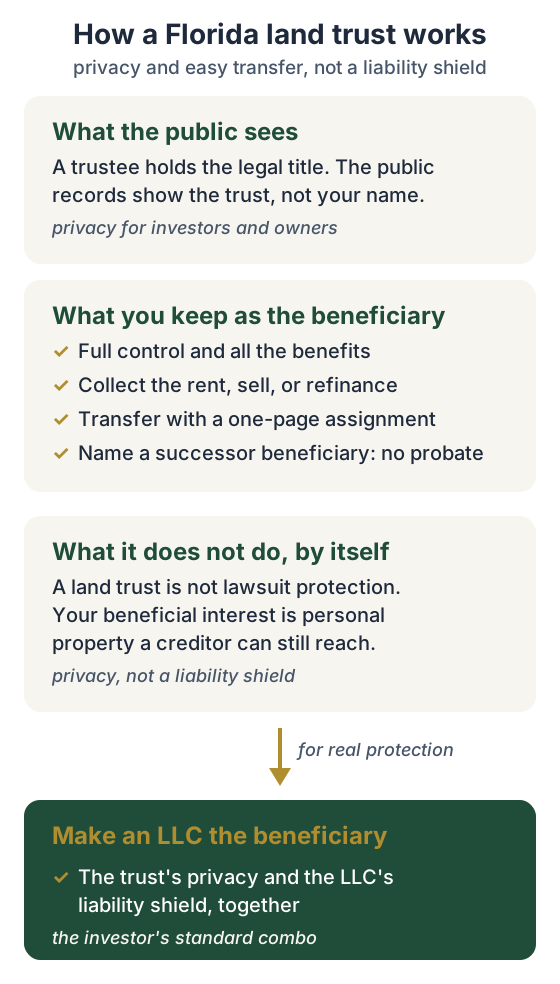
A Florida land trust, authorized by a specific Florida statute, lets a trustee hold legal title to your real estate while you keep full control and all the benefits. You still decide everything, collect the rent, and can sell or refinance, but the public records show the trust, not your name. Your ownership is held as a beneficial interest you can transfer with a simple assignment. In short, it buys you privacy and easy transfer. What it does not buy, by itself, is asset protection.
What a Land Trust Does Well
- Privacy. Your name does not appear in the public property records, which is why investors and high-profile owners use them.
- Easy transfer. You sell or assign your beneficial interest with a one-page document, rather than recording a new deed each time.
- Clean structure for holding multiple properties or multiple owners under one arrangement.
- Probate avoidance. The trust can name a successor beneficiary, so the property passes at your death without probate.
What It Does Not Do (Read This Part)
A land trust gives privacy, not lawsuit protection. Your beneficial interest is treated as personal property a creditor can still reach, and the trust does nothing to shield you if someone is injured on the property. Anyone who sells a land trust as an asset-protection cure-all is overselling it. The real protection comes from pairing it with an entity: a properly structured LLC as the beneficiary of the land trust gives you the trust’s privacy and the LLC’s liability shield together. That combination is how it is usually done for investment property.
Land Trust vs. LLC vs. the Simple Options
| Tool | Gives you | Good for |
|---|---|---|
| Land trust | Privacy, easy transfer | Investment/rental property, privacy |
| LLC | Liability protection | Holding a business or rentals safely |
| Land trust + LLC | Privacy + protection | The investor’s standard combo |
| Lady bird deed | No-probate, keep control | Your homestead |
For the home you actually live in, a land trust is usually not the right tool; a lady bird deed or a revocable trust protects your homestead benefits better.
Holding investment property and want privacy done right?
Book a free 30-minute consult. We will set up the land trust, and the LLC behind it where protection matters, so you get both.
Book your free consultWho Uses a Florida Land Trust
Real-estate investors holding rentals, owners who want their names out of the public record, families holding raw land or a second property, and out-of-state owners who want a clean Florida structure. If that sounds like you, a land trust (often with an LLC) can be an efficient piece of the plan. If you are mainly trying to keep your home out of probate, we will point you to the simpler tools instead.
Frequently Asked Questions
What Is a Florida Land Trust?
A Florida land trust is a trust that holds title to real estate under a specific Florida statute. A trustee holds the legal title to the property, while you (the beneficiary) keep full control and all the benefits: you decide what happens to the property, collect the rent, and can sell or refinance. The point is that the public record shows the trust and trustee, not your name, and your ownership is held as a beneficial interest you can transfer privately. It is mainly a privacy and convenience tool.
What Is a Florida Land Trust Good For?
Four things. Privacy: your name does not appear in the public property records. Easy transfer: you can sell or assign your beneficial interest with a one-page document instead of recording a new deed each time. Holding multiple properties or multiple owners cleanly under one structure. And probate avoidance: the trust can name a successor beneficiary so the property passes without probate at your death. Real-estate investors and owners who value privacy use them often.
Does a Land Trust Protect My Assets From Lawsuits?
No, not by itself, and this is the most important thing to understand. A land trust gives you privacy, not liability protection. Your beneficial interest is treated as personal property that a creditor can still reach, and the trust does nothing to shield you if someone is injured on the property. For real protection, the common approach is to make a properly structured LLC the beneficiary of the land trust, so you get the trust’s privacy and the LLC’s liability shield together. We set up the combination correctly.
Land Trust vs. LLC: Which Do I Need?
They do different jobs, and you often want both. A land trust gives privacy and easy, low-cost transfer. An LLC gives liability protection. Neither replaces the other. The clean structure for an investment property is frequently a land trust that holds title, with an LLC as the beneficiary, combining the trust’s privacy with the LLC’s protection. For a simple personal home, a lady bird deed or a revocable trust is usually a better fit than a land trust.
Does a Land Trust Avoid Probate?
It can. Because your interest in a land trust is a beneficial interest you can direct, the trust agreement can name a successor beneficiary to receive the property at your death, passing it outside probate. That said, for a primary home most Florida families find a lady bird deed simpler and cheaper for the same probate-avoidance goal. A land trust shines more for investment and rental property and for owners who specifically want privacy.
Can I Put My Homestead in a Florida Land Trust?
It is usually not the right tool for your homestead. Homestead carries valuable tax and creditor protections, and a revocable living trust or a lady bird deed is the cleaner way to keep those benefits while avoiding probate. Land trusts are generally used for investment properties, second homes, and land, not the home you live in and claim as homestead. We will steer you to the right structure for each property you own.
How Much Does a Florida Land Trust Cost?
It is quoted at the consult, because the right setup depends on how many properties are involved and whether we are pairing it with an LLC for protection. A land trust is generally an efficient structure once it is part of a larger real-estate or estate plan. The free 30-minute consult is where we confirm whether a land trust, an LLC, a lady bird deed, or some combination fits what you are trying to do.
Common Situations
The private investor. An owner of six rental houses does not want his name searchable on every property. Each home goes into a land trust for privacy, with an LLC as beneficiary for liability protection. Tenants and the public see the trust, not him.
The asset-protection myth. A new investor is told a land trust alone will protect him from lawsuits. We explain it only gives privacy, and add a properly structured LLC so he actually has protection.
The wrong tool for the homestead. A homeowner asks to put her primary residence in a land trust. Because that could complicate her homestead protections, we use a lady bird deed instead, keeping her benefits and avoiding probate.
The four-sibling parcel. Four siblings inherit raw land together, and every buyout or transfer among them means recording a new deed, while any one sibling’s death would put that share through probate. We move the parcel into a land trust: the trustee holds title, and each sibling holds a beneficial interest with a named successor. A sibling who wants out signs a one-page assignment instead of a new deed, and a death no longer means a probate. One structure, four owners, no title churn.
Sources of Law
- Fla. Stat. §689.071: the Florida Land Trust Act (a trustee holds title; the beneficiary’s interest is personal property). flsenate.gov (retrieved 2026-06-08)
- LLC liability and charging-order protection: Fla. Stat. ch. 605 (§605.0503). Lady bird (enhanced life estate) deeds are recognized by Florida common law and title practice.
Updated on July 12, 2026. Reviewed by Kevin D. Klagge, Esq., Fla. Bar No. 99502. Attorney Kevin Klagge represents families, businesses, and international clients in estate planning and international law, with a focus on Florida legal tools. He litigates estate and business issues in court. General information about Florida law, not legal advice, and no attorney-client relationship is created. The right structure depends on your property and goals. Do not send confidential information until we have agreed to represent you.