
What Medicaid Planning Actually Is
The call usually starts the same way: “Mom’s going into a nursing home and we’re told we’ll lose everything.” Most of the time that fear is wrong. The homestead is generally exempt, and many families assume they own too much when they do not.
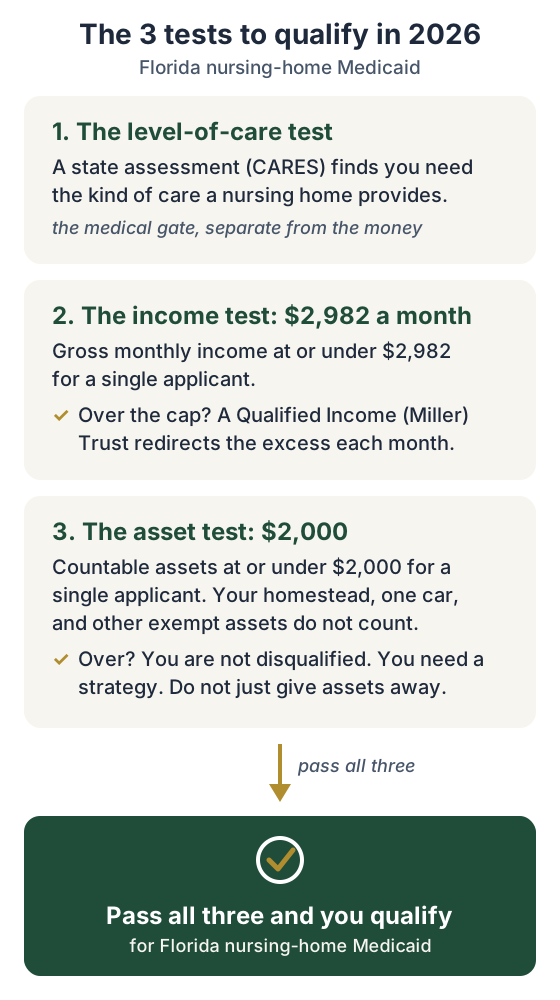
Florida’s long-term-care Medicaid program pays for skilled nursing care once you meet an asset test and an income cap. Medicaid planning is the legal work of arranging income and assets so you qualify without giving up everything and without tripping the federal transfer penalty. It is not hiding money. It is using the exemptions and tools the rules were built with.
Check the three tests and 2026 numbers → or read how to qualify, step by step →
Why “Just Give It Away” Backfires: the 5-Year Look-Back
Florida reviews 60 months of transfers before a nursing-home application. An uncompensated gift creates a penalty period of no coverage. Here is the trap most families do not see: the penalty clock does not start when you give the money away. It starts later, once the applicant is already in care, spent down, and would qualify but for the gift. A do-it-yourself crisis gift creates a penalty that only begins running once the family is broke and the $11,000-a-month bill is unpaid.
You also lose the step-up in basis on gifted property, lose control, and cannot undo it. Estimate the penalty a transfer would create →
Crisis Planning vs. Pre-Planning
Pre-planning (five or more years out): move assets early so the look-back window closes before care is needed. The Medicaid asset-protection trust lives here. More options, more time, lower cost.
Crisis planning (already in care): it is not too late. Even with no advance warning, legitimate tools still shelter a large share of assets. Whether you have five years or five days, there is usually a path.
Married or Single: the First Question
This is where planning starts. Married couples have the strongest protections available, through the spousal-impoverishment rules. A single applicant leans on exempt-asset conversion and a gift-and-note approach.
The Community Spouse Is Protected
The healthy “community spouse” is not left destitute. A protected share of countable assets (up to $162,660 in 2026) stays with the well spouse rather than going toward the applicant’s $2,000 limit. This is called the community-spouse resource allowance. A minimum monthly income allowance can also divert some of the applicant’s income to a lower-income spouse. A Medicaid-compliant annuity can turn excess cash into the well spouse’s income stream. See the figures →
Legitimate Strategies (We Pick the Right Mix)
There’s a menu of lawful tools, and which ones fit depends entirely on your facts and timing:
- Qualified Income (Miller) Trust for an applicant over the income cap (flat $750).
- Community-spouse protections so the at-home spouse keeps the house, an income floor, and up to $162,660 of assets.
- Exempt-asset conversion: turn countable cash into exempt things at fair value (pay off the mortgage, home repairs, a newer car, an irrevocable prepaid funeral), none of which is a penalized transfer.
- Personal-services / caregiver agreement: pay a family member fair wages for care under a written contract, so value comes back and it isn’t a gift.
- Spousal transfers to the community spouse, held to the allowance rather than the $2,000 limit.
- Gift-and-note / “half-a-loaf” for a single applicant in crisis, handled by counsel, never as a DIY move.
- A Medicaid asset-protection trust (irrevocable, income-only) for pre-planning, and a Medicaid-compliant annuity to convert excess cash to income.
Some of these tools are powerful but easy to do wrong. A wrong move can create the very penalty you are trying to avoid. Get advice before anyone signs or moves money.
Crisis or planning ahead, there’s usually a path.
Book a free 30-minute consult before you spend down or give anything away.
Book your free consultProtecting the Home From Estate Recovery
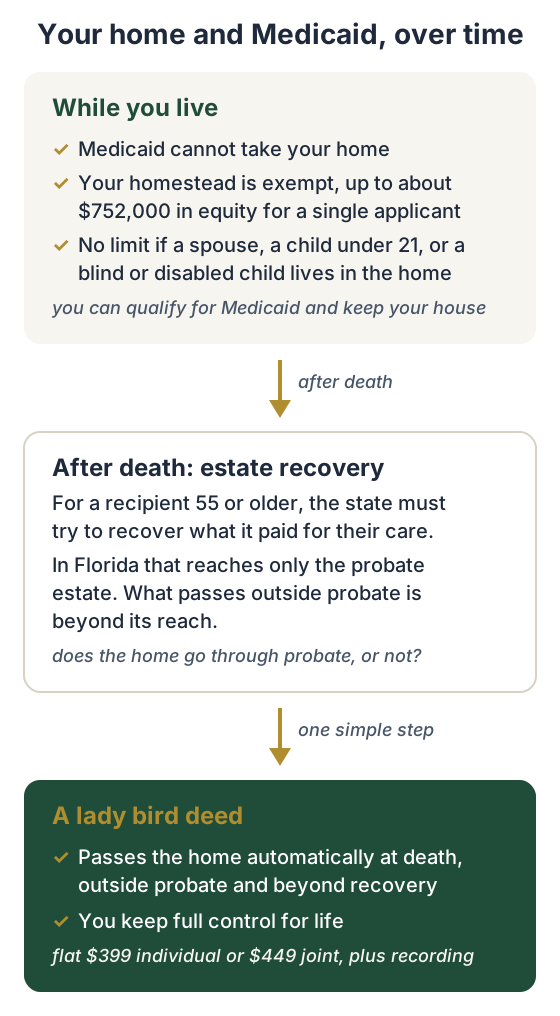
Your homestead is exempt for eligibility, so you do not sell it to qualify. The real risk is estate recovery after death, which Florida runs only against the probate estate under Florida law. A lady bird deed keeps the home out of probate and beyond recovery. Worried the home is at risk? See can a nursing home take your house in Florida →
What Medicaid Planning Is Not
- It is not hiding assets or fraud.
- A lady bird deed does not “qualify Mom for Medicaid,” it’s an estate-recovery tool, not an eligibility tool.
- “Spend down” doesn’t mean burn it all; for a couple it means convert countable to exempt, not consume.
- Naming “my estate” on an IRA, life policy, or POD account drops the money into probate, the one place recovery reaches. Name real beneficiaries.
What to Bring to Your Consult
Bring a list of assets: bank accounts, CDs, brokerage, retirement accounts and whether they are in payout, life insurance with face and cash value, and real estate. Also bring: income for the applicant and any spouse; marital status and whether a spouse is at home; any gifts or transfers in the last five years with dates and amounts; the current care status; and your existing estate documents.
Flat Fees, and How We Work
Remote-first, plain English. Qualified Income (Miller) Trust: $750. Medicaid applications, five-year asset-protection plans, and crisis planning: flat fees quoted at the consult. You see the number before you commit. Government costs (filing, recording, certified copies) are additional, at cost. See full pricing →
Frequently Asked Questions
What Does a Florida Medicaid Planning Attorney Do?
We arrange your income and assets so you can qualify for nursing-home Medicaid without spending down to nothing or making a gift that creates a penalty. That can mean a Qualified Income Trust, converting countable assets into exempt ones, spousal planning, or a longer-term asset-protection plan. We also protect the home from estate recovery and file the application.
Can I Protect My Assets and Still Qualify for Medicaid in Florida?
Often yes. The rules include legitimate tools (exemptions, spousal allowances, income trusts, annuities, caregiver agreements) built into federal and Florida law. The right mix depends on whether you’re married, what you own, and how soon care is needed. What doesn’t work is simply giving assets away, which triggers the five-year look-back penalty.
What Is the Five-Year Look-Back?
Florida reviews 60 months of transfers before a nursing-home Medicaid application. Uncompensated gifts during that window create a penalty period with no Medicaid coverage. The penalty length depends on the amount given divided by a state figure confirmed at application, and the penalty clock doesn’t even start until the applicant is otherwise eligible, which is why a do-it-yourself crisis gift can backfire badly.
Is It Too Late if My Parent Is Already in a Nursing Home?
No. Crisis planning still shelters a meaningful share of assets even with no advance warning, using tools like exempt-asset conversion, a gift-and-note arrangement, or a Medicaid-compliant annuity. The earlier you call the more options you have, but a crisis is not a dead end. Get advice before signing or moving anything.
Do We Have to Spend Down to Zero?
No, especially for a married couple. “Spend down” usually means converting countable cash into exempt assets or the healthy spouse’s income, not burning it. A community spouse can keep up to a protected allowance (the CSRA) rather than the applicant’s $2,000 limit.
What Is a Qualified Income (Miller) Trust and Do I Need One?
Florida is an income-cap state, so income over the 2026 cap of $2,982 a month would disqualify an applicant outright. A Qualified Income (Miller) Trust redirects the excess income so you meet the cap and still qualify. We set these up for a flat $750, and they’re common enough that we treat them as routine.
Will Medicaid Take My House?
Your Florida homestead is generally exempt for eligibility, so you don’t sell it to qualify. The real risk is estate recovery after death, which Florida runs against the probate estate. A lady bird deed keeps the home out of probate and beyond recovery. See our page on protecting the home from Medicaid estate recovery.
Can I Just Deed My House or Give Money to My Kids to Protect It?
That’s the most common and most damaging mistake. An outright gift starts the five-year penalty clock, can lose the step-up in basis, can’t be undone, and exposes the asset to your child’s creditors and divorce. There are legitimate ways to protect the home and savings that don’t carry those problems.
What Does Medicaid Planning Cost?
Flat fees so you know the number before you commit: a Qualified Income Trust is $750, and Medicaid applications, five-year asset-protection plans, and crisis planning are each a flat fee quoted at the consult, sized to the work your situation actually needs. Government filing costs are additional, at cost.
Is Medicaid Planning Legal?
Yes. It uses exemptions, allowances, and trusts that federal and Florida law specifically permit. It is not hiding assets or fraud. The job of a Medicaid planning attorney is to use the rules correctly so you qualify without an unnecessary penalty, and to keep you away from the moves that create one.
What Happens to My Social Security and Pension Once I’m on Medicaid?
In a nursing home, almost all of your monthly income goes to the facility as your share of the cost, and Medicaid pays the rest of the bill. You keep a small personal-needs allowance (about $160 a month) for things like clothing and a haircut, plus enough to cover your health-insurance premiums. If you have a spouse at home with little income of their own, part of your income can be redirected to them instead under the spousal-impoverishment rules. So Medicaid does not take your income in a lump. It steers most of it to your care while protecting a minimum for you and your at-home spouse.
Common Situations
The crisis call. A daughter in Atlanta phoned the week her widowed father entered a Fort Lauderdale nursing home, sure the family would lose his $180,000 in savings. Instead of giving it away (which would have created a penalty no one could afford to wait out), a crisis plan converted part to exempt assets and bridged the rest, qualifying him months sooner than expected.
The married couple who feared losing everything. A Naples couple was told the husband’s memory care would drain their retirement. As the community spouse, the wife kept a protected share, an annuity turned excess cash into her income, and he qualified without a single penalized gift. The home stayed exempt and out of probate for later.
The DIY gift that almost happened. A son was days from having his mother sign her bank balance over to him to “get under the limit.” Walking through the look-back showed the gift would have created a penalty that started only once she was broke and in care. A legitimate spend-down plan reached the same protection without the penalty.
Sources of Law
- 42 U.S.C. §1396p (estate recovery, 60-month look-back and penalty, Qualified Income Trust, home-equity limit); Fla. Stat. §409.9101 (Florida Medicaid Estate Recovery Act, probate estate only); Fla. Admin. Code 65A-1.712 / 65A-1.713 and DCF ESS Policy Manual ch. 1640. 2026 ICP figures change each January; the penalty divisor is state-set and confirmed at application. (retrieved 2026-06-07)
Updated July 11, 2026. Reviewed by Kevin D. Klagge, Esq., Fla. Bar No. 99502. Attorney Kevin Klagge represents families, businesses, and international clients in estate planning and international law, with a focus on Florida legal tools. He litigates estate and business issues in court. General information about Florida law, not legal advice, and no attorney-client relationship is created. Medicaid figures are 2026 and change annually; eligibility and any penalty turn on your specific facts and are confirmed at application.