The Short Answer
A quitclaim deed (often searched as a "quick claim deed" or "quick deed"; the legal name is quitclaim) transfers whatever interest the signer owns, with no warranties about the title. The missing warranties make it fast and cheap for transfers between people who already trust each other, and a poor choice for buying property from a stranger. A quitclaim is a fine tool for the right job, and a costly one when used as a do-it-yourself estate plan.
When a Quitclaim Deed Is the Right Tool
Reach for a quitclaim when the title history is not in question.
- Divorce. A quitclaim removes an ex-spouse from the home’s title after a settlement.
- Marriage. A quitclaim adds or removes a spouse on the title.
- Funding a trust. A quitclaim moves your home into your own revocable living trust.
- Family clean-up. A quitclaim clears a co-ownership or fixes a misspelled name on title.
In each of these, everyone already knows the property’s history, so the absence of warranties does not create risk.
What a Quitclaim Deed Does Not Do
- A quitclaim does not guarantee good title. If the signer’s ownership is defective, you inherit the defect.
- A quitclaim does not avoid probate unless you give the property away outright now, which causes the problems below.
- A quitclaim does not remove anyone from the mortgage. Title and the loan are separate things, and the loan still has to be refinanced or paid off.
Can a Quitclaim Deed Be Reversed After It Is Signed?
A quitclaim deed cannot be reversed by the person who signed it. The question I get most about a quitclaim deed is, "Can I undo this?", and the honest answer is that once the deed is signed, delivered and recorded, the property belongs to the new owner. The only ways back are a new deed signed by that owner or a lawsuit to cancel the deed for fraud, undue influence, or lack of capacity.
A Florida appellate decision from 1975 shows what the lawsuit route looks like. A widow signed a quitclaim deed giving her home to her stepson. She believed she was signing a will (a document that takes effect at death and can be changed the next morning), and a quitclaim deed takes effect the day it is signed. She sued her stepson for fraud and undue influence, the case went to a trial without a jury, and the judge cancelled the deed after hearing the evidence. The stepson appealed and lost on that point. The appellate court then struck the part of the judgment that had cleared her title, because the stepson might still hold a share of the home through his late father's estate, so even after winning she did not leave court with clean title.
Practice pointer. A deed signed by mistake is valid until a court says otherwise, and the person who signed it carries the burden of proving the mistake. The document that does what she thought she was signing is a will, which costs $299 at our office, or a lady bird deed, which costs $399 plus recording and lets the owner change her mind for the rest of her life.
The Estate-Planning Trap: "Just Add the Kids"
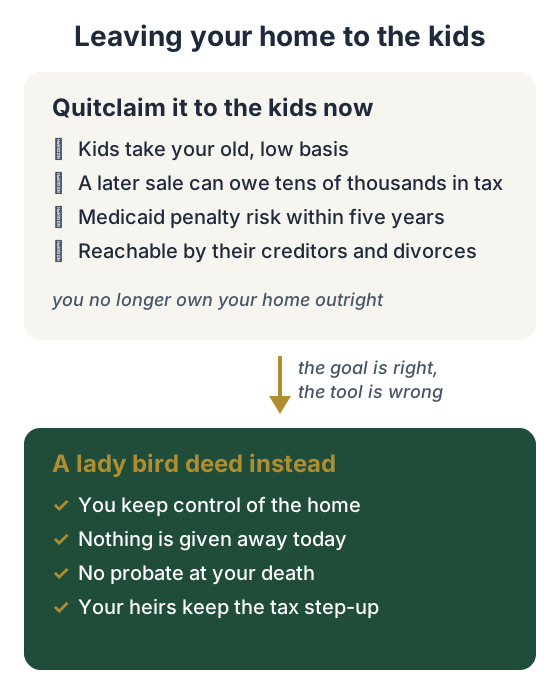
The most expensive quitclaim mistake is deeding your home to your children to "avoid probate." A gift today backfires four ways.
- Capital-gains tax. Your kids take your old, low basis, not the date-of-death value. On a home that has appreciated, a later sale can owe tens of thousands in tax that a lady bird deed would have erased through the date-of-death step-up. Run the numbers on the gift tax calculator →
- Medicaid penalty. The gift is a transfer for Florida Medicaid. If you need nursing care within five years, it can buy you months of ineligibility.
- Lost control and exposure. You no longer own your home outright; it is now reachable by your children’s creditors, divorces, and lawsuits.
- The gift may not even avoid probate. Simply "adding" a child to a Florida deed creates a tenancy in common with no right of survivorship unless the deed expressly says so (Fla. Stat. §689.15). Without that language your share still goes through probate at your death, so the move fails the very goal you signed it for.
The goal (no probate) is right. The tool is wrong. A lady bird deed gets you there without giving anything away today. (Florida does not have a transfer-on-death deed, and the lady bird deed is its equivalent.) If you are set on a lifetime transfer anyway, read the four ways to transfer property to a family member in Florida first. Find the right deed in four questions →
Quitclaim vs. Lady Bird vs. Warranty Deed
| Deed | Good for | Avoids probate? |
|---|---|---|
| Quitclaim | Divorce, spouse, trust funding, family clean-up | No (not by itself) |
| Lady bird (enhanced life estate) | Passing your home to heirs, keeping control | Yes |
| Warranty | Selling to a buyer (full title guarantee) | No |
Requirements and Cost
A valid Florida quitclaim needs the correct grantor and grantee, the full legal description from the prior recorded deed, and words of conveyance. It must be signed before two subscribing witnesses (Fla. Stat. §689.01), which is what makes the deed valid, and acknowledged before a notary so it can be recorded (§695.03). Since January 1, 2024, each witness’s mailing address must also appear on the deed before the clerk will record it (§695.26). On a married person’s homestead, the spouse generally must join. Our flat fee is $399 plus recording and any documentary stamp tax that applies. Watch the doc stamp, because a gift with no mortgage owes only the $0.70 minimum, and if there is any consideration (including taking property subject to a mortgage), Florida's documentary stamp tax applies on that amount. A mistake in the legal description costs more on a quitclaim than on any other deed, because Florida's curative-notice statute for a single lot or block error excludes quitclaim deeds, so the repair is a corrective deed from the same grantor or a lawsuit.
Not sure a quitclaim is the right deed?
In a No-Cost Phone Consult we will tell you straight whether a quitclaim, a lady bird deed, or a trust fits, before you record anything.
Book a no-cost consultFrequently Asked Questions
What Is a Quitclaim Deed in Florida?
A quitclaim deed transfers whatever interest the signer happens to own in a property, with no warranties. The deed does not promise the title is good or even that the signer owns anything. The deed passes along whatever the signer has, and that is what makes it quick and cheap for transfers between people who trust each other, and risky for an arm’s-length purchase, where a buyer wants the protection of a warranty deed instead.
Is a Quick Claim Deed the Same as a Quitclaim Deed?
Yes. "Quick claim deed," "quick deed," and "quit claim deed" are all common ways people search for the same document; the legal name is quitclaim deed. The nickname fits, because a quitclaim is the quickest deed to prepare, and the speed comes from what it leaves out. A quitclaim makes no promises about the title at all. If someone offers you a "quick deed transfer" in Florida, they mean a quitclaim, and everything on this page applies.
When Should I Use a Quitclaim Deed?
Good uses are transfers where title is not in question, such as removing an ex-spouse after a divorce, adding or removing a spouse, transferring your home into your own revocable trust, clearing up a co-ownership between family members, or correcting how a name is spelled on title. In those situations the lack of warranties does not matter, because everyone already knows the history of the property.
Why Is a Quitclaim Deed a Bad Way to Leave My Home to My Kids?
Deeding your home to your children now is a completed gift, and the gift backfires three ways. The children inherit your old (low) tax basis instead of the date-of-death value, so a later sale can owe tens of thousands in capital-gains tax; the gift can trigger a Florida Medicaid transfer penalty if you need care within five years; and you lose control, the home is now exposed to their creditors, divorces, and lawsuits. A lady bird deed reaches the no-probate goal without any of that.
Lady Bird Deed vs Quitclaim Deed: What Is the Difference?
Timing and control. A quitclaim deed transfers the property now. Once recorded, it belongs to the new owner, who takes your low tax basis, and the transfer carries all the Medicaid and creditor consequences of a lifetime gift. A lady bird deed transfers the property only at your death. You keep full ownership for life, you can sell or mortgage without anyone's permission, your family takes with the stepped-up tax basis, and Florida's Medicaid rules treat it as if no transfer happened. The quitclaim is the tool for moving title today (a divorce, funding your trust); the lady bird deed is the tool for leaving your home when you die.
Does a Quitclaim Deed Avoid Probate?
Only if you give the property away during your lifetime, which creates the tax and Medicaid problems above. A quitclaim does not have a built-in "at death" feature. And simply adding a child as a co-owner does not reliably help either. In Florida, co-owners are tenants in common with no right of survivorship unless the deed expressly says so (Fla. Stat. §689.15), so your share can still land in probate. To keep your home out of probate while you keep control and the tax step-up, the right tool in Florida is a lady bird (enhanced life estate) deed, not a quitclaim.
Does a Quitclaim Deed Remove Someone From a Mortgage?
No. A quitclaim changes who is on the title and leaves the loan exactly where it was. If your ex-spouse quitclaims the house to you, your ex-spouse is still legally responsible for the mortgage until it is refinanced or paid off. The loan misunderstanding is one of the most common and costly mistakes in a divorce transfer.
Do I Owe Documentary Stamp Tax on a Florida Quitclaim Deed?
The answer depends on consideration. A pure gift with no money and no mortgage owes only the $0.70 minimum. But if there is consideration, including a beneficiary taking the property subject to a mortgage, Florida documentary stamp tax (Fla. Stat. §201.02) is figured on that amount. Adding an adult child to a mortgaged home, for example, can unexpectedly trigger doc-stamp tax on their share of the loan balance. (Moving your homestead between spouses, where the mortgage is the only consideration, is exempt.)
What Has to Be in a Valid Florida Quitclaim Deed?
The grantor and grantee, the full legal description from the prior recorded deed, words of conveyance, and proper execution. Under Fla. Stat. §689.01 a deed is valid when signed before two subscribing witnesses; a notary acknowledgment (§695.03) is what lets it be recorded. Since January 1, 2024, each witness’s mailing address must also appear on the deed to record it (§695.26). If the property is homestead and the signer is married, the spouse generally must join. A wrong legal description or a missed spousal joinder can cloud title for years.
Can the Notary Be One of My Two Witnesses?
Yes. Florida does not require three separate people. The notary can also serve as one of the two subscribing witnesses, as long as the notary actually watches you sign and then signs the deed a second time on a witness line (with name and, since 2024, a mailing address). What does not work is a notary who only completes the notarial block. A notary may acknowledge a signature that was made earlier and out of their presence, so that signature alone does not count as a subscribing witness. A deed with one real witness plus a notary-only signature is a witness short and invalid. Because the notary acknowledges your signature, not their own, there is no self-notarization problem. Many title companies still prefer two independent witnesses plus the notary to avoid any later dispute. (The deed rule does not carry over to wills, where the notary on the self-proving affidavit should not double as a witness.)
What If There Is a Typo in the Legal Description of a Quitclaim Deed?
A quitclaim deed is the one Florida deed the 2020 curative-notice statute does not reach. For other deeds, a single wrong lot, block, unit or directional call is cured by recording a sworn curative notice that relates back to the original deed, provided the grantor owned no other land in the same subdivision within 5 years and the description is not metes and bounds. The statute defines an erroneous deed as any deed other than a quitclaim deed, so a quitclaim with a bad description is repaired by a corrective deed signed by the same grantor, or by a reformation lawsuit if that grantor has died or will not sign. Copy the description from the last recorded deed and read it back against the plat before anyone signs.
How Much Does a Quitclaim Deed Cost at Your Firm?
Our flat fee for a quitclaim, warranty, or life-estate deed is $399, plus county recording (about $18 to $30) and any documentary stamp tax that applies. The fee is posted up front and honored for 90 days. We will also tell you, free, if a quitclaim is the wrong tool for what you are trying to do.
Can the Person Inheriting the Home Be One of the Witnesses?
Legally yes, which surprises almost everyone. Florida requires two subscribing witnesses on a deed, and a Florida appellate court has held there is no requirement that those witnesses be disinterested, saying it was quite to the contrary, in a case about homestead property where the witnesses were officers of the company being paid. People assume otherwise because will signings do use disinterested witnesses. That said, use a neutral witness anyway. A deed signed by the very person who benefits is the first thing an unhappy relative points at, and the cost of avoiding that argument is asking a neighbor instead.
How Do I Get a Quitclaim Deed in Florida?
To get a quitclaim deed in Florida, have one drafted with the correct names and legal description, sign it before two witnesses and a notary, and record it in the county where the property sits. Copy the legal description from the last recorded deed, because the short description on the tax bill is not a substitute. The mailing address of each witness has to appear on the deed before the clerk will record it, and on a married owner’s homestead the spouse generally must join. The firm prepares and records a quitclaim for a flat $399, plus recording and any documentary stamp tax that applies.
Is There a Florida Quitclaim Deed Form?
Yes, since July 1, 2023 Florida law has set out the form a quitclaim deed must substantially follow. The statutory form is captioned as a quitclaim deed, names the first party and the second party with their post office addresses, and recites the consideration. The form came from a 2023 law aimed at title fraud, and the clerk separately requires the witnesses’ names and mailing addresses before recording. Following the form does not settle whether a quitclaim is the right deed, and a quitclaim used to leave a home to children can cost the family its step-up in basis.
Common Situations
The divorce transfer that left the loan behind. A wife keeps the house; the husband quitclaims his title to her. A year later she learns he is still on the mortgage and a missed payment hit her credit. The quitclaim moved the title and never touched the loan. A refinance was the missing step.
The $40,000 "simple" gift. A father quitclaims his paid-off Orlando home to his daughter to skip probate. When she sells after his death, she owes capital-gains tax on decades of appreciation because she took his basis, not the stepped-up value. A lady bird deed would have erased the tax.
The right use. A couple moves their Sarasota home into their new revocable trust with a quitclaim deed. Title is clean, the trust is funded, and probate is avoided, exactly the job a quitclaim is built for.
The bargain lot bought by quitclaim. A man buys a vacant lot from an acquaintance who offers a fast, cheap closing by quitclaim deed. A year later a survey turns up an old judgment lien and a relative of a prior owner claiming an interest. Because a quitclaim carries no warranties, he has no recourse against the seller, and clearing the mess takes a quiet-title suit (a court action to resolve disputed ownership) that costs far more than a proper closing would have. Buying at arm’s length is the one job a quitclaim should never do. A warranty deed and title insurance exist for that job.
Sources of Law
- Fla. Stat. §689.01: execution of deeds (notary plus two subscribing witnesses). flsenate.gov (retrieved 2026-06-07)
- Fla. Stat. §201.02: documentary stamp tax on deeds and consideration, including the amount of any mortgage whether or not the underlying indebtedness is assumed. flsenate.gov · What the tax costs on each kind of deed
- IRC §1012 (carryover basis) and §1014 (step-up in basis at death), cited by section.
- Fla. Stat. §689.041 (curative procedure for scrivener’s errors in deeds: (1)(a) an erroneous deed is any deed other than a quitclaim deed; (1)(c) a single error in a lot or block, a unit, building or phase, or one directional call or fraction; (2) the conditions, including no other land of the grantor in the same subdivision within 5 years and no metes and bounds description; (3) the notice form); §689.025 (the statutory quitclaim form). (text read 2026-10-18)
- Passio v. Passio, 309 So. 2d 595 (Fla. Dist. Ct. App. 1975): cancellation of a quitclaim deed the signer believed was a will, affirmed; the portion of the judgment quieting title stricken because the stepson's possible claim through his father's estate was never pleaded. Opinion text on file (retrieved 2026-09-03). Other parties' case, not a matter handled by this firm.
- Witnesses: Fla. Stat. §689.01 (two subscribing witnesses); Ross v. Richter, 187 So. 2d 653, 654-55 (Fla. 2d DCA 1966) ("There is no requirement that such witnesses must be attesting witnesses as required for the execution of wills. There is no requirement that such witnesses must be disinterested. Quite to the contrary."), the property there being homestead, citing Cross v. Robinson Point Lumber Co.; Skyline Outdoor Communications, Inc. v. James, 903 So. 2d 997 (Fla. 1st DCA 2005) (§689.01 two-witness requirement). (Opinions read 2026-09-08.)
What I See When a Quitclaim Deed Comes Back to Court
Many cases like this keep coming up with a quitclaim deed that was signed for a reason the deed was never built to serve. In 14 years of law practice, I also litigate deeds after they fail, which enhances the practice of drafting deeds. The advice you will find on most sites is right in general and wrong in the situation that actually brings people to me. The general advice is that a quitclaim deed is quick, cheap and fine between family members. The situation that brings people to me is a parent who signed one because a form was the fastest way to do what a will or a lady bird deed should have done.
In reading the 1975 decision above and the ones like it, I have a few take-home points.
The first is timing. A quitclaim deed takes effect the day it is signed and delivered, and recording it tells the world. A will takes effect at death and can be torn up the next morning. The stepmother in that case believed she was signing the second kind of document and had signed the first, and the only way back was a lawsuit against her own stepson. Practice pointer. Before anyone signs a quitclaim deed to a family member, I ask whether the signer wants the property to change hands today or at death, because the answer decides the document and no form asks the question.
Second, the cost of the wrong document is the litigation and never the deed. A simple will costs $299 at my office and a lady bird deed costs $399 plus recording (about $18 to $30 at the clerk). Either one would have done what that stepmother thought she was doing, and she would have kept the house, kept the right to change her mind, and never met her stepson in a courtroom. The trial and the appeal that followed cost her years, and the appellate court still left the stepson's claim through his father's estate open at the end of it.
Third, a deed signed in trust is not void because the trust was misplaced. Someone has to sue, prove fraud or undue influence, and persuade a judge. Avoid a quitclaim deed signed at a kitchen table with nobody asking what the signer thinks the paper does, because that deed is valid the moment it is signed and the only way to cancel it is a case like this one.
The honest limit is that the appellate court affirmed the cancellation because the record held enough evidence to support the trial judge, and the opinion says no more than that. I cannot tell you from the opinion what she was told at the signing or who prepared the deed, and I cannot tell you that a different judge would have reached the same result. What I can tell you is that a $299 will or a $399 deed is a cheaper way to learn what a document does than a trial.
Kevin D. Klagge, Esq., admitted in Florida since 2012. The case described above is a published decision of a Florida court rather than a matter handled by this firm. Past results do not guarantee a similar outcome.
Updated on October 18, 2026. Reviewed by Kevin D. Klagge, Esq., Fla. Bar No. 99502. General information about Florida law, not legal advice, and no attorney-client relationship is created. Do not send confidential information until we have agreed to represent you.