
The Short Answer
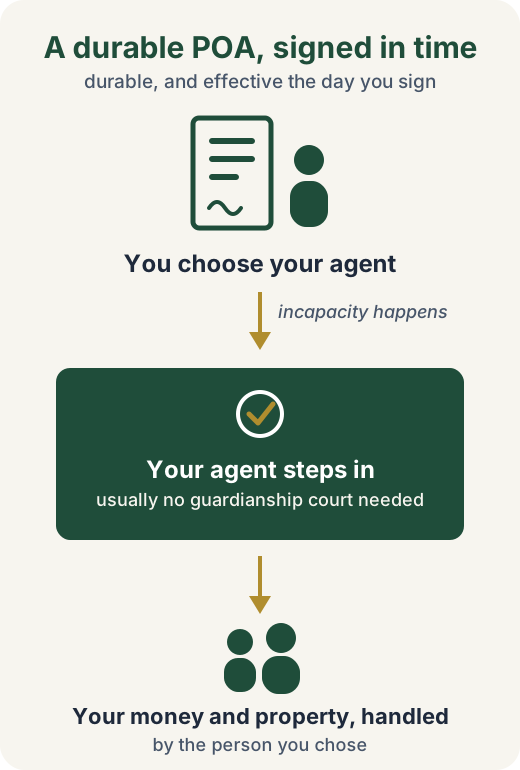
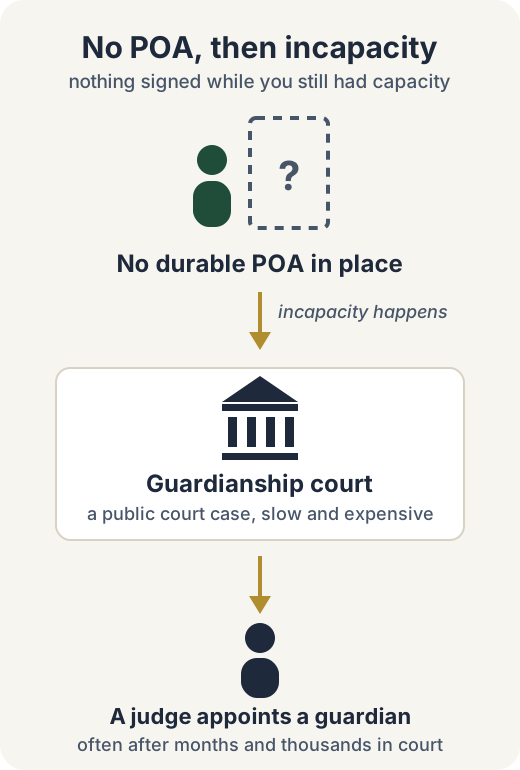
The two do the same job, control of your affairs when you cannot manage them, but they get there in opposite ways. A power of attorney is something you set up yourself, in advance, naming people you trust. Guardianship is imposed by a court after you have already lost capacity and did not plan, with a judge declaring you incapacitated and appointing someone to control your life under ongoing supervision. The power of attorney is the good outcome; guardianship is the fallback nobody wants.
Side by Side
| How they compare | Power of attorney | Guardianship |
|---|---|---|
| Who chooses | You do, in advance | A judge |
| Cost | A flat fee, once | Thousands, plus ongoing |
| Privacy | Private | Public court case |
| Court oversight | None | Ongoing hearings & reports |
| When you can set it up | While competent | After capacity is lost |
Florida Law Prefers the Power of Attorney
This is not just our opinion. Florida law requires a court to consider less-restrictive alternatives, like a valid durable power of attorney and health care surrogate, before imposing a guardianship. In other words, if you have done the planning, the law itself says guardianship should not happen. The documents you sign now are the alternative the court is required to look for.
Keep your family out of guardianship court.
Book a free 30-minute consult. We will put a durable power of attorney and health care surrogate in place, so a judge never has to step in.
Book your free consultThe One Window That Closes
Here is the catch that turns a simple plan into a courtroom: a power of attorney can only be signed while you still have capacity. Once a parent has dementia or has lost the ability to understand the document, it is too late, and guardianship becomes the only route to authority over their care and money. That is why the move is to sign a durable power of attorney and health care surrogate early, well before anyone thinks they are needed. If your parent is already incapacitated, we can still guide the family; if they are not, do it now.
Frequently Asked Questions
What Is the Difference Between Guardianship and Power of Attorney?
A power of attorney is something you set up yourself, while you are competent, naming a person you trust to handle your finances (a durable power of attorney) and your medical decisions (a health care surrogate) if you ever cannot. Guardianship is the opposite: it is what happens when you did not plan and lose capacity, so a court has to step in, declare you incapacitated, and appoint someone, sometimes a stranger, to control your affairs under ongoing court supervision. One you choose in advance; the other is imposed by a judge.
Is a Power of Attorney Better Than Guardianship?
For almost everyone, yes, by a wide margin. A power of attorney is private, inexpensive, takes effect immediately when needed, and lets you choose who is in charge. Guardianship is public, expensive, slow, and ongoing, with court hearings, annual reports, and a judge overseeing decisions, and you do not get to pick the guardian. Florida law itself prefers the power of attorney: a court must consider less-restrictive alternatives, like a valid POA, before imposing a guardianship.
Does a Power of Attorney Avoid Guardianship?
Usually, yes, and that is the whole point of signing one. If you have a valid durable power of attorney for finances and a health care surrogate for medical decisions, your chosen people already have the authority they need, so there is generally no reason for anyone to ask a court for a guardianship. The documents do the job a guardianship would, without the court. The catch is that they must be signed while you still have capacity, which is why waiting is the mistake.
What if My Parent Is Already Incapacitated and Has No Power of Attorney?
Then a power of attorney is no longer an option, because signing one requires capacity, and guardianship may be the only path to get someone legal authority over their care and finances. That is exactly the situation good planning avoids. If you are facing it, we can guide the family through what is needed; if your parent still has capacity, the far better and cheaper move is to put a power of attorney and health care surrogate in place now, before it is too late.
Can a Power of Attorney and a Guardian Both Exist?
Sometimes, but they do not usually coexist smoothly. If a guardianship is established, the court can suspend or limit a power of attorney. The practical takeaway is to get the power of attorney in place early so a guardianship never becomes necessary. When a guardianship is truly unavoidable, the documents you signed earlier can still guide who serves and how, which is another reason to plan ahead.
When Does Each One End?
A power of attorney ends when you die (your will and estate plan take over then), and you can revoke it any time while you have capacity. A guardianship ends at your death too, or earlier if a court restores your capacity, but until then it continues under court supervision with regular reporting. The power of attorney gives you and your family control and flexibility; the guardianship gives the court control.
How Do I Set Up a Power of Attorney to Avoid Guardianship?
With two documents signed while you are competent: a durable power of attorney for your finances and a designation of health care surrogate (with a living will and HIPAA release) for your medical care. We prepare a complete incapacity plan, and the documents are flat-fee. The 30-minute consult is free, and the best time to do it is well before anyone thinks it is needed.
Common Situations
The plan that worked. A daughter helps her still-sharp father sign a durable power of attorney and health care surrogate. Two years later his memory fails, and she steps in to manage everything immediately, no court, no guardianship.
The plan that was too late. A son waits until his mother’s dementia is advanced, then learns she can no longer sign a power of attorney. The family has to file for guardianship, a months-long, public, expensive process that an early document would have avoided.
The blended-family conflict. Without a chosen agent, relatives disagree about who should be in charge of an incapacitated parent, and a judge decides. A power of attorney naming one person up front would have settled it.
The stroke at fifty-eight. A husband collapsed with a stroke on an ordinary morning. There was no power of attorney, because at fifty-eight he was "too young to need one." His wife could not touch his retirement account or the business account to keep the household running, and the family had to ask a guardianship court for authority he could have granted with one signature. Incapacity does not wait for old age; these documents belong in place at every age.
Sources of Law
- Fla. Stat. §744.331 and §744.2005: a court must consider less-restrictive alternatives (including a durable power of attorney and health care surrogate) before imposing guardianship. flsenate.gov (retrieved 2026-06-08)
- Durable power of attorney: Fla. Stat. ch. 709. Health care surrogate and advance directives: ch. 765. A power of attorney requires capacity to sign and ends at death.
Updated on July 12, 2026. Reviewed by Kevin D. Klagge, Esq., Fla. Bar No. 99502. Attorney Kevin Klagge represents families, businesses, and international clients in estate planning and international law, with a focus on Florida legal tools. He litigates estate and business issues in court. General information about Florida law, not legal advice, and no attorney-client relationship is created. Whether guardianship can be avoided depends on capacity and timing. Do not send confidential information until we have agreed to represent you.