The Timeline by Type
Swipe the table sideways to see the full timeline for each type.
| Type | Typical time | When it applies |
|---|---|---|
| Disposition without administration | Days to a few weeks | Tiny estates, no real property |
| Summary administration | A few weeks to ~2 to 3 months | Estate $150,000 or less (raised from $75,000 on July 1, 2026), or death over 2 years ago |
| Formal administration | Usually 6 to 12 months | Most larger or recent estates |
Why Formal Probate Takes Months
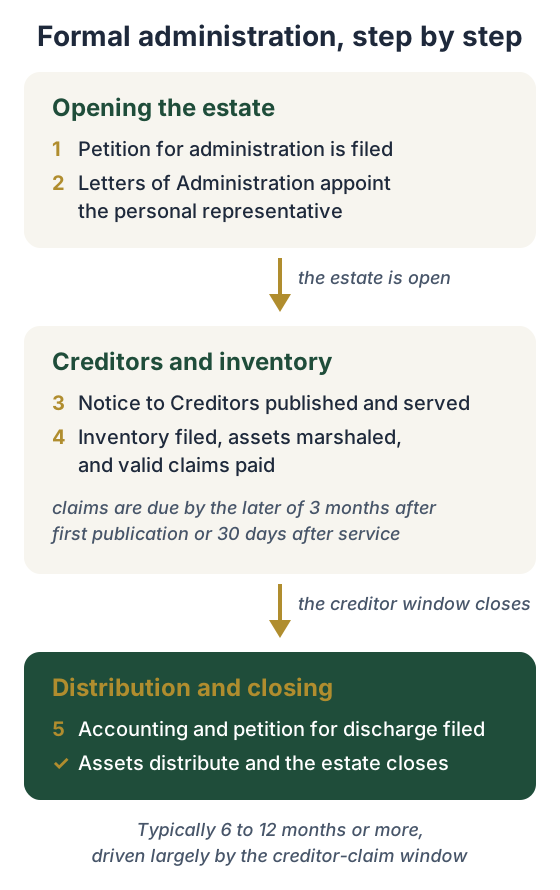
The main reason is the creditor period. After the personal representative publishes a notice to creditors, creditors have three months to file claims, and the estate generally cannot close and distribute until that window runs and any claims are resolved. Add the time to gather and value assets, file any tax returns, sell real estate, and handle disputes, and several months is normal even for a smooth estate. Nothing closes before the creditor clock finishes.
How Long Does It Take to Settle an Estate in Florida?
A straightforward Florida estate in formal administration usually takes 6 to 12 months from the day the court issues letters to the order discharging the personal representative, and summary administration often finishes in a few weeks to two or three months. Florida’s probate rules expect the final accounting and the petition for discharge within 12 months after letters, unless the estate owes a federal estate tax return or the court extends the time.
Settling an estate means more than the court case. The personal representative collects the assets, pays the valid debts and the final tax returns, sells or transfers the house, and distributes what is left. In a routine formal administration the sequence runs like this.
- Weeks 1 to 6. The petition is filed with the original will and the death certificate, and the court issues letters of administration, usually a few weeks after filing in a routine case.
- Months 1 to 2. The notice to creditors is published and the notice of administration is served on the beneficiaries, which starts two separate 3-month windows. The inventory is due within 60 days after letters.
- Months 2 to 5. The creditor window runs. The personal representative reviews each claim, objects to the wrong ones, and lists or sells the house.
- Months 5 to 9. Claims are paid, the decedent’s final income tax return is filed, and the final accounting and plan of distribution are served. Beneficiaries then have 30 days to object.
- Months 9 to 12. The assets are distributed, receipts come back, and the court discharges the personal representative.
A larger estate moves on a longer clock. The federal estate tax return is due nine months after the death, and the 12-month deadline to close then runs from that due date instead of from letters. Our page on filing Form 706 covers who has to file one.
Assets outside probate settle on their own schedule. An account with a named beneficiary pays out once the institution has the death certificate and its claim form, and a straightforward trust is usually distributed 6 to 12 months after the death because the trustee waits out the same debts and taxes.
Practice pointer. An estate that cannot close in 12 months needs a court order extending the time, and the request has to state the status of the estate and the reason for the delay. Ask for the extension before the deadline, not after a beneficiary asks the judge why nothing has happened.
What Slows It Down
Will contests and family disputes, a business or other hard-to-value asset, out-of-state real estate (which needs its own ancillary probate), tax returns, missing heirs, and a personal representative who is slow to act. Most are avoidable with a clean estate and good planning; an experienced attorney keeps the rest moving rather than letting it drift. A will contest has to be filed within 3 months after the notice of administration is served, and the estate cannot close until the court decides it.
Want it handled and moving, not stalled?
Book a No-Cost Phone Consult with Attorney Kevin D. Klagge, Esq. We will confirm which type of probate applies and keep it on the fastest path, wherever you are.
Book a no-cost consultThe Fastest Probate Is the One You Avoid
Much of an estate can skip probate entirely. A lady bird deed on the home, a funded revocable trust, and beneficiary or pay-on-death designations all pass outside it. For what must be probated, see what to do when a parent dies and estimate the cost. We handle Florida probate wherever you are, including for out-of-state families.
Frequently Asked Questions
How Long Does Probate Take in Florida?
It depends on the type. Summary administration, for smaller estates or deaths more than two years ago, often finishes in a few weeks to about two or three months. Formal administration, for larger or more recent estates, usually runs 6 to 12 months, and longer if there are complications. The single biggest reason formal probate cannot finish quickly is a mandatory creditor period that has to run before the estate can close.
Why Does Formal Probate Take Months?
Mainly because of the creditor period. Once the personal representative publishes a notice to creditors, creditors have three months to file claims, and the estate generally cannot be closed and distributed until that window runs and any claims are resolved. On top of that, gathering and valuing assets, filing any required tax returns, selling real estate, and resolving disputes all add time. None of it can be rushed past the creditor window.
What Is the Fastest Type of Probate?
Disposition without administration is the fastest, but it is only for very small estates with no real property, used mainly to reimburse final expenses. Next is summary administration, available when the probate estate is $150,000 or less (raised from $75,000 on July 1, 2026) or the person died more than two years ago; it skips appointing a personal representative and can wrap up in weeks. Formal administration is the slowest because of the creditor period and the appointment process.
What Slows a Florida Probate Down?
Will contests and family disputes, hard-to-value assets like a business or unusual property, out-of-state real estate that needs its own ancillary probate, estate or income tax returns, missing or hard-to-locate heirs, and a personal representative who is slow to act. Many of these are avoidable with a clean estate and good planning, and an experienced attorney keeps the rest moving.
Can I Speed It Up or Avoid Probate Entirely?
Yes. Whether summary administration is available can shorten things dramatically, and a well-run formal administration avoids needless delay. Better still, much of an estate can avoid probate altogether. A lady bird deed on the home, a funded revocable trust, and beneficiary or pay-on-death designations all pass outside probate. The least time-consuming probate is the one your family never has to open.
Does Living Out of State Make It Take Longer?
Not with the right firm. Florida courts accept electronic filing and remote signing, so an out-of-state family can handle a Florida probate without travel, and it does not add time. We run the whole process wherever you are and keep it moving, which often makes it faster than a family trying to manage it themselves from afar.
How Long Does Probate Take in Florida Without a Will?
Probate without a will takes about as long as probate with one, usually 6 to 12 months for a formal administration and a few weeks to two or three months for summary administration. The three-month creditor period runs the same way in both cases. A missing will can add time at the start, because the heirs have to be identified, Florida’s order of preference decides who serves, and an heir who objects to the proposed personal representative can delay the letters.
How Long Does an Executor Have to Settle an Estate in Florida?
The personal representative generally has 12 months from the date the court issues letters. Florida’s probate rules require the final accounting and petition for discharge within 12 months after letters for an estate that files no federal estate tax return, and within 12 months after the return’s due date when one is required. The court can extend the deadline for cause after notice to interested persons, and the request has to explain the status of the estate and the reason for the delay.
How Long Can a House Stay in Probate in Florida?
A house can stay in an open estate until the estate closes, generally within 12 months of letters unless the court extends that deadline, but a sale does not have to wait for the end. The personal representative can sell an estate house mid-case once letters issue, under a power of sale in the will or with a court order. A protected homestead passes at death to the heirs and needs a court order confirming its status before a clean sale. If nobody opens probate, the house stays titled in the deceased owner’s name and no title company will insure a buyer.
Sources of Law
- Fla. Stat. §733.2121 and §733.702: notice to creditors and the three-month claim period. Fla. Prob. R. 5.340(a) (inventory within 60 days after letters); Fla. Prob. R. 5.400(b)(6),(c) (30 days to object to the final accounting; final accounting and petition for discharge within 12 months after letters, or 12 months after the federal estate tax return is due, unless extended for cause); Fla. Stat. §733.212 (notice of administration and the 3-month objection period). Read from the Florida Probate Rules as of July 16, 2026 and the 2026 Florida Statutes (retrieved 2026-10-01). Ch. 735: summary administration and disposition without administration. flsenate.gov (retrieved 2026-06-08)
Updated on October 1, 2026. Reviewed by Kevin D. Klagge, Esq., Fla. Bar No. 99502. General information about Florida law, not legal advice, and no attorney-client relationship is created. Timelines depend on the specific facts. Do not send confidential information until we have agreed to represent you.
More Guides on Florida Probate
This guide is part of Florida Probate.
- Florida Probate Cost by County
- Florida Notice of Administration and the 3-Month Clock
- Florida Personal Representative Deed and the Power of Sale
- Florida Personal Representative
- Florida Personal Representative Fees
- Executor Fees by State (Dataset)
- Florida Letters of Administration
- Executor vs. Executrix in Florida