
The Short Answer
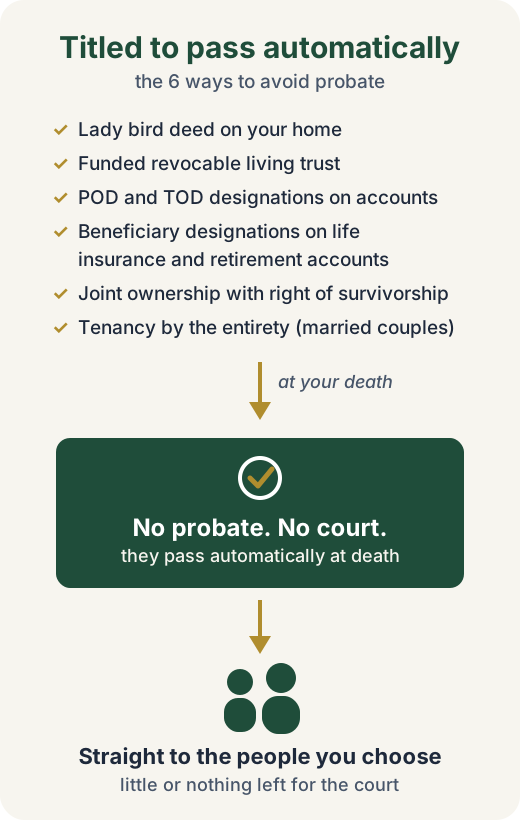
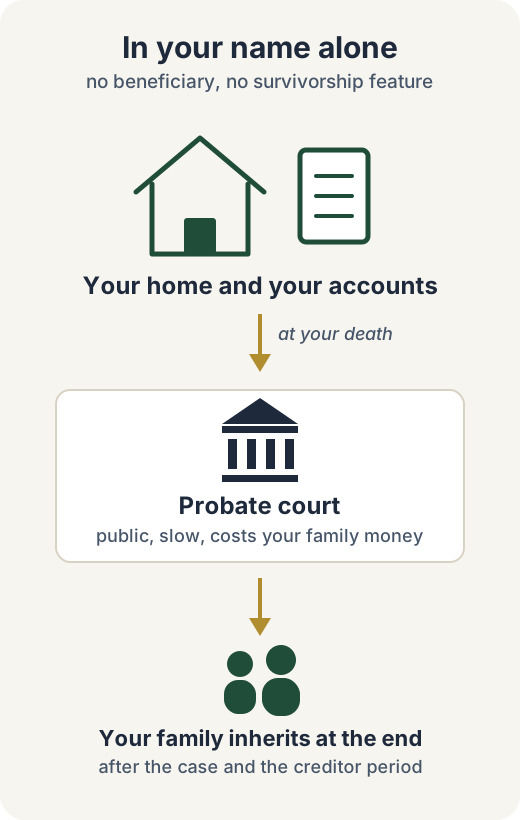
Probate is what handles assets left in your sole name at death. So you avoid it by making your assets pass some other way, automatically, to the people you choose. Do that and there is little or nothing left for the court. The catch most people miss: a will does not avoid probate, it is the instruction sheet probate reads. Here are the six tools that actually keep your estate out of court.
The 6 Ways to Avoid Probate in Florida
- Lady bird deed on your home. Passes the house to your family automatically at death, no probate, while you keep full control for life. A few hundred dollars.
- Funded revocable living trust. Everything you retitle into it avoids probate and is managed if you lose capacity. The strong fit for larger or multi-state estates.
- Pay-on-death (POD) and transfer-on-death (TOD) designations on bank and brokerage accounts. Usually free to add.
- Beneficiary designations on life insurance and retirement accounts (these already skip probate when named).
- Joint ownership with right of survivorship. Passes to the surviving owner, though it has trade-offs we will flag.
- Tenancy by the entirety for married couples, which also adds creditor protection.
Why a Will Does NOT Avoid Probate
This is worth repeating because it costs families so often. A will only speaks through probate, it tells the court who inherits, but the court still has to open the case, run the creditor period, and oversee distribution. If avoiding the public filing, the delay, and the cost is your goal, the will is not the tool. The six tools above are. Pair them with a will as a backstop, not a substitute.
Want to keep your family out of probate court?
Book a free 30-minute consult. We will tell you which tools you actually need, often the cheaper ones.
Book your free consultThe Cheapest Combination for Most Families
If your main asset is a Florida home and some accounts, the simplest, cheapest setup is usually a lady bird deed on the house plus POD/TOD designations on the accounts, often a few hundred dollars total. A trust earns its higher price when you own property in more than one state, have a blended family or minor children, or want centralized management. Not sure which? The deed selector narrows it in four questions, or we sort it at the consult. You can also see what probate would cost if you do nothing.
All six tools side by side:
| Tool | What it does, and what it costs |
|---|---|
| Lady bird deed | Passes your home automatically at death while you keep full control for life. A few hundred dollars. |
| Funded revocable living trust | Everything you retitle into it avoids probate, and it is managed if you lose capacity. Costs more but does more; the better fit for larger or multi-state estates. |
| POD and TOD designations | Cover bank and brokerage accounts. Usually free to add. |
| Beneficiary designations | Life insurance and retirement accounts already skip probate when a beneficiary is named. |
| Joint ownership with right of survivorship | Passes to the surviving owner, though it has trade-offs we will flag. |
| Tenancy by the entirety | For married couples, and it also adds creditor protection. |
Frequently Asked Questions
How Do I Avoid Probate in Florida?
You avoid probate by making sure your assets pass by some method other than your name alone at death. The main tools are a lady bird (enhanced life estate) deed on your home, a funded revocable living trust, pay-on-death and transfer-on-death designations on accounts, beneficiary designations on life insurance and retirement accounts, joint ownership with right of survivorship, and tenancy by the entirety for married couples. Anything that passes by one of these routes skips probate. What is left in your sole name with no designation is what goes through probate.
Does a Will Avoid Probate in Florida?
No, and this is the most common misunderstanding in estate planning. A will does not avoid probate; it is the instruction sheet that probate follows. Assets in your name alone still go through the probate court before anyone inherits, with or without a will. The will just tells the court who gets what. To actually avoid probate you need the tools above, a trust, a lady bird deed, or beneficiary designations, in addition to (not instead of) a will.
Is Probate Always Required in Florida?
No. Probate is only needed for assets titled in the deceased person’s sole name with no beneficiary or survivorship feature. If everything passed by a trust, a lady bird deed, joint ownership, or pay-on-death designations, there may be little or nothing to probate. Smaller estates may also use a faster, simpler path called summary administration, or even disposition without administration, instead of full probate. Whether probate is required comes down to how each asset was titled.
What Is the Cheapest Way to Avoid Probate in Florida?
For most families, a lady bird deed on the home plus pay-on-death designations on bank and investment accounts is the cheapest, simplest combination. A lady bird deed runs a few hundred dollars and keeps the house out of probate while you keep full control; POD and TOD designations are usually free to add at the bank or brokerage. A funded revocable trust costs more but does more, and is the better fit for larger or more complicated estates.
Do I Still Need a Will if I Avoid Probate?
Yes. Even with trusts and beneficiary designations, you want a will, often a short "pour-over" will, as a backstop for anything you forgot to retitle, and to name a guardian if you have minor children. The goal is not to skip the will; it is to make sure as little as possible has to pass through it. A good plan uses both: probate-avoidance tools for your assets, and a will to catch the rest.
Can You Set This Up for Me?
Yes, and we will tell you honestly which tools you actually need rather than selling you the most expensive one. For many clients a lady bird deed and a few beneficiary designations do the job for a few hundred dollars; others are better served by a full trust plan. We map it at the free 30-minute consult and handle everything remotely.
Common Situations
The "I have a will, I’m fine" surprise. A retiree assumes his will keeps his home out of probate. It does not. A lady bird deed added in an afternoon does, and his family avoids a months-long case.
The simple win. A widow with a paid-off home and two bank accounts adds a lady bird deed and POD designations. Her whole estate now passes without probate, for a few hundred dollars.
The case for the trust. A couple with homes in two states and a child with special needs needs more than deeds and designations; a funded trust coordinates all of it and avoids probate in both states.
The helper on the account. A father adds one daughter to his checking account as a joint owner so she can help pay his bills. At his death, Florida law presumes the account passes to her alone as the surviving owner, and the will that split everything equally among his three children never touches it. Her siblings can challenge that presumption in court, but the burden is heavy and the fight is expensive. A POD designation naming all three children, plus a durable power of attorney for the bill paying, would have done the same job without disinheriting anyone.
Sources of Law
- Florida probate applies to assets in the decedent’s sole name (Fla. Stat. ch. 731-735). Non-probate transfers: lady bird (enhanced life estate) deeds (common law), revocable trusts (ch. 736), POD/TOD designations, survivorship, and tenancy by the entirety. A will is admitted to, not a substitute for, probate. (retrieved 2026-06-08)
Updated on July 12, 2026. Reviewed by Kevin D. Klagge, Esq., Fla. Bar No. 99502. Attorney Kevin Klagge represents families, businesses, and international clients in estate planning and international law, with a focus on Florida legal tools. He litigates estate and business issues in court. General information about Florida law, not legal advice, and no attorney-client relationship is created. The right tools depend on your assets and goals. Do not send confidential information until we have agreed to represent you.