
The Short Answer
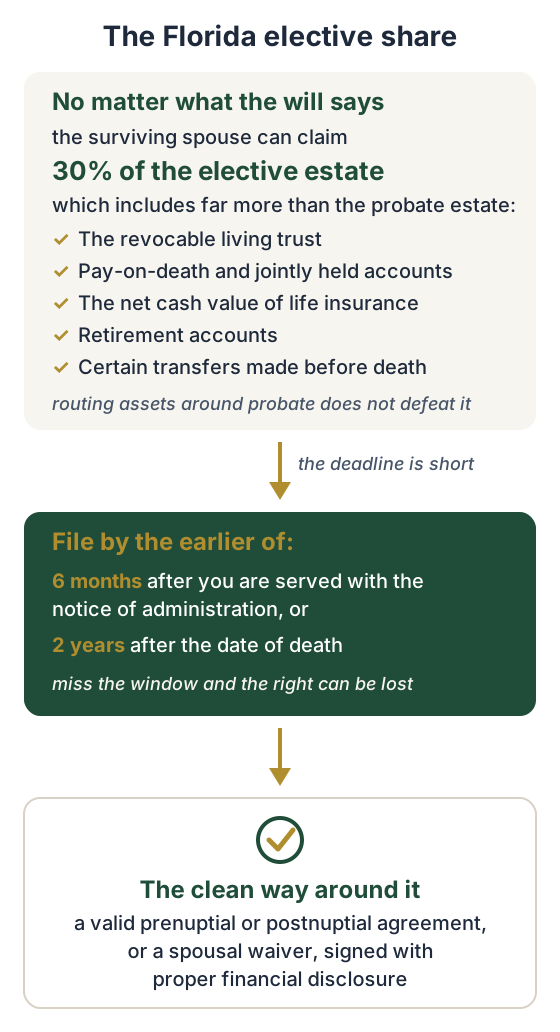
Florida law says you cannot disinherit your spouse. Even if your will or trust leaves a surviving husband or wife nothing, they can claim the elective share, 30% of the elective estate. And the "elective estate" is defined broadly, so a spouse cannot be cut out by simply moving assets into a trust or naming other beneficiaries. It is one of the strongest protections in Florida estate law, and one of the most common things people fight about.
What Counts: It’s Not Just Probate Assets
This is what gives the elective share its teeth. The 30% is measured against an elective estate that includes far more than the probate estate:
- The deceased spouse’s revocable living trust.
- Pay-on-death and jointly held accounts.
- The net cash value of life insurance.
- Retirement accounts.
- Certain transfers the deceased spouse made before death.
In other words, you cannot defeat the elective share by routing assets around probate. The law follows them.
The Deadline Is Short
A surviving spouse generally has to file the election by the earlier of six months after being served with the notice of administration, or two years after the date of death. Miss it and the right can be lost. If you are a surviving spouse who was left out or shortchanged, this is time-sensitive, so get advice promptly rather than waiting to see how the estate plays out.
And There’s More Than the 30%
A surviving spouse’s protections stack. On top of the elective share, a spouse may be entitled to exempt personal property and a family allowance during administration, and those come in addition to the 30%. The spouse’s homestead rights (a life estate or a half interest in the home) are separate and cannot be defeated by the will, but since 2017 the home’s value is counted inside the elective-share math: it goes into the estate the 30% is measured against, and what the spouse receives in the home counts toward satisfying the 30%. Together they give a surviving spouse substantial rights, which is precisely why spousal-rights disputes are so common in Florida estates.
A surviving spouse left out, or an estate facing a claim?
Book a free 30-minute consult. We will tell you what the elective share is worth here and the deadline you are working against, before the window closes.
Book your free consultPlanning Around It (the Right Way)
Sometimes a spouse genuinely wants to leave the other less than 30%, often in a second marriage where each has their own children. The clean, enforceable way to do that is a valid prenuptial or postnuptial agreement, or a separate spousal waiver, signed with proper financial disclosure. Trying to defeat the elective share by hiding or retitling assets does not work, because the law reaches non-probate transfers. We draft waivers that hold up and structure plans that respect the rules rather than inviting a fight.
When It Becomes a Fight
Elective-share disputes are common, especially in blended families: a surviving spouse asserts the claim, and children from a prior marriage, or the estate, contest the amount or the validity of a waiver. Because Kevin litigates probate and trust disputes in court as well as drafting the plans, we can represent a surviving spouse claiming the right, or an estate defending an overreaching claim, and give you a straight read on your position.
Frequently Asked Questions
What Is the Florida Elective Share?
It is a surviving spouse’s legal right to claim a share of the deceased spouse’s estate regardless of what the will or trust says. In Florida the elective share is 30 percent of the "elective estate." The point of the law is that you cannot disinherit your spouse; even if your will leaves them nothing, they can elect to take their 30 percent. It exists to protect a surviving husband or wife from being cut out.
How Much Is the Elective Share in Florida?
Thirty percent of the elective estate. What makes it powerful is how broadly the "elective estate" is defined: it is not just the probate assets. It also reaches into the deceased spouse’s revocable living trust, pay-on-death and jointly held accounts, the net cash value of life insurance, retirement accounts, and certain transfers made before death. So a spouse cannot dodge the elective share simply by moving assets into a trust or naming other beneficiaries; the law counts those too.
Can a Spouse Really Not Be Disinherited in Florida?
Correct, not without their agreement. Unlike a child, who can be disinherited, a spouse has the elective-share right by law. The only ways to limit it are with the spouse’s consent, through a valid prenuptial or postnuptial agreement or a separate written waiver, or by the spouse simply choosing not to elect. Absent a waiver, a surviving spouse who was left little or nothing can claim their 30 percent.
What Is the Deadline to Claim the Elective Share?
Short, which is why people call quickly. A surviving spouse generally must file the election by the earlier of six months after being served with the notice of administration, or two years after the date of death. Miss the window and the right can be lost. If you are a surviving spouse who was left out or shortchanged, treat it as time-sensitive and get advice before the clock runs.
Is the Elective Share All a Surviving Spouse Gets?
No, there is more. A surviving spouse may also be entitled to exempt personal property and a family allowance during administration, and those come in addition to the elective share. The spouse’s homestead rights (often a life estate or a half interest in the home) cannot be defeated by the will, though under current law the home’s value is counted inside the elective-share calculation. Between them, Florida law gives a surviving spouse substantial protection, which is exactly why spousal rights are a frequent source of estate disputes.
How Do I Plan Around the Elective Share?
If you want to leave your spouse less than 30 percent, perhaps in a second marriage where each spouse has their own children, the clean way is a valid prenuptial or postnuptial agreement, or a properly drafted spousal waiver, signed with the right disclosures. Trying to defeat the elective share by hiding assets does not work, because the law reaches non-probate transfers. We draft enforceable waivers and structure plans that respect the rules.
What if There’s a Fight Over the Elective Share?
These disputes are common, especially in blended families: a surviving spouse claims the share, and the children from a prior marriage, or the estate, contest the amount or the validity of a waiver. Because Kevin litigates probate and trust disputes in court as well as drafting the plans, we can represent a surviving spouse asserting the right, or an estate defending against an overreaching claim, and tell you honestly where you stand.
Common Situations
The second marriage. A husband’s will leaves nearly everything to his children from his first marriage and little to his second wife. She elects against the estate and claims her 30% of the elective estate, including assets he had moved into a trust. A prenuptial agreement would have set different terms by agreement.
The trust that did not dodge it. A spouse moved most assets into a revocable trust believing it kept them away from the surviving spouse. Because the trust is part of the elective estate, the surviving spouse’s 30% reached those assets anyway.
The enforceable waiver. A remarrying couple, each with grown children, sign a postnuptial agreement with full disclosure, each waiving the elective share. When one dies, the plan holds, and the estate passes as they intended without a fight.
The share already satisfied. Adult children panic when their father’s widow files for the elective share, fearing she will take 30% on top of everything else. But what passed to her outside the will counts first: under Florida law, the joint accounts, life insurance, and other assets that already flowed to a surviving spouse are applied toward the 30% before anything is taken from anyone else. Because she had already received more than the share was worth, the election added nothing. Running the numbers early spared the family a fight.
Sources of Law
- Fla. Stat. §732.2065: the elective share is 30% of the elective estate. §§732.2035 and 732.2045: what is included in (and excluded from) the elective estate. flsenate.gov (retrieved 2026-06-08)
- Fla. Stat. §732.2135: time to file the election (the earlier of 6 months after service of the notice of administration or 2 years after death). §732.702: waiver of spousal rights.
- Separate spousal protections: homestead (Fla. Const. Art. X, §4; §732.401), exempt property (§732.402), family allowance (§732.403).
Updated on July 12, 2026. Reviewed by Kevin D. Klagge, Esq., Fla. Bar No. 99502. Attorney Kevin Klagge represents families, businesses, and international clients in estate planning and international law, with a focus on Florida legal tools. He litigates estate and business issues in court. General information about Florida law, not legal advice, and no attorney-client relationship is created. Elective-share outcomes depend on the specific facts and on strict deadlines. Do not send confidential information until we have agreed to represent you.