
The Three Homesteads (People Mix These Up Constantly)
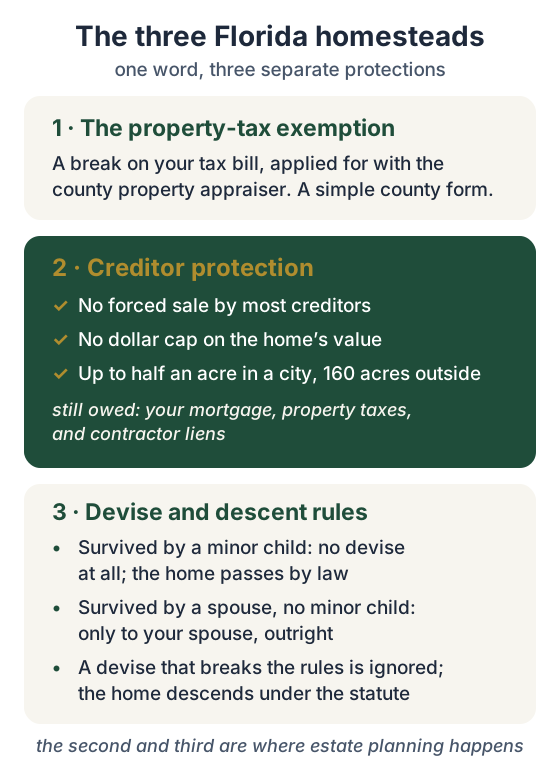
- The property-tax exemption. A break on your tax bill you apply for with the county property appraiser. It is a simple county form, not what this page is about.
- Creditor protection. Your primary home is shielded from forced sale by most creditors, with no dollar cap. This is the powerful one.
- Devise and descent rules. If you are survived by a spouse or minor child, Florida limits how you can leave your home, and overrides a will that breaks the rules.
The second and third are where estate planning happens, and where families get tripped up.
Creditor Protection: Among the Strongest Anywhere
Florida’s constitutional homestead exemption protects your primary residence from forced sale by most creditors, with no dollar limit (subject to size: up to half an acre in a city, 160 acres outside). The main exceptions are debts tied to the property itself, your mortgage, property taxes, and contractor liens. This protection is a cornerstone of Florida asset protection, and it keeps protecting the home as it passes to your family at death. How far homestead creditor protection goes →
You Cannot Freely Leave Your Homestead
This surprises people. Under the Florida Constitution:
- Survived by a minor child → you cannot devise the homestead at all; it passes by law.
- Survived by a spouse and no minor child → you may leave it only to your spouse, outright.
- A devise that breaks these rules is ignored, and the home descends under the statute.
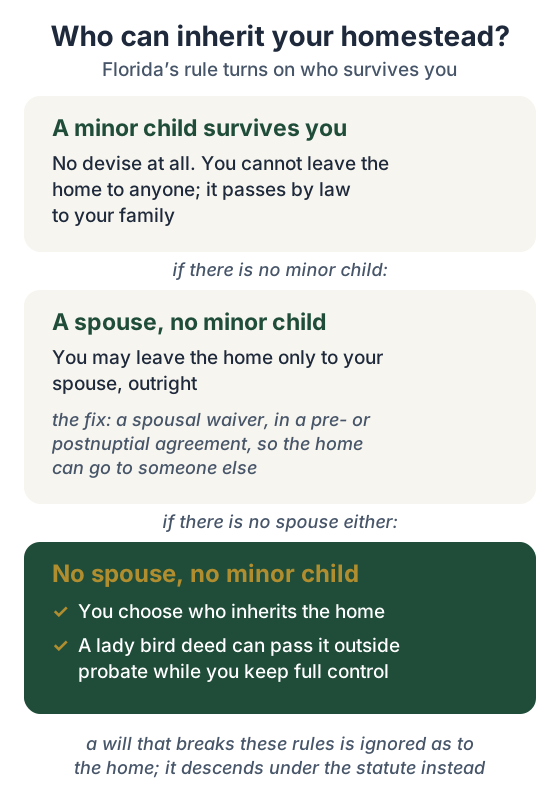
This is why a will alone often cannot accomplish what people want with the family home, and why the spouse’s rights and the right deed matter so much. Can you leave your home to anyone? →
Want your home to pass the way you intend?
Book a free 30-minute consult. We will work within Florida’s homestead rules so your plan actually holds.
Book your free consultWhat Happens to the Home at Death
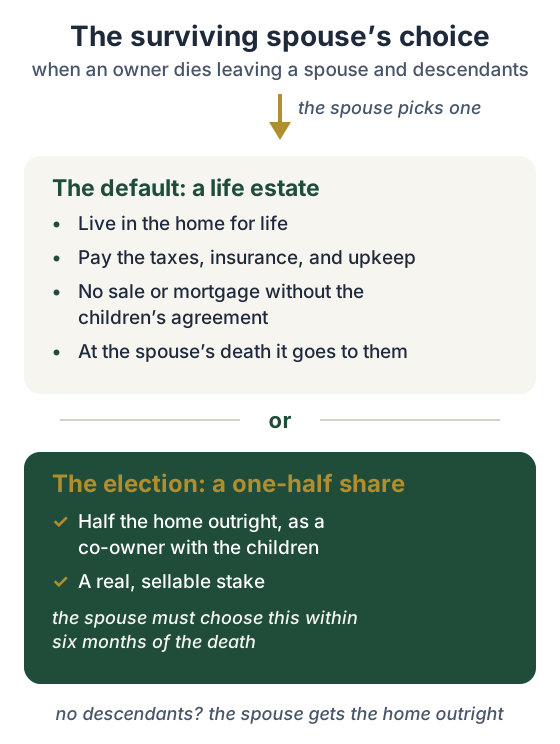
If the homestead was not validly devised and there is a surviving spouse plus descendants, the spouse takes a life estate with the remainder to the descendants, or the spouse can elect within six months to take a one-half undivided interest as a tenant in common instead. With no spouse, it passes to the descendants. Either way, the homestead generally passes outside probate and beyond the deceased owner’s creditors, even if the estate is insolvent. Full guide to homestead and the surviving spouse →
Planning Within the Rules
The rules are strict, but there is room to plan. A lady bird deed passes the home outside probate while you keep control (used correctly within the spouse and minor-child limits). Married couples often hold title as tenants by the entirety, so the home passes automatically to the survivor. And a spouse can waive homestead rights in a valid pre- or postnuptial agreement, common in blended families where each spouse wants the home to go to their own children. We build the plan around your situation.
Frequently Asked Questions
What Does Florida Homestead Law Actually Do?
It does three separate things that people constantly mix up. First, it gives a property-tax break you apply for with the county (that part is a simple county form). Second, and far more powerful, it shields your primary home from most creditors, with no dollar limit, one of the strongest protections in the country. Third, it restricts how you can leave your home at death: if you are survived by a spouse or a minor child, you cannot freely will the homestead away. The second and third are where estate planning lives.
Can I Leave My Florida Home to Anyone I Want?
Not if you have a spouse or a minor child. Under the Florida Constitution, if you are survived by a minor child, you cannot devise your homestead at all; it passes by law. If you are survived by a spouse and no minor child, you can leave the home only to that spouse outright. A devise that breaks these rules is simply ignored, and the home descends under the statute instead. A spouse can waive these rights in a valid pre- or postnuptial agreement, and there are planning tools, like a lady bird deed, that work within the rules.
What Happens to a Florida Homestead When the Owner Dies?
If there is a surviving spouse and descendants, and the home was not validly devised, the spouse receives a life estate with the remainder to the descendants, or the spouse can elect within six months to take a one-half undivided interest as a tenant in common instead. If there is no spouse but there are descendants, it passes to them. Critically, the homestead generally passes outside the probate estate and beyond the reach of the deceased owner’s creditors, even if the estate is insolvent. It is a protected asset that flows to the family.
Is My Florida Homestead Protected From Creditors?
Yes, strongly. Florida’s constitutional homestead exemption protects your primary residence from forced sale by most creditors, with no dollar cap (subject to size limits: up to half an acre in a city, up to 160 acres outside one). The main exceptions are debts tied to the property itself, your mortgage, property taxes, and contractor (mechanic’s) liens. This protection is a big reason Florida is considered one of the most debtor-friendly states, and it continues to protect the home as it passes to your heirs at death.
How Does a Lady Bird Deed Work With Homestead?
A lady bird deed can pass your homestead to your family at death outside probate while you keep full control and keep all your homestead protections during life. But it does not override the devise restrictions: a homestead lady bird deed that tries to pass the home to your children when you are survived by a spouse or minor child can be void as to the homestead. Used correctly, within the spouse and minor-child rules, it is one of the cleanest ways to pass a Florida home. We make sure it is done right.
Can a Spouse Waive Florida Homestead Rights?
Yes. A spouse can waive their homestead rights, including the right to inherit the home, in a valid prenuptial or postnuptial agreement, or in a separate written waiver that meets Florida’s requirements. This is common in second marriages and blended families, where each spouse wants their home to pass to their own children. Without a valid waiver, the surviving spouse’s homestead rights control, regardless of what the will says.
Common Situations
The blended-family trap. A husband’s will leaves his home to his children from a first marriage. Because he is survived by his wife, the devise is void; she takes a life estate (or elects a half interest). A spousal waiver, signed earlier, would have let him do what he intended.
The protected home. A widow worries creditors will take her house. Florida’s unlimited homestead exemption protects it from forced sale during her life, and it passes to her children free of her creditors at death.
The five acres outside town. A retired couple lives on five acres just past the city limits and assumes only the house itself is protected. Under Florida law, a homestead outside a municipality can cover up to 160 acres of contiguous land, so the whole parcel is shielded from forced sale, not just the footprint of the home. Inside a city the limit is half an acre, so where the property sits matters. We confirm how the size rules apply to your land as part of the plan.
Sources of Law
- Fla. Const. Art. X §4: §4(a)-(b) creditor exemption and size limits; §4(c) devise restrictions. Fla. Stat. §732.401 (descent of homestead; surviving-spouse life estate and the §732.401(2) one-half-interest election); §732.4015 (devise restriction); §732.7025 (spousal waiver). flsenate.gov (retrieved 2026-06-08)
Updated on July 12, 2026. Reviewed by Kevin D. Klagge, Esq., Fla. Bar No. 99502. Attorney Kevin Klagge represents families, businesses, and international clients in estate planning and international law, with a focus on Florida legal tools. He litigates estate and business issues in court. General information about Florida law, not legal advice, and no attorney-client relationship is created. Homestead outcomes depend on your specific facts. Do not send confidential information until we have agreed to represent you.