
The Short Version
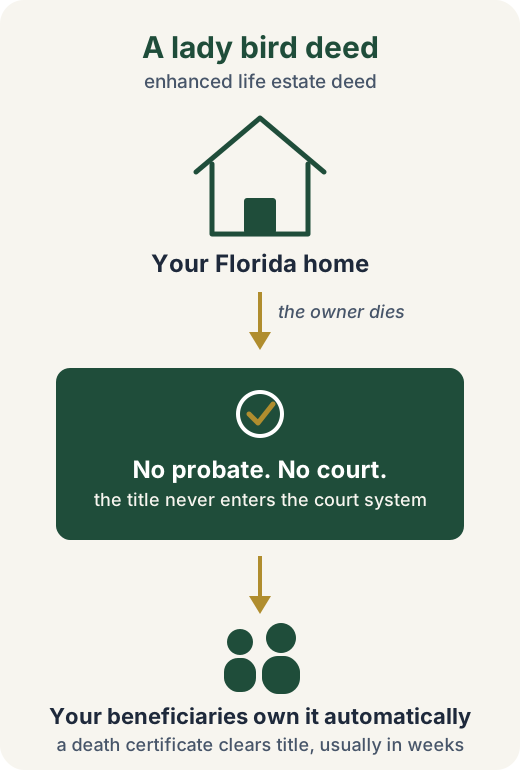
A lady bird deed can name as many remainder beneficiaries as you like, plus backups. At your death they own the home together. The problem is not the naming. It is what comes next: co-owners who must all sign to sell or refinance, a beneficiary who dies first, or one who has special needs or creditors. Each of those can break a deed that a trust would have absorbed.
The Three Ways Multiple Beneficiaries Break a Deed
- The standoff. Leave the home to three children and, after you are gone, all three generally must agree to sell or refinance. One who wants to keep it, or who simply will not sign, can freeze the other two. When they cannot break the tie, the result is a partition lawsuit: a court forces the sale and the lawyers are paid first.
- The death in the family. If a beneficiary dies before you and your deed has no survivorship language, that share can fall into the deceased beneficiary’s estate and trigger probate, the exact thing you were avoiding. The fix is contingent language, and a generic form usually leaves it out.
- The vulnerable share. A beneficiary on means-tested benefits who inherits part of your home can lose those benefits. A beneficiary with creditors, a divorce, or bankruptcy exposure can have their share seized or split. An outright share on a deed offers no protection at all.
Red flags: these mean name a trust, not people, on the deed
If any of these describe your beneficiaries, an outright multi-beneficiary deed is the wrong structure. A revocable trust holding the home solves every one of them:
- A child on SSI or Medicaid. An outright share counts as a resource and can end their benefits. The home should run to a third-party special needs sub-trust instead, fully discretionary, with no Medicaid payback.
- A child with creditors, a rocky marriage, or bankruptcy risk. A continuing spendthrift sub-trust keeps their share out of a creditor’s or a divorcing spouse’s reach in a way a deed cannot.
- More than two or three beneficiaries, or any who may disagree. A trustee with a power of sale replaces a committee of co-owners headed for partition.
- A minor beneficiary. A minor cannot sign to sell or refinance, which can force a court guardianship of the property. And if you have a minor child, Florida homestead law can void the deed entirely.
- You want real contingency planning. A trust absorbs a beneficiary who predeceases you or cannot serve by amending the trust, not by re-recording a deed every time life changes.
Book a free consult and we will design the structure around your actual family, not a one-size form.
The Better Structure: Name Your Trust as the Beneficiary
For anything past the simplest case, the recommended Florida approach is not to name the people on the deed at all. It is to name your revocable living trust as the remainder beneficiary. The lady bird deed still keeps the home out of probate and you keep full control for life. But at your death the home flows into the trust, where a single trustee follows the rules you set: sell and split the proceeds, hold it for a younger beneficiary, protect a vulnerable share, or buy one sibling out. No standoff, no partition suit, no benefits lost.
This is the quiet truth the form sellers leave out. A lady bird deed is a wonderful tool for one home going to one capable adult. The moment you have several beneficiaries with different lives, the deed needs a trust behind it to actually work. Compare a lady bird deed vs. a living trust →
Leaving your home to more than one person?
Let us look at who they are before you record anything. In a free 30-minute consult we will tell you whether a simple deed works or whether a trust will save your family a fight.
Book your free consultWhat It Costs to Do It Right
If a straightforward lady bird deed fits, our flat fee is $399 individual / $449 joint, plus recording. If your beneficiaries call for a trust, we will quote a flat fee for the trust up front and tell you exactly why it is worth it for your family. The 30-minute consult is free either way, and we will not sell you a trust you do not need. See the deed cost breakdown →
Frequently Asked Questions
Can a Lady Bird Deed Name More Than One Beneficiary?
Yes. A Florida lady bird deed can name two, three, or more remainder beneficiaries, and it can name backup (contingent) beneficiaries too. At your death they receive the home together, usually as tenants in common, each owning a share. Naming several beneficiaries is easy. Making sure they can actually agree on what to do with the house afterward is the hard part.
What Happens If My Beneficiaries Cannot Agree on the House?
Once they co-own the home, they generally all have to sign to sell it or refinance it. One who refuses can freeze the others. If they reach a standstill, the only way out is often a partition lawsuit, where a court forces a sale and divides the proceeds, after legal fees eat into everyone’s share. This is the most common way a multi-beneficiary deed goes wrong, and it is entirely avoidable with the right structure.
What If One of My Beneficiaries Dies Before I Do?
If your deed does not say what happens, that beneficiary’s share can pass through their own estate, which can force the very probate you were trying to avoid. A properly drafted deed states that a deceased beneficiary’s share goes to their descendants or to the surviving beneficiaries, so a death in the family does not unravel the plan. This is one of the details a form template usually gets wrong.
Can I Leave the Home to My Children in Unequal Shares?
Yes. You can give one beneficiary a larger share than another, as long as the deed spells out the percentages clearly. The catch is the same as with equal shares: unequal co-owners still have to agree to sell or refinance, and the one with the smaller share has the same power to hold things up. If your shares are unequal because your family situation is complicated, that is usually a sign a trust will serve you better.
What If One Beneficiary Has Special Needs or Gets Benefits?
Then an outright share is a serious problem. A beneficiary on SSI or Medicaid who inherits a piece of your home outright can lose those benefits, because the property counts as a resource. Even a beneficiary who simply has creditors, a shaky marriage, or bankruptcy exposure can have their share seized or divided. The fix is to route the home through a trust with a protected sub-share for that person, which a deed alone cannot do.
How Does a Trust Solve the Multiple-Beneficiary Problem?
Instead of naming the people on the deed, you name your revocable living trust, and the trust holds the home for them after your death. A single trustee can sell, rent, or divide the property under rules you set in advance, so there is no standoff and no partition suit. The trust can also keep a special-needs or creditor-exposed beneficiary’s share protected, and it handles a beneficiary who dies or is unable to serve without re-recording anything. For more than a couple of beneficiaries, this is almost always the better tool.
So When Is a Multi-Beneficiary Lady Bird Deed Actually Fine?
When the beneficiaries are a small number of adults who get along, none of them has special needs or creditor problems, and they are likely to agree on selling or keeping the home. A widow leaving her house to two close daughters who plan to sell it is a clean fit. The more beneficiaries you add, and the more complicated their lives, the more a trust earns its cost.
Common Situations
Two daughters, one plan. A widow in Naples leaves her paid-off home to two adult daughters who already agree they will sell it and split the money. A lady bird deed for $399 is exactly right, and we say so.
Three kids, one holdout. A father deeds his home equally to three children. After he dies, two want to sell and one wants to live there. The disagreement ends in a partition suit that costs the family tens of thousands. A trust naming one child as trustee, with a buyout formula, would have prevented all of it.
The son on disability. A mother names all four children on the deed, including a son who receives SSI. His outright quarter-share threatens his benefits the day she dies. Running the home through a third-party special needs sub-trust would have protected both his share and his benefits.
The remarried widower. A widower with two adult sons remarries and wants his new wife and both sons named together on the deed, each with a share. That would leave a surviving spouse co-owning one house with her stepsons, where she wants to stay and they want to sell, with Florida’s homestead rules for a married owner layered on top. The cleaner structure is a trust that gives her the right to live in the home for life and passes it to the sons afterward. Co-ownership between a widow and stepchildren is a standoff waiting to happen; a trust sets the rules while everyone is still on good terms.
Sources of Law
- Fla. Stat. ch. 64: partition of jointly owned real property. flsenate.gov (retrieved 2026-06-14)
- Fla. Stat. §736.0502: spendthrift provisions protecting a beneficiary’s trust interest. flsenate.gov
- 42 U.S.C. §1396p(d)(4) / SSI resource rules: inherited real property as a countable resource; third-party special needs trusts. law.cornell.edu
- Fla. Const. Art. X, §4(c) / Fla. Stat. §732.401: homestead may not be devised away from a surviving spouse or minor child. flsenate.gov
Updated on July 12, 2026. Reviewed by Kevin D. Klagge, Esq., Fla. Bar No. 99502. Attorney Kevin Klagge represents families, businesses, and international clients in estate planning and international law, with a focus on Florida legal tools. He litigates estate and business issues in court. General information about Florida law, not legal advice, and no attorney-client relationship is created. Do not send confidential information until we have agreed to represent you.