
The Short Answer
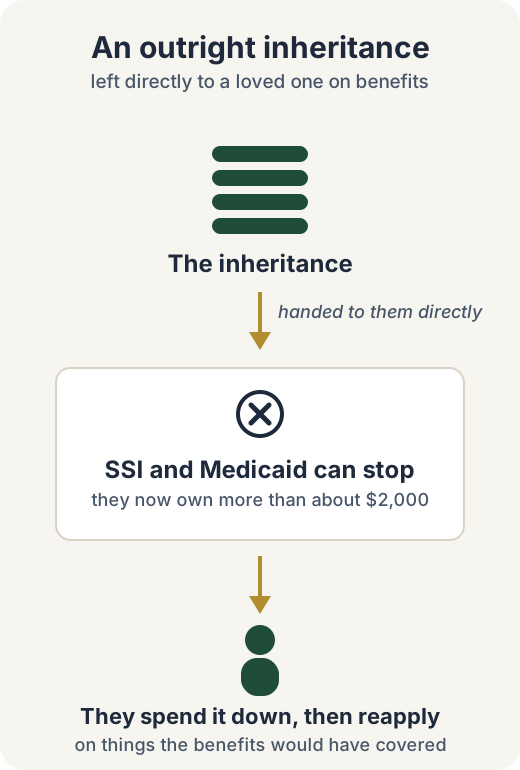
A special needs trust holds money and property for a person with a disability without disqualifying them from the benefits they rely on, like SSI and Medicaid. Those benefits cut off the moment a person owns more than about $2,000, so an inheritance or a gift handed over directly can do real damage. The trust holds the assets instead, and a trustee uses them to improve the person’s life in ways the benefits never cover. The guiding rule is supplement, not supplant: the trust adds to the safety net rather than replacing it.
The Trap: Leaving Money the Wrong Way
Two well-meaning mistakes hurt families again and again:
- Leaving an inheritance directly to a disabled child or relative. The money pushes them over the asset limit, their benefits stop, and they have to spend it down on things the benefits would have paid for, then reapply. Years of careful saving, undone in a month.
- Disinheriting them to "protect" the benefits. Now they keep the benefits but get nothing extra, and lose the comfort and care your gift could have provided.
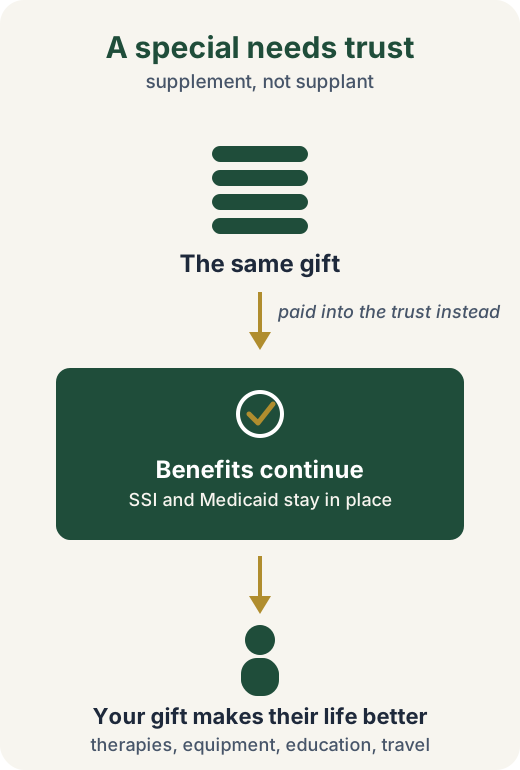
A special needs trust avoids both. The benefits continue, and your gift makes their life genuinely better.
What the Trust Can Pay For
The trustee uses the trust for the things that add quality of life, which government programs do not cover: therapies and care beyond Medicaid, special equipment, education and training, travel and recreation, a phone and electronics, transportation or a vehicle, a personal caregiver or companion, even a gym membership. The trust is generally careful about paying for food and housing directly, because that can reduce the SSI check, and we set yours up so the trustee knows exactly how to spend without causing harm.
The Two Main Types
The right structure depends on whose money funds the trust:
- Third-party trust (the estate-planning one): funded with your money, usually parents or grandparents planning ahead. There is no Medicaid payback, so whatever remains at the beneficiary’s death can pass to other family members you choose.
- First-party trust: funded with the disabled person’s own money, such as a personal-injury settlement or an inheritance they received directly. It must be irrevocable, set up before they turn 65, and include a Medicaid payback, meaning the state is repaid from what is left at death.
- Pooled trust: run by a nonprofit that pools many beneficiaries’ funds; a good option for smaller amounts, when there is no suitable trustee, or for a first-party trust over someone 65 or older.
The same comparison side by side:
Swipe the table sideways to compare all three types.
| What to compare | Third-party trust | First-party trust | Pooled trust |
|---|---|---|---|
| Whose money funds it | Someone else’s, usually parents or grandparents planning ahead | The disabled person’s own, such as a settlement or an inheritance received directly | Many beneficiaries’ funds, pooled by a nonprofit with a separate account for each |
| Key rules | No Medicaid payback; what remains at death can pass to other family members you choose | Must be irrevocable, set up before age 65, with a Medicaid payback at death | Run by a nonprofit; funds are pooled for investment, accounts kept separate |
| When it fits | Planning ahead for a child or grandchild with a disability | A settlement or an inheritance the person already received | Smaller amounts, no suitable individual trustee, or a first-party trust at 65 or older |
A simple savings tool called an ABLE account often pairs with the trust for everyday disability expenses. We help you decide how to use both.
Have a child or relative with a disability?
Your estate plan should route their share through a special needs trust, not to them directly. Book a free 30-minute consult and we will set it up right.
Book your free consultWhat It Costs
We quote a flat fee at the consult, based on the type of trust, the funding, and your family’s situation. It protects benefits often worth far more over a lifetime, and it prevents the painful scramble that follows when an inheritance lands in the wrong place. It is one piece of the broader irrevocable trust toolkit, and we coordinate it with the rest of your estate plan. See pricing →
Frequently Asked Questions
What Is a Special Needs Trust?
It is a trust that holds money and property for a person with a disability without disqualifying them from means-tested government benefits like SSI and Medicaid. Those benefits cut off if the person owns more than about $2,000, so an inheritance or a gift handed to them directly can do real harm. A special needs trust holds the assets instead, and the trustee uses them to improve the person’s life in ways the benefits do not cover. The key word is supplement: the trust adds to government benefits rather than replacing them.
Why Can’t I Just Leave Money to My Disabled Child Directly?
Because it can backfire badly. The moment your child receives the money, their countable assets jump over the limit and their SSI and Medicaid can stop, sometimes including the services that fund their housing, care, or therapies. They then have to spend down the inheritance on things the benefits would have covered, and reapply. Disinheriting them to "protect" their benefits is no better, because it leaves them with nothing extra. A special needs trust is the tool that solves both problems at once.
What Can a Special Needs Trust Pay For?
The things that make life fuller, which government benefits do not cover: therapies and medical care beyond what Medicaid pays, special equipment, education and training, travel and recreation, electronics and a phone, a vehicle or transportation, a personal caregiver or companion, even haircuts and a gym membership. What the trustee generally avoids is paying for food and shelter directly, since that can reduce the SSI check, and we set the trust up so the trustee knows exactly how to spend without doing harm.
What’s the Difference Between a First-Party and Third-Party Special Needs Trust?
It comes down to whose money funds it. A third-party trust is funded with someone else’s money, usually parents or grandparents planning ahead for a disabled child; it has no Medicaid payback, so whatever is left at the beneficiary’s death can go to other family. A first-party trust is funded with the disabled person’s own money, such as a personal-injury settlement or an inheritance they received directly; it must be irrevocable, set up before they turn 65, and include a Medicaid payback (the state is repaid at death). Which one fits depends entirely on where the money is coming from.
What Is a Pooled Trust?
A pooled trust is a special needs trust run by a nonprofit organization that combines (pools) many beneficiaries’ funds for investment while keeping a separate account for each. It can be a good option when the amount is modest, when there is no suitable individual trustee, or for a first-party trust over a beneficiary who is 65 or older, where an individual first-party trust may not work. We will tell you whether a pooled trust or an individual one is the better fit.
How Does an ABLE Account Fit In?
An ABLE account is a tax-advantaged savings account for a person whose disability began before age 46 (the limit rose from 26 in 2026), and it can hold a limited amount without affecting benefits. It pairs nicely with a special needs trust: the ABLE account is simple and flexible for everyday disability expenses, while the trust handles larger amounts and long-term planning. Many families use both. We help you decide how to split funds between them.
Who Should Set Up a Special Needs Trust?
Parents or grandparents who want to leave something to a child or grandchild with a disability; anyone whose will or trust currently leaves an inheritance to a relative who receives, or might one day receive, disability benefits; and a disabled person who has come into money through a settlement or a direct inheritance. If someone in your family has a disability, your estate plan should almost certainly route their share through a special needs trust rather than to them outright.
How Much Does a Florida Special Needs Trust Cost?
We quote a flat fee at the consult, because the design depends on the type of trust, the funding, and your family’s situation. It is a meaningful investment, but it protects benefits that are often worth far more over a lifetime, and it prevents the costly scramble that follows an inheritance landing in the wrong place. The 30-minute consult is free.
Common Situations
The parents planning ahead. A couple’s adult son has autism and receives SSI and Medicaid. Their old will left him a third of the estate outright, which would have ended his benefits. We redirect his share into a third-party special needs trust, naming his sister as trustee, so he keeps his benefits and gains everything the trust can provide.
The settlement. A young woman receives a large personal-injury settlement that would disqualify her from Medicaid. A first-party special needs trust holds the funds, preserving her coverage while paying for therapies and care the settlement was meant to provide.
The grandmother’s gift. A grandmother wants to leave something to a grandson with Down syndrome. Leaving it to him directly would cost him his benefits; a special needs trust lets her gift help him for the rest of his life without that risk.
Sources of Law
- 42 U.S.C. §1396p(d)(4)(A) (first-party special needs trust), (d)(4)(C) (pooled trust); Social Security POMS on SSI trust treatment. (retrieved 2026-06-08)
- Florida Trust Code, Fla. Stat. ch. 736 (trust creation and administration generally). ABLE accounts: 26 U.S.C. §529A (eligibility now extends to disability onset before age 46).
- Means-tested benefit asset limits (about $2,000 for SSI) are set by federal program rules and change; confirmed at the consult.
Updated on July 11, 2026. Reviewed by Kevin D. Klagge, Esq., Fla. Bar No. 99502. Attorney Kevin Klagge represents families, businesses, and international clients in estate planning and international law, with a focus on Florida legal tools. He litigates estate and business issues in court. General information about federal and Florida law, not legal advice, and no attorney-client relationship is created. Benefit rules and limits change and depend on your specific facts. Do not send confidential information until we have agreed to represent you.