The Short Version
When the person who created a revocable trust dies, the trust becomes irrevocable and the successor trustee has to settle it, essentially doing what a personal representative does in probate, but privately, without a full court case. You gather and value the assets, notify the beneficiaries, handle creditors and taxes, keep an accounting, and distribute what is left. The funded trust spared the family probate, but the settlement work is real, and it comes with real duties.
What the Successor Trustee Must Do
This section covers the job after a death. Taking over while the grantor is still alive, accepting or declining, and proving your authority to a bank are in our guide to the Florida successor trustee.
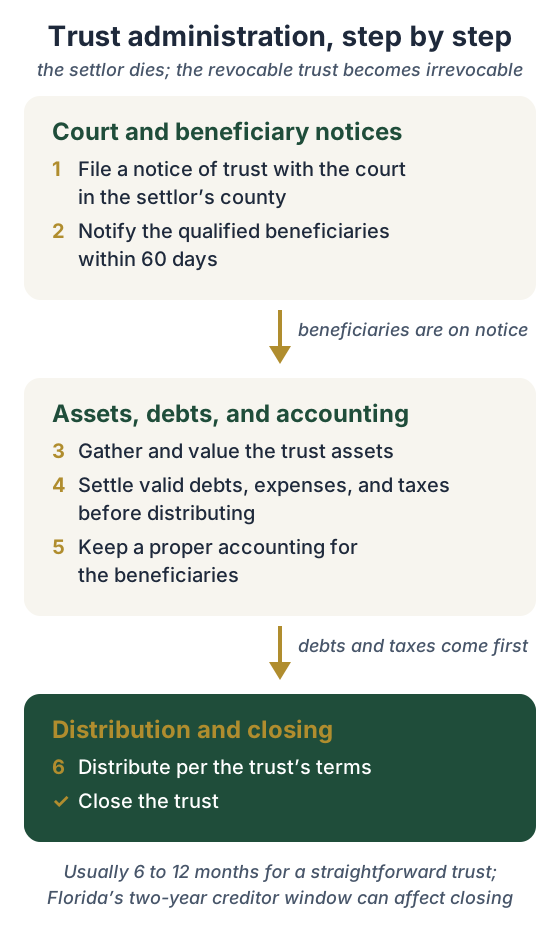
- File a "notice of trust" with the court in the settlor’s county.
- Notify the qualified beneficiaries within 60 days that the trust exists and who the trustee is.
- Gather and value the trust assets.
- Settle valid debts, expenses, and taxes before distributing.
- Keep a proper accounting for the beneficiaries, who have enforceable rights to information and accountings.
- Distribute per the trust’s terms, then close the trust.
Skip a step, or distribute before debts and taxes are handled, and the trustee can be personally liable. Personal exposure is why most trustees serve with an attorney.
A different problem stops a trustee before any of this can start, which is a trust whose own terms never say what happens after the death. We followed a widow through six years of litigation over a document that described the couple’s rights only while both of them were alive, in the two words that froze a trust.
The Notice of Trust: The Filing Most Families Miss
Step one on that list deserves its own word, because it is the filing successor trustees most often skip. After the person who created the trust dies, Florida law requires the trustee to file a notice of trust with the court in the county where that person lived. The filing is a short paper carrying the settlor’s name and date of death, the title and date of the trust, and the trustee’s name and address. Its job is visibility. It tells the probate court and any creditors that the trust exists, so the estate side and the trust side can be coordinated. What the notice does not do is expose the plan, because the trust document itself is never filed and stays private. Skipping the notice does not shield the trust either, because valid expenses and obligations of the estate can still reach trust assets. File it early, then move to the beneficiary notices.
Named as successor trustee, and not sure where to start?
Book a No-Cost Phone Consult with Attorney Kevin D. Klagge, Esq. We will guide every step in order, wherever you are, and keep you off the liability traps.
Book a no-cost consultTrust Administration vs. Probate
A funded trust avoids the probate court case, but not the work of settling the estate. Trust administration is that work, run by the trustee instead of supervised by a judge, which makes it less expensive, more private and usually faster. The trade-off is that the trustee carries the responsibility (and the liability) that a court would otherwise oversee. If the trust was not fully funded, some assets may still need probate alongside the administration.
How Long It Takes
Usually 6 to 12 months for a straightforward trust, longer for a complex one, driven by valuing assets, resolving creditor claims, filing tax returns, and distributing carefully. Florida’s two-year creditor window can affect when a trustee is comfortable closing. We keep it moving and tell you what is realistic.
How Long Can a Beneficiary Sue a Trustee After the Money Goes Out?
A common question I hear is, "Once I distribute, when am I actually finished?" The answer surprises most trustees, because Florida lets the trustee set that clock himself, and doing nothing sets no clock at all.
Where a trustee sends a beneficiary a written report that adequately discloses a matter, and pairs it with a limitation notice, the beneficiary has 6 months from receiving the later of the two to sue over anything that report disclosed. Send the accounting without the limitation notice and the 6 months never starts, leaving the ordinary limitations period in its place. The single sentence is the difference between closed in half a year and open for years.
The trap runs the other way too. A beneficiary who knows he never received an accounting does not thereby start any clock against the trustee for failing to account. Florida says so expressly, and it means the trustee who keeps quiet to avoid trouble has bought himself no protection whatsoever. Behind all of it sits a repose period of 10 years from the end of the relationship or 20 years from the act complained of, whichever is later, running to 40 years where the beneficiary did not know about the trust, and a further 30 years on top where a beneficiary proves by clear and convincing evidence that the trustee actively concealed the facts.
The delivery rules for the limitation notice are fussy and worth respecting. The notice can sit inside the accounting, arrive with it, or follow within 10 days, and where it follows separately it is not treated as delivered separately if it travels with any other written communication except one that refers only to the limitation notice. A trustee who staples it to a cover letter about the sale of the house has lost that route.
Frequently Asked Questions
What Is Trust Administration in Florida?
Trust administration is the process of settling a trust after the person who created it (the settlor) dies. The revocable trust becomes irrevocable, and the successor trustee steps in to do essentially what a personal representative does in probate, meaning gather and value the assets, notify beneficiaries, deal with creditors and taxes, keep an accounting, and distribute what is left to the beneficiaries. The big difference is that a properly funded trust does all of this without a full probate court case, which is faster and more private, but it is still a real legal job with real duties.
What Does a Successor Trustee Have to Do?
A lot, and on a fiduciary duty to do it right. In Florida the successor trustee must, among other things, file a "notice of trust" with the court in the settlor’s county, notify the qualified beneficiaries within 60 days (including the trustee’s name and that the trust now exists), gather and value the trust assets, settle valid debts, expenses, and taxes, keep a proper accounting, and then distribute the assets per the trust’s terms. Getting the order or the accounting wrong can expose the trustee to personal liability, which is why most serve with an attorney.
Does a Trust Avoid Probate, or Is Trust Administration the Same Thing?
A funded trust avoids the probate court case, that is the benefit, but it does not avoid the work of settling the estate. Trust administration is that work, handled privately by the trustee instead of publicly by the court. So you trade a court-supervised probate for a trustee-run administration, which is less expensive, more private and usually faster, but still requires proper notice, creditor handling, accounting and distribution. If the trust was not fully funded, some assets may still need probate alongside the trust administration.
How Long Does Trust Administration Take?
Often 6 to 12 months for a straightforward trust, and 18 to 24 months or longer for a complex one. The timeline is driven by the same things that slow probate, namely valuing and selling assets, resolving any creditor claims, filing tax returns, and distributing carefully. Creditors generally have up to two years from the death to bring claims, which can affect how soon a trustee is comfortable closing the trust. We keep it moving and tell you what is realistic for your situation.
I’m a Successor Trustee. What Should I Do First?
Do not rush to distribute. First, secure the assets and gather the key documents (the trust, the death certificate, account statements). Then the legal steps begin with the notice of trust, the 60-day beneficiary notice, and an inventory of what the trust holds. Distributing to beneficiaries before debts, taxes, and the proper notices are handled is the classic mistake that creates personal liability for a trustee. Bring it to us early and we will guide each step in order.
Can You Help Me Administer a Trust?
Yes, this is a core part of what we do, and we handle it wherever you are for trustees who live out of state. We prepare the notice of trust and beneficiary notices, guide the creditor and tax steps, help with the accounting, and handle the distributions and closing, so you can serve as trustee without missing a deadline or stepping into liability. The phone consult costs nothing, and we quote the work up front.
Common Situations
The out-of-state trustee. A daughter in another state is named successor trustee of her late mother’s Florida trust. We handle the notice of trust, beneficiary notices, and distributions wherever you are, so she settles it without flying back and forth.
The early distribution. A trustee starts paying out to beneficiaries before taxes and a creditor claim are resolved. We step in, sort the order of payment, and protect him from personal liability.
The half-funded trust. A son settling his late father’s trust discovers one brokerage account still titled in his father’s own name, never moved into the trust. The trust cannot reach it, so a small probate case runs alongside the trust administration to collect that account and pour it into the trust under the father’s backup will. We handle both tracks together, so the family deals with one coordinated settlement instead of two separate fights. It is the most common surprise successor trustees bring us.
What Goes Wrong for Trustees
I walk clients through that sequence because the first thing a new trustee wants to do is the one thing that ends badly. A daughter is named successor trustee, the family is waiting, and she pays out. I have a few take-home points from the files that arrive after that.
The first is order of payment. I see cases where a trustee distributed in full and a tax bill or a creditor claim surfaced afterwards, and the beneficiaries had already spent it. The trustee is the one who answers for the shortfall, out of pocket, and asking eight relatives to send money back is not a remedy anybody actually gets.
The second is that silence is not safety. Trustees hold accountings back because the family is fighting and an accounting feels like handing over ammunition. What I tell them is that Florida gives a properly delivered accounting the power to close the door in 6 months, and gives a withheld one no clock at all. The trustee who says nothing for four years has not run out the time, he has preserved it for the other side.
The third is the half-funded trust. I read trust instruments that were never funded every week, and in an administration it shows up as one account still in the settlor’s own name. The trust cannot reach it, so the family needs a small probate running alongside, and the trustee who did not look for it distributes as though the estate were complete.
Practice pointer. Put the limitation notice inside the accounting itself rather than mailing it afterwards. Florida permits three delivery routes and the separate one carries a rule people get wrong, so the version that cannot fail is the one bound into the document the beneficiary is already reading.
Avoid a partial distribution made to quiet an impatient beneficiary before the tax position is settled. An early payment made under pressure is the single most common reason a trustee ends up personally liable, and the beneficiary who pushed for it is usually the one who later objects to the accounting.
One limit is worth stating plainly. How exposed a particular trustee is turns on what the trust says, what has already been sent to the beneficiaries and what the estate owes, and none of that is visible from a web page. What I can tell you is the order the steps go in, and that the order is what decides whether the liability is yours.
Kevin D. Klagge, Esq., admitted in Florida since 2012. Any case described above is a decision of a Florida court rather than a matter handled by this firm. Past results do not guarantee a similar outcome.
Sources of Law
- Fla. Stat. §736.1008 (annotated): limitations on proceedings against trustees. Subsection (2) sets the 6-month bar running from receipt of the trust disclosure document or an applicable limitation notice, whichever is later; (4)(a) defines the limitation notice and gives optional wording; (5) fixes the four delivery routes, with (5)(c) providing that a separately delivered notice is not delivered separately if accompanied by another written communication other than one referring only to the notice; (3) provides that a beneficiary’s actual knowledge of not having received an accounting does not commence any period of limitations or laches for that claim; (6) sets the 10, 20 and 40-year repose periods and the 30-year extension on clear and convincing proof of active concealment. (retrieved 2026-09-20)
- Fla. Stat. ch. 736 (Florida Trust Code): §736.05055 (annotated) (notice of trust), §736.0813 (annotated) (duty to inform and account; 60-day beneficiary notice), §736.08135 (annotated) (trust accounting content). Creditor claims and the 2-year period interact with §733.710. flsenate.gov (retrieved 2026-06-08)
Updated on September 20, 2026. Reviewed by Kevin D. Klagge, Esq., Fla. Bar No. 99502. General information about Florida law, not legal advice, and no attorney-client relationship is created. A trustee’s duties depend on the trust and the estate. Do not send confidential information until we have agreed to represent you.
More Guides on Florida Revocable Living Trust
- Florida Trustee Fees
- Florida Trust Accounting
- Trust Amendment vs Restatement in Florida
- The Florida Trust Code
- Can You Borrow Against a Trust?
- Fannie Mae and Freddie Mac Rules for a Trust Mortgage
- How to Get an EIN for a Trust
- How to Find Out if There Is a Trust
Try the Which Estate Plan Do I Need? (quiz).