
Funding Is the Step People Skip
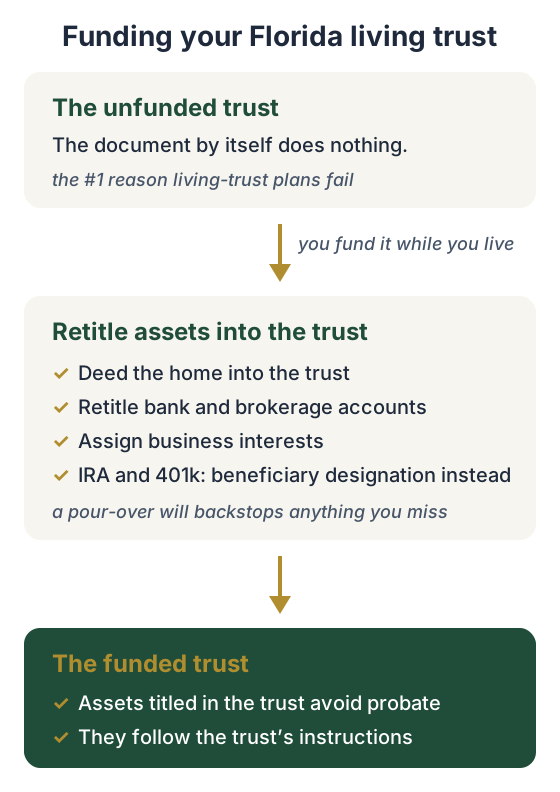
Funding means retitling your assets into the trust’s name: deeding real estate, retitling bank and brokerage accounts, assigning business interests. A living trust document by itself does nothing; only the assets actually titled in the trust avoid probate and follow its instructions. This is exactly why DIY trusts so often fail, people buy the document and never fund it.
Putting Your House in the Trust
You record a new deed transferring the home into the trust. In Florida, three things have to be right: your homestead protections carry over (with proper drafting), your mortgage is not triggered (federal law protects transfers to your own living trust), and your homestead tax exemption is preserved. Get the deed wrong and you can jeopardize all three.
We’ll fund it for you, not just draft it.
A free 30-minute consult includes the funding checklist and the deeds.
Book your free consultWhat to Leave Out
Not everything belongs in the trust. Retirement accounts (IRA, 401k) generally should not be retitled, that can trigger tax; you coordinate them by beneficiary designation instead. A pour-over will backstops anything you miss, but the goal is to fund completely while you are alive so it rarely has to.
The whole funding job, asset by asset:
| Asset | How it gets into your plan |
|---|---|
| Your home | Record a new deed transferring it into the trust |
| Bank and brokerage accounts | Retitle them in the trust’s name |
| Business interests | Assign them to the trust |
| Retirement accounts (IRA, 401k) | Generally not retitled; coordinate by beneficiary designation instead |
| Cars | Often left out for simplicity |
| Anything you forget | The pour-over will pours it into the trust, though it may go through probate first |
Frequently Asked Questions
What Does It Mean to "Fund" a Trust?
Funding means transferring your assets into the trust’s name, retitling bank and brokerage accounts, deeding real estate, and assigning other property to the trust. This is the step people skip, and it is the most important one. A trust document sitting in a drawer controls nothing; only the assets actually titled in the trust avoid probate and follow the trust’s instructions. An unfunded trust is the single most common reason a living-trust plan fails.
How Do I Put My House in a Trust?
You record a new deed transferring the home from yourself into the trust. In Florida there are a few things to get right: homestead protections generally carry over when the trust is properly drafted, your mortgage does not get triggered (federal law, the Garn-St. Germain Act, protects transfers to your own living trust), and your homestead tax exemption should be preserved. Doing the deed wrong can jeopardize all three, which is why this is not a do-it-yourself step.
What Should I NOT Put in My Trust?
Retirement accounts (IRA, 401k) generally should not be retitled into a trust, doing so can trigger immediate income tax; instead you coordinate them through beneficiary designations. Cars are often left out for simplicity. And some assets are better handled with a beneficiary or transfer-on-death designation than retitled. Part of funding is knowing what belongs in the trust and what is better handled another way.
What if I Forget to Fund Something?
That is what a pour-over will is for: it acts as a backstop, catching anything you did not transfer during life and pouring it into the trust, though those assets may still go through probate first. The goal is to fund as completely as possible while you are alive so the pour-over rarely has to do its job. We give you a funding checklist and handle the deeds and retitling.
Does the Bank Need a Full Copy of My Trust to Retitle My Accounts?
No. Florida law lets your trustee hand the bank a short document called a certification of trust instead. It proves the trust exists, gives its date, and confirms the trustee’s authority, without revealing who inherits what. Banks, brokerages, and title companies accept it in place of the full trust, so your plan stays private while you retitle accounts. We prepare the certification along with the trust, so funding is a form, not a negotiation.
Updated on July 12, 2026. Reviewed by Kevin D. Klagge, Esq., Fla. Bar No. 99502. Attorney Kevin Klagge represents families, businesses, and international clients in estate planning and international law, with a focus on Florida legal tools. He litigates estate and business issues in court. General information about Florida law, not legal or tax advice. Do not send confidential information until we have agreed to represent you.