Funding Is the Step People Skip
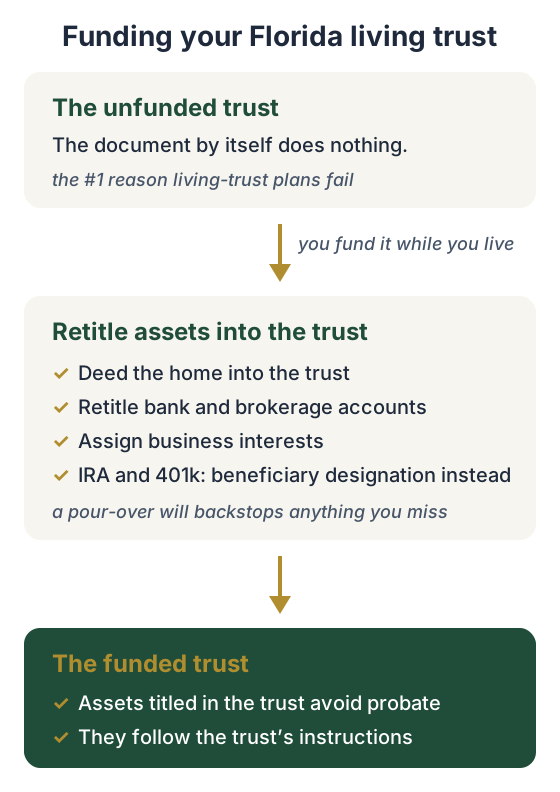
Funding means retitling your assets into the trust’s name, deeding real estate, retitling bank and brokerage accounts, and assigning business interests. A living trust document by itself moves nothing. Only the assets actually titled in the trust avoid probate and follow its instructions. The missing funding step is exactly why DIY trusts so often fail, because people buy the document and never fund it.
Each bank has its own paperwork for an account in a trust’s name. Our guide to opening a trust account at a bank quotes what Chase, Bank of America, Wells Fargo and Ally require.
What Is a Living Trust Fund?
A living trust fund is a revocable living trust that has been funded, meaning your home, your accounts and your other property have been retitled into the trust’s name. People say “trust fund” for the money and property inside the trust, and in Florida a living trust controls only what has actually been moved in.
The phrase sounds like old family money, and most living trust funds belong to ordinary families. A retired couple whose condo is deeded to their trust and whose savings and brokerage accounts are titled to them as trustees has a living trust fund. The couple stays in charge as their own trustees, the accounts keep using their own Social Security numbers, and the trust files no separate tax return while they are alive.
The fund is what does the work, because the trust document alone controls nothing. At incapacity or death, the successor trustee takes over whatever is titled in the trust with no guardianship and no probate, and anything left in your own name passes under the pour-over will and may go through probate first. Building the fund is the funding job on this page, a recorded deed for the home and each bank’s own trust paperwork for each account, with retirement accounts tied in by beneficiary designation instead.
A trust fund in the older sense, an irrevocable trust a parent or grandparent sets up to hold money for a child, works differently. Once the person who created that trust gives up the power to take the money back, the trustee manages the fund under the trust’s terms, and the child receives distributions when the terms say so. Our guide to the Florida irrevocable trust covers that version.
Putting Your House in the Trust
You record a new deed, usually a warranty deed rather than a quitclaim, transferring the home into the trust, signed before two witnesses and a notary and recorded in the county where the home sits. In Florida, three things have to be right. Your homestead protections carry over (with proper drafting), your mortgage is not triggered (federal law protects transfers to your own living trust), and your homestead tax exemption is preserved. A deed drafted wrong can jeopardize all three. Property in another state can go into the same Florida trust, but its deed follows that state’s law, as the guide to out-of-state property in a Florida trust explains. The full homestead walkthrough, including the pros, cons, and mortgage question, is at putting your house in a trust in Florida.
The words on the deed decide whether your successor trustee can sell the house without handing a buyer the trust. Florida's recording statute lets anyone deal with a trustee on the strength of the recorded deed alone when the deed names the grantee as trustee and confers the power to protect, conserve, sell, lease, encumber and otherwise manage and dispose of the property. A deed that names the trust by its title and date and recites none of those powers refers a buyer to a document that is not in the public record, which is a cloud on the title, and the Florida Bar's trust administration manual says the title company will then require the trust, excerpts from it, or a certification of trust before it insures a sale. A warranty deed carries your existing title policy and the prior owner's warranties into the trust, which a quitclaim does not, and older policies can stop covering a trustee who took by quitclaim once you have died. What the deed has to say →
Practice pointer. A funding deed recorded years ago by someone else is worth reading before anything else in the file, because a missing powers paragraph is fixed by a corrective deed while you are alive and by a title examiner's demand for the trust after you are not.
We draft the trust and record the deed for your home.
A No-Cost Phone Consult includes the funding checklist and the deeds.
Book a no-cost consultWhat to Leave Out
Some assets belong outside the trust. Retirement accounts (IRA, 401k) generally should not be retitled, because retitling can be treated as a withdrawal and taxed as income in that year. You coordinate them by beneficiary designation instead. The account-side paperwork usually runs through your advisor, and here is how we work with your financial advisor so nothing falls through. A pour-over will backstops anything you miss, but the goal is to fund completely while you are alive so it rarely has to.
The table below shows the whole funding job, asset by asset.
| Asset | How it gets into your plan |
|---|---|
| Your home | Record a new deed transferring it into the trust |
| Bank and brokerage accounts | Retitle them in the trust’s name |
| Business interests | Assign them to the trust |
| Retirement accounts (IRA, 401k) | Generally not retitled; coordinate by beneficiary designation instead |
| Cars | Often left out for simplicity |
| Anything you forget | The pour-over will pours it into the trust, though it may go through probate first |
Practice pointer. A bank’s new-account form often asks how the account is owned and offers joint, payable-on-death and trust options side by side, and the box the clerk checks controls over what the trust says. Read the signature card before you leave the branch, because a card titled to you alone, with no payable-on-death beneficiary, sends that account through probate.
How Long Does Probate Take on Unfunded Assets in a Trust in Florida?
Probate on assets left out of a Florida trust usually takes a few weeks to two or three months through summary administration, when what was left out totals $150,000 or less after exempt property, and 6 to 12 months through formal administration when it is larger. Formal probate cannot close sooner than about three months, because creditors get three months from the first published notice to file claims. Clients are often confused about whether the pour-over will skips that process, and ask me, “Doesn’t my trust cover the house even though it was never deeded in?” The pour-over will does send the house to the trust in the end, but only after a court opens an estate, appoints a personal representative and lets the creditor period run.
The cost follows the same split. Probating assets that were left out is a flat fee from $2,500 for summary administration and from $3,500 for formal administration, plus court and publication costs. A recorded deed into the trust is $550. The guide to dying without funding your trust walks through the homestead exception and the rest of the clean-up.
Who Handles Funding the Trust, You or the Lawyer?
The person the engagement letter names handles the funding, and without that sentence the answer is unsettled in Florida. No Florida appellate court has decided whether a lawyer must fund a trust he drafted when he never agreed to, and the Second District expressly left that question open in 2021. The answer therefore depends on what was promised in writing. In our Complete Trust Plan, I prepare and record one funding deed for your Florida home, prepare a certification of trust for the banks, and give you written funding instructions. The bank and brokerage forms still need your own signature, because only the account owner can retitle an account.
Practice pointer. Ask any lawyer drafting a trust to say in the engagement letter which deeds he will record and which accounts you will retitle yourself. A one-line answer at signing settles a question that otherwise surfaces only after a death.
What It Costs to Fund a Florida Trust
Funding your Florida home is included when we build the trust. The Complete Trust Plan is a flat fee from $3,200 for an individual or $4,500 for a couple, and it includes the revocable trust, a pour-over will, the incapacity documents, one funding deed for your homestead and help retitling your accounts. Each additional property is $199. If you already have a trust, a deed moving a house into it is a flat fee from $550, which includes reviewing the trust so the deed names the right trustee. Government costs, mainly the county recording fee and any documentary stamp, are additional and passed through at cost, and posted fees are honored for 90 days. The full list is on the pricing page.
The deed is the step that makes the trust work.
Book a No-Cost Phone Consult with Attorney Kevin D. Klagge, Esq. We will tell you what is already in your trust and what still needs a deed or a new account title.
Book a no-cost consultFrequently Asked Questions
What Does It Mean to "Fund" a Trust?
Funding means transferring your assets into the trust’s name, retitling bank and brokerage accounts, deeding real estate, and assigning other property to the trust. Funding is the step people skip, and it is the most important one. A trust document sitting in a drawer controls nothing; only the assets actually titled in the trust avoid probate and follow the trust’s instructions. An unfunded trust is the single most common reason a living-trust plan fails.
How Do I Put My House in a Trust?
You record a new deed transferring the home from yourself into the trust. In Florida three things have to be right. Homestead protections generally carry over when the trust is properly drafted, your mortgage does not get triggered (federal law, the Garn-St. Germain Act, protects transfers to your own living trust), and your homestead tax exemption should be preserved. Doing the deed wrong can jeopardize all three, which is why this is not a do-it-yourself step.
Do I Use a Quitclaim Deed to Put My House in My Trust?
A warranty deed is the better form in most cases. A quitclaim transfers whatever you own with no warranties, so it carries neither the prior owner’s warranties nor your existing title insurance into the trust, and under older owner’s policies the successor trustee can be left without coverage after your death. Either form also has to name you as trustee of the trust by its title and date and recite the trustee’s powers to protect, conserve, sell, lease, encumber and otherwise manage and dispose of the property, because a deed without those powers sends the title company looking for the trust at the next closing. The deed is included in the Complete Trust Plan and is a flat fee from $550 for a trust you already have.
What Should I NOT Put in My Trust?
Retirement accounts (IRA, 401k) generally should not be retitled into a trust, doing so can trigger immediate income tax; instead you coordinate them through beneficiary designations. Cars are often left out for simplicity. And some assets are better handled with a beneficiary or transfer-on-death designation than retitled. Part of funding is knowing what belongs in the trust and what is better handled another way.
What if I Forget to Fund Something?
A pour-over will exists for exactly that. The pour-over will acts as a backstop, catching anything you did not transfer during life and pouring it into the trust, though those assets may still go through probate first. The goal is to fund as completely as possible while you are alive so the pour-over rarely has to do its job. We give you a funding checklist and handle the deeds and retitling.
Does the Bank Need a Full Copy of My Trust to Retitle My Accounts?
No. Florida law lets your trustee hand the bank a short document called a certification of trust instead. The certification proves the trust exists, gives its date, and confirms the trustee’s authority, without revealing who inherits what. Banks, brokerages, and title companies accept it in place of the full trust, so your plan stays private while you retitle accounts. We prepare the certification along with the trust, so funding is a form, not a negotiation.
How to Open a Trust Fund Account?
A trust fund account is opened by the trustee in the trust’s name, either by retitling an existing account or by opening a new one. Each bank has its own paperwork for a trust account, and most accept a certification of trust instead of the full trust document, so the terms of the plan stay private. While the person who created a revocable trust is alive and serving as trustee, the account uses that person’s own Social Security number and needs no separate tax identification number. Our guide to opening a trust account quotes what Chase, Bank of America, Wells Fargo and Ally require.
How to Put Money in a Trust Fund?
Money goes into a trust fund by retitling a bank or brokerage account in the trust’s name, or by depositing into an account the trustee has opened for the trust. Real estate goes in by a recorded deed, and business interests are assigned to the trust. Retirement accounts such as an IRA or 401k generally stay out, because retitling them can trigger immediate income tax, and they are tied to the plan through beneficiary designations instead. Any account left in your own name at death passes under the pour-over will and may go through probate first.
Can You Set Up a Trust Fund for Yourself?
Yes, and a revocable living trust is exactly that, a trust you create, serve as trustee of and benefit from during your life. Day to day nothing changes, because the person who creates the trust usually serves as the trustee and keeps full control of the money. The trust’s real work starts at incapacity or death, when a successor trustee steps in without a guardianship or probate. A trust set up for your own benefit does not protect the money from your own creditors, even when the trust is irrevocable.
What Happens to a Trust Fund When the Person Dies?
When the person who created a revocable trust dies, the trust becomes irrevocable and the successor trustee takes over the assets titled in the trust, with no probate for those assets. Within 60 days the trustee must notify the qualified beneficiaries that the trust exists and tell them they can request a copy. The successor trustee then pays the final bills and taxes and distributes or holds each share as the trust directs. Assets never retitled into the trust are the exception, because those pass under the pour-over will and may go through probate first.
How Long Does a Trust Fund Last?
A trust fund lasts as long as its terms say, which can be a few months or several generations. A trust that pays everything out after the creator’s death ends once the successor trustee pays the bills and distributes the rest. A trust that holds a child’s share until age 30, or pays a surviving spouse for life, continues for years or decades. Florida allows a trust created on or after July 1, 2022 to last up to 1,000 years.
When Do You Get Your Trust Fund?
A beneficiary receives a trust fund when the trust’s terms say so, and the trustee has to follow those terms. A trust might direct distribution within 90 days after death, give a child a share at a set age such as 30, or leave the timing to the trustee’s discretion. A successor trustee usually pays the final bills and taxes and waits out the creditor period before distributing the rest. A beneficiary who thinks the trustee is delaying has the right to a copy of the trust and to annual accountings.
Sources of Law
- Fla. Stat. §689.01 (deed execution with two subscribing witnesses); 12 U.S.C. §1701j-3(d)(8) (no due-on-sale enforcement against a transfer into an inter vivos trust in which the borrower remains a beneficiary).
- The powers on the deed: Fla. Stat. §689.073(1) to (3) and (5) (a recorded instrument naming a grantee as trustee and conferring the power to protect, conserve, sell, lease, encumber and otherwise manage and dispose of the property vests those powers in the trustee; no duty to inquire; purchasers take free of beneficiary claims). Resnick v. Goldman, 133 So. 2d 770 (Fla. 3d DCA 1961), and Grammer v. Roman, 174 So. 2d 443 (Fla. 2d DCA 1965), as cited in Florida Real Estate Transactions §10.06[3] (opinions not read for this page). Administration of Trusts in Florida (The Florida Bar, rev. Dec. 2025) ch. 14, §14.4.D (warranty deed preferred) and §14.5.B.4 (the trust, excerpts or a certification required unless the deed grants the powers). (verified 2026-10-18)
- Fla. Stat. §732.513 (pour-over devise to a trust); §733.702(1) (creditor claims barred unless filed within 3 months after first publication of the notice to creditors, or 30 days after service); §735.201(2) (summary administration where the estate less exempt property does not exceed $150,000, or the decedent has been dead more than 2 years), as amended by ch. 2026-57, effective July 1, 2026; §736.1017 (annotated) (certification of trust). Text read from the 2026 Florida Statutes, retrieved 2026-10-15.
- Ellerson v. Moriarty, No. 2D20-2653 (Fla. 2d DCA June 23, 2021) (slip opinion; dismissal of a granddaughter’s malpractice claim over an unrecorded funding deed reversed on the allegations; footnote 4 leaves open whether a drafting lawyer has a duty to fund absent an express agreement). Opinion read in full from CourtListener, retrieved 2026-10-15.
- Advertised fees are honored for 90 days from the posted date. Government costs, meaning recording, documentary stamps and certified copies, are additional and passed through at cost. Fees are not a prediction of outcome.
What I See When a Trust Is Never Funded
In my practice, funding is the part of a trust plan that fails most quietly, because nothing looks wrong until the person who signed is gone. In a Florida case decided in 2021, a grandmother hired a lawyer in January 2018 and signed an amendment to her trust giving her granddaughter a share of a property on 17th Street West in Palmetto (the gift was written into the trust itself, so nobody doubted what she wanted). She died that August. According to the granddaughter, the lawyer had talked with both of them about preparing and recording the deed, and no deed was ever prepared. The court called the gift “an unfunded devise,” and the granddaughter did not receive her interest in the property.
The granddaughter’s remaining option was a malpractice suit against the lawyer, which the trial court dismissed and the appeals court revived in June 2021, so that she could try to prove he had agreed to record the deed. Nearly three years after the death, the family was still litigating whether anyone had promised to do a job that takes one deed and one recording. A deed into the trust, signed at the same meeting as the amendment, would have put the property in the trust seven months before she died. I charge $550 for that deed, and in a new trust plan the first one is included.
Practice pointer. When a trust or an amendment names a specific property, I record the deed for that property at the signing rather than leaving it on a to-do list, and I check the county’s official records afterward to confirm it posted.
Avoid an amendment that gives away a named property while the deed for it is still unsigned, which leaves the gift in the trust and the property outside it.
A recorded deed has an honest limit. The deed controls only the property it describes, so a house bought after the trust was signed, or an account opened in your own name years later, needs its own deed or its own trust title. The pour-over will is the only backstop for those assets, and it works through probate.
Updated on October 18, 2026. Reviewed by Kevin D. Klagge, Esq., Fla. Bar No. 99502. General information about Florida law, not legal or tax advice. Do not send confidential information until we have agreed to represent you.
More Guides on Florida Revocable Living Trust
- Can You Put a House With a Mortgage in a Trust?
- How Do You Buy a House Anonymously in Florida?
- Can You Put Your Florida Homestead in a Revocable Trust?
- Florida Homes Held in Trust by County (Dataset)
- Florida Community Property Trust
- Trust Account Requirements (Dataset)
- Chase Trust Account: What Chase Requires
- Bank of America Trust Account
Try the Which Estate Plan Do I Need? (quiz).