The Short Answer
To qualify for Florida nursing-home Medicaid, you pass three tests. You need nursing-home-level care, your income has to fit under a cap, and your countable assets have to be at or under the limit. The key word is countable, because your home, a car, and several other assets do not count at all. Run your own numbers with the Florida Medicaid eligibility calculator, then read on for what to do if you are over. The limits themselves change almost every year, and we keep them together with what each one means in the 2026 Florida Medicaid numbers.
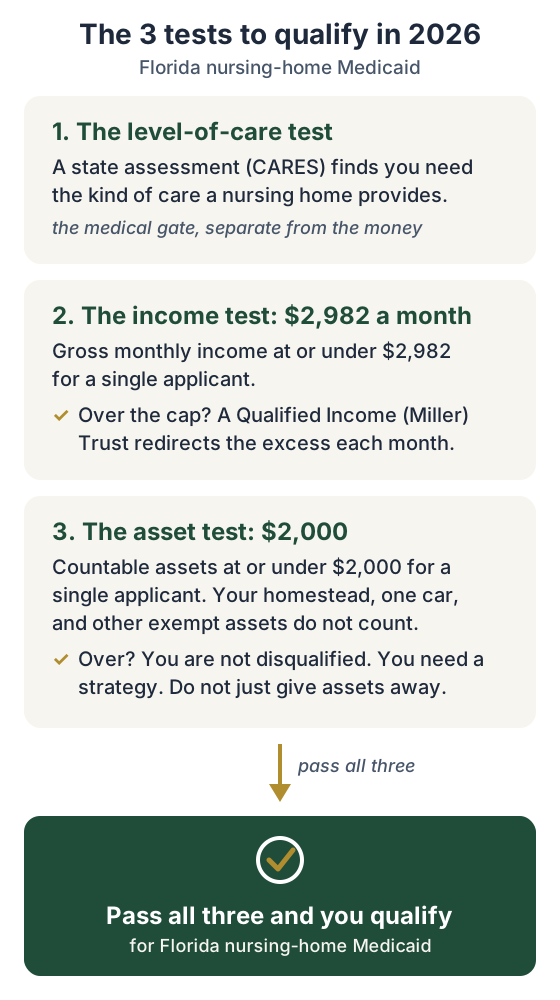
The 3 Tests to Qualify in 2026
- Level-of-care test. A state assessment (CARES) has to find you need the kind of care a nursing home provides. The assessment is the medical test, separate from the money.
- Income test, $2,982 a month. A single applicant’s gross monthly income must be at or under $2,982. Over it? Florida is an income-cap state, and a Qualified Income (Miller) Trust fixes it, see below.
- Asset test, $2,000. Countable assets must be $2,000 or less for a single applicant. Exempt assets (homestead, one car, personal belongings, prepaid burial, certain life insurance) do not count toward it.
The asset test turns on the word countable. Here is the split.
| Countable (counts toward $2,000) | Exempt (does not count) |
|---|---|
| Bank accounts and CDs | Your homestead (while you live there or intend to return) |
| Stocks | One car |
| A second property | Personal belongings |
| Cash-value life insurance over the limit | Prepaid burial arrangements and certain life insurance |
If You’re Over the Income Limit
Income over $2,982 a month does not disqualify you in Florida. A Qualified Income Trust (also called a Miller Trust) redirects the excess income each month so you still meet the cap. It is a standard tool, and we set them up routinely. Being "over income" is almost never the real obstacle.
If You’re Over the Asset Limit
This is where most families get stuck, and where planning matters most. Being over $2,000 in countable assets means you need a strategy. It does not mean you are disqualified. Here are the options.
- Spend-down on exempt items (home repairs, a reliable car, prepaid funeral).
- A personal-services / caregiver agreement.
- Spousal transfers to the at-home spouse.
- Medicaid-compliant annuities.
- A longer asset-protection plan set up before the look-back window matters.
What a parent can buy, which debts to pay first and how a gift turns into months without coverage are set out in our guide on how to spend down assets for Medicaid in Florida.
Do not just give assets away. Gifting is the single most common self-inflicted wound, because it triggers the five-year look-back penalty below and can leave you with no coverage and no money. Talk to an attorney before transferring anything. See how a "tax-free" gift still backfires on the gift tax calculator.
Married Couples: Protecting the At-Home Spouse
When one spouse needs care and the other stays home, Florida’s spousal-impoverishment rules protect the spouse at home. The at-home spouse (called the community spouse) can keep the homestead, a car, and up to $162,660 in countable assets. This protected share is called the community-spouse resource allowance. In many cases, a minimum monthly income allowance applies too. With planning, couples often protect considerably more than the default numbers suggest. The full picture is in our guide to what the community spouse can keep.
The 5-Year Look-Back
Florida reviews the five years of transfers before your application. Gifts and below-value transfers in that window are totaled and divided by a penalty divisor to set a stretch of ineligibility, during which the roughly $10,000-a-month nursing home bill is yours. Early planning protects the most. Crisis gifting hurts. You can estimate the penalty a past gift would create before you apply.
Your Home
Your homestead is exempt while you live there or intend to return, up to a 2026 equity limit of $752,000. There is no cap if a spouse or a child under 21 or a blind or disabled child lives there. The risk to the home is not eligibility. It is estate recovery after death, which reaches only the probate estate. A lady bird deed passes the home outside probate, keeping it out of recovery’s reach. This is why deed planning and Medicaid planning go together.
Over the limits, or not sure?
That is exactly what a No-Cost Phone Consult is for. We will tell you what is protectable in your situation before you spend down a dollar.
Book a no-cost consultYour Next Step
Start with the three tests above and the eligibility calculator for a quick read on where you stand. Then, before moving any money, talk to a Florida Medicaid planning attorney. The order matters. The families who keep the most are the ones who get advice before they act.
Frequently Asked Questions
How Do You Qualify for Medicaid in Florida?
For nursing-home (ICP) Medicaid in 2026 you have to pass three tests, a medical level-of-care test (you need nursing-home-level care), an income test (gross monthly income at or under $2,982 for a single applicant, or a Qualified Income Trust if you are over), and an asset test ($2,000 or less in countable assets for a single applicant). Many assets are exempt, including your homestead, so most people own less "countable" than they think.
Will Selling My House Affect My Medicaid?
Yes, and this catches families constantly. While you live in your Florida homestead (or intend to return to it), it is exempt and does not count against the $2,000 asset limit. Sell it, and the sale proceeds hit your bank account as fully countable assets, which can end your eligibility the same month. If a sale is genuinely needed, the planning happens before the closing, not after. There are lawful ways to handle proceeds, but they take lead time and advice. Talk to us before you list the house, not after it sells.
What Is the Florida Medicaid Income Limit for 2026?
The 2026 income cap for a single ICP applicant is $2,982 per month of gross income. Florida is an "income-cap" state, but going over the cap does not disqualify you, because a Qualified Income (Miller) Trust redirects the excess so you still meet the limit. These are routine to set up.
What Is the Florida Medicaid Asset Limit for 2026?
A single applicant can have no more than $2,000 in countable assets. Countable means bank accounts, CDs, stocks, a second property, and cash-value life insurance over the limit. Exempt (non-countable) assets include your homestead, one car, personal belongings, and prepaid burial arrangements. For a married couple with one spouse applying, the at-home spouse can keep up to $162,660 (the community spouse resource allowance).
How Do I Qualify if I’m Over the Asset Limit?
Being over $2,000 does not mean you cannot qualify; it means you need planning. Legitimate Florida strategies include spending down on exempt items, a personal-services contract, spousal transfers, certain annuities, or a longer asset-protection plan. The one thing not to do is start gifting assets away yourself, which triggers the five-year look-back penalty and usually makes things worse.
Does My House Stop Me From Qualifying?
Usually not. Your Florida homestead is an exempt resource while you live there or intend to return, up to a 2026 equity limit of $752,000 for a single applicant (no cap if a spouse or a child under 21 or a blind or disabled child lives there). The home’s real risk comes after death through estate recovery, which a lady bird deed can avoid by keeping the home out of probate.
What Is the Medicaid 5-Year Look-Back in Florida?
When you apply, Florida reviews the previous 5 years of transfers. Gifts or below-value transfers in that window are added up and divided by a penalty divisor ($10,645 per month in 2026) to create a period of ineligibility. This is why do-it-yourself gifting backfires, and why planning years ahead protects the most.
Can a Married Couple Protect the At-Home Spouse?
Yes. Florida has spousal-impoverishment protections so the husband or wife who stays home is not left destitute. The community spouse can keep the homestead, a vehicle, and up to $162,660 in countable assets, plus, in many cases, a minimum monthly income allowance. Careful planning often lets a couple protect substantially more than they expect.
When Should I Start the Medicaid Qualification Process?
As early as possible. Planning years before care is needed gives you the widest, cheapest set of options because it gets ahead of the look-back. But it is rarely too late: even after someone enters a nursing home, an elder-law attorney can often protect a meaningful share of the estate in a "crisis" case. Start with an honest look at the three tests, then talk to an attorney before moving any money.
What Assets Are Exempt and Don’t Count Toward the $2,000 Limit?
More than people expect. Florida does not count your homestead while you or your spouse live there (up to the state home-equity limit), one vehicle, your household goods and personal belongings, an irrevocable prepaid funeral or a burial plot, and term life insurance with no cash value (whole-life policies are exempt only up to a small face value). That is why qualifying is usually not about handing your savings to the nursing home. It is about converting countable cash into exempt things you actually need, done the right way so it does not trip the look-back.
Common Situations
"We make too much." A daughter assumes her father’s $3,400 monthly pension disqualifies him. A Qualified Income Trust handles the overage, and he qualifies. Income was never the real barrier.
"We have to spend it all." A wife fears losing everything when her husband enters care. Florida’s spousal protections let her keep the house, a car, and up to $162,660, and planning protects more. She keeps her home and her footing.
The gift that backfired. A man gives his son $50,000 to "get under the limit," then applies six months later. The look-back penalty delays his coverage by roughly five months. Had he called first, the same goal could have been reached without the penalty.
Sources of Law
- 2026 Florida ICP (nursing-home) Medicaid figures: asset limit $2,000 (single), income cap $2,982/month, community spouse resource allowance $162,660, home-equity limit $752,000. Florida DCF/ESS Policy Manual. (retrieved 2026-07-11)
- Qualified Income (Miller) Trust authority for income-cap applicants: 42 U.S.C. §1396p(d)(4)(B); Fla. ESS policy.
- Five-year transfer look-back and penalty: 42 U.S.C. §1396p(c).
- Fla. Stat. §409.9101: Florida Medicaid estate recovery, limited to the probate estate. flsenate.gov
What Families Ask Me in the First Phone Call
In 14 years of law practice, the call almost always comes from an adult child, and almost always in the week a parent went into a facility rather than the year before.
A common question I hear is, "Do we have to spend everything first?" No. Spending down is what happens to a family that does not plan, and it is not the same thing as qualifying. There is a difference between money that counts and money that does not, and most of the work is moving assets from the first category to the second without making a gift.
What I see go wrong is the well-meaning transfer. Somebody moves the house or empties an account to a child, believing that starts a clock. It does start a clock, and the clock does not begin until the applicant is otherwise eligible and out of money, which is precisely when the family can least afford to wait it out.
Practice pointer. Bring five years of statements to the first meeting, including the accounts you think are irrelevant. The application asks for them and the answer is easier to build before somebody has already given something away.
Avoid doing anything with the house before the eligibility picture is drawn. Where a lady bird deed is the right answer it costs $399 and keeps the home out of estate recovery. Where an outright transfer happens first, that option is gone and a penalty has replaced it.
Kevin D. Klagge, Esq., admitted in Florida since 2012. General information rather than advice on your situation.
Updated on September 1, 2026. Reviewed by Kevin D. Klagge, Esq., Fla. Bar No. 99502. General information about Florida law and 2026 Medicaid figures, not legal advice; figures change annually and eligibility depends on your facts. No attorney-client relationship is created. Do not send confidential information until we have agreed to represent you.
More Guides on Florida Medicaid Planning
- Florida Caregiver Agreement for Paying Family Care
- Florida Medicaid Share of Cost and Medically Needy
- Does Florida Medicaid Check Your Bank Account?
- Can a Postnup Help With Medicaid Planning in Florida?
- Florida Medicaid Asset Protection Trust (MAPT)
- Can a Non-Lawyer Do Medicaid Planning in Florida?
- How Much Does Assisted Living Cost in Florida?
- Does Medicaid Pay for Assisted Living in Florida?