
Do It Before the Crisis, Not After
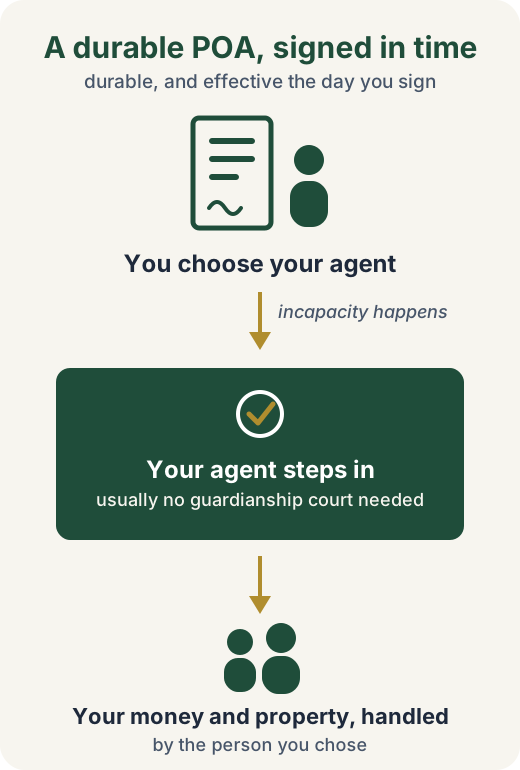
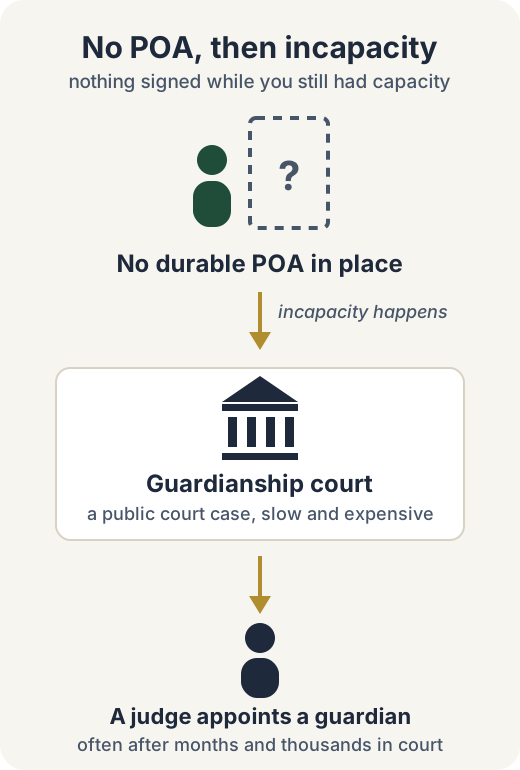
Here is the hard truth families learn too late: a power of attorney can only be signed by your parent while they still have capacity. Once dementia, a stroke, or a sudden decline takes that away, it is too late, and the only way to act for them is guardianship, a court process that is slow, public, and expensive. The whole point of a POA is to avoid that. So the right time is at the first sign of aging or illness, not after the emergency.
The Four Documents Your Parent Needs
- Durable power of attorney (financial): you pay bills, manage accounts, handle the home, and deal with Medicaid and benefits.
- Health-care surrogate (medical): you make health decisions if they cannot.
- Living will: their end-of-life wishes, in writing.
- HIPAA authorization: so doctors can talk to you.
See the full set on the power of attorney and advance directives pages, or work the whole legal checklist for aging parents. Ready to start? Here is how to get power of attorney for a parent, step by step.
Set it up while your parent still can.
A free 30-minute consult gets the right documents in place, by phone or video, even if you are out of state.
Book your free consultFlorida’s Rules (Why a Form Off the Internet Fails)
A Florida POA must be signed by your parent before two witnesses and a notary. It has to say it is durable, or it ends the instant your parent loses capacity. Florida does not allow "springing" powers that start later, so it is effective on signing. And the powers that matter most for elder care, making gifts and handling Medicaid transfers, only work if they are spelled out and separately initialed. Generic online forms routinely miss these, and a bank or Medicaid caseworker rejects them at the worst moment. We draft it to hold up and to include the authority your family will actually need.
If Your Parent Already Lost Capacity
Then a POA is off the table, and the path is guardianship. We can guide you through it, but it is the costlier, court-supervised route, which is the best argument for acting early with everyone else you love.
Get the printable checklist (free PDF)
The one-page Florida Aging-Parents Legal Checklist: every document and decision, in the order that matters, with room to check things off as a family.
We'll email the PDF and nothing else unless you ask. Downloading it does not create an attorney-client relationship; please don't send confidential details yet.
Frequently Asked Questions
Can I Get Power of Attorney for a Parent Who Has Dementia?
Only if your parent still has the mental capacity to understand and sign the document. A power of attorney must be granted by your parent, while they can still make decisions; you cannot give it to yourself. If your parent has already lost capacity, it is too late for a POA, and the only path is guardianship, a court process where a judge appoints someone to act for them. That is slower, public, and far more expensive, which is exactly why families should set up a POA early, at the first sign of decline, not after.
What Documents Does My Parent Need?
Four, ideally signed together: a durable power of attorney (so you can handle finances, accounts, and bills if they cannot), a health-care surrogate (so you can make medical decisions), a living will (their end-of-life wishes), and a HIPAA authorization (so doctors can talk to you). The durable POA is the financial one; the surrogate is the medical one. Most families need both, plus the directives.
What Makes a Florida Power of Attorney Valid?
Florida has strict rules. The document must be signed by your parent in front of two witnesses and a notary. It must say it is "durable," or it ends the moment your parent loses capacity, which defeats the purpose. Florida does not allow "springing" powers that kick in later on incapacity, so a valid POA is effective as soon as it is signed. And certain powers (making gifts, changing beneficiaries, creating or amending a trust) only work if they are spelled out and separately initialed. A form off the internet often misses these and fails when you need it.
What Can the Agent Do, and Not Do?
With a properly drafted durable POA, you can pay your parent’s bills, manage bank and investment accounts, deal with their home, file taxes, and handle Medicaid and benefits paperwork. You act in their best interest and keep their money separate from yours. You cannot use it after your parent dies (it ends at death, and probate takes over), and you cannot do the special things (large gifts, beneficiary changes) unless the document specifically grants them. We draft it to cover what your family actually needs, including Medicaid planning authority.
Should My Parent Name Two Children as Agents?
They can, but it deserves thought. Florida allows co-agents, and unless the document says otherwise each one can act alone, which works well when the siblings trust each other. What causes trouble is requiring them to sign everything together: every check and every bank errand then needs two signatures, which gets hard when one child lives far away. For many families the smoother setup is one agent plus a named successor, so there is a backup if the first child cannot serve. It is your parent’s choice, and we talk it through at the consult.
My Parent Lives in Florida but I Live Out of State. Can You Help?
Yes. This is one of the most common situations we handle: an adult child managing a Florida parent’s affairs from another state. We work by phone and video, arrange remote or mobile-notary signing for your parent, and coordinate the whole plan, the POA, the surrogate, and any Medicaid or estate planning, without you flying in.
Sources of Law
- Florida Power of Attorney Act, Fla. Stat. ch. 709 (execution §709.2105, durability §709.2104, no springing powers §709.2108, superpowers §709.2202). Health-care surrogate and living will: ch. 765. (retrieved 2026-06-10)
Updated on July 12, 2026. Reviewed by Kevin D. Klagge, Esq., Fla. Bar No. 99502. Attorney Kevin Klagge represents families, businesses, and international clients in estate planning and international law, with a focus on Florida legal tools. He litigates estate and business issues in court. General information about Florida law, not legal advice, and no attorney-client relationship is created. Do not send confidential information until we have agreed to represent you.