The Short Answer
Yes, a trust can own an LLC, and for most business owners that means a revocable living trust holding the membership interest. You transfer the LLC into your trust and keep running things exactly as before. Nothing changes while you are alive. The payoff comes at the hard moment. If you die or become unable to act, your successor trustee steps straight in, with no probate gap and no business in limbo. It is one of the simplest ways to make sure a business outlives its owner.
What Happens to Your LLC if You Die Without a Plan
This is the part owners rarely think about until it is too late. Consider what happens if your business is in your own name when you die.
- A single-member LLC can be forced into probate, and Florida law can wind the company down roughly 90 days after the sole member’s death unless the operating agreement says otherwise or your heirs act in time. Months of paralysis, employees and customers waiting, and no one with clear authority to sign.
- A multi-member LLC follows the operating agreement, and if that agreement is silent or vague, your heirs and your co-owners can end up fighting over who controls your share.
The full probate-side mechanics, including the split between the money rights your heirs receive and the vote they do not, are in what happens to a business when the owner dies in Florida.
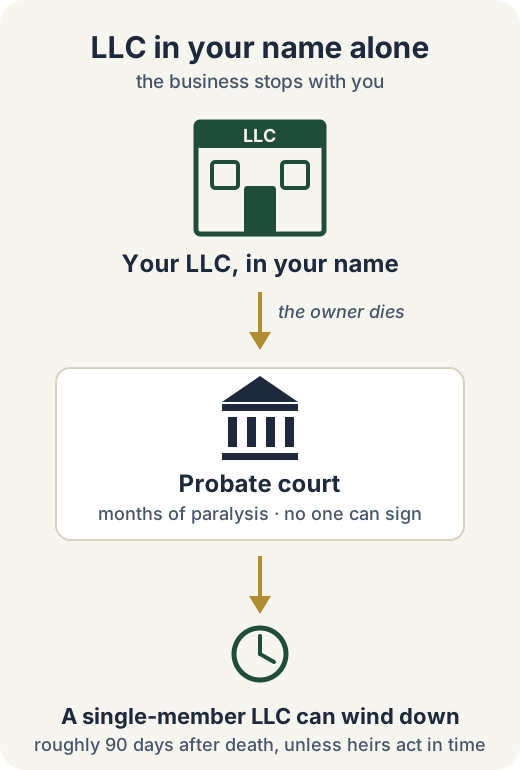
A trust that owns the LLC sidesteps all of it. The interest never enters probate, and your trustee has authority from day one.
Trust vs. LLC: You Are Not Choosing Between Them
If you are still weighing the two head to head, our LLC vs trust for real estate guide runs the full comparison. The short version follows.
A lot of people search "trust vs LLC" thinking they have to pick one. You do not, because they do different jobs.
- An LLC is a business entity. Its job is to shield your personal assets from business liabilities and set the rules for running the company.
- A trust is an estate-planning tool. Its job is to avoid probate, handle incapacity, and pass your assets to your family the way you want.
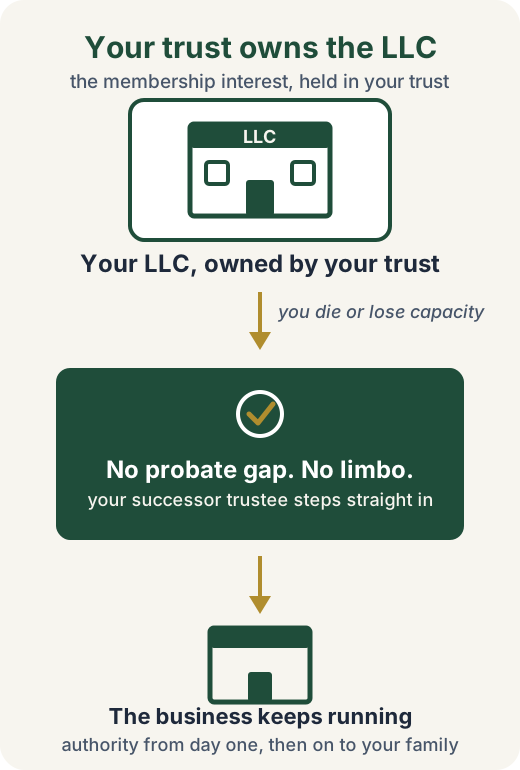
The clean answer is usually both, stacked, with a trust that owns the LLC. The business keeps its liability protection, and the ownership passes smoothly to your family. One does not replace the other.
Revocable or Irrevocable?
For nearly everyone, a revocable living trust is the right home for the business. You keep full control, avoid probate, and the company passes cleanly to your family, with no downside while you live. An irrevocable trust owning the LLC is a different tool, used when the goal is protecting the business from creditors or planning for Medicaid, and it means giving up control. If you are a family wanting to hold a business for generations while keeping control of decisions, a directed trust is often the answer. We match the structure to your actual goal.
What to Check Before You Transfer It
Putting an LLC into a trust is straightforward, but a few things have to line up. Your operating agreement must allow the transfer (in a multi-member LLC, the other members may have consent rights or a right of first refusal), any bank loans, licenses, or franchise agreements need to permit it, and the assignment of the membership interest has to be done correctly with the company’s records updated. This is exactly the kind of step a blank online form gets wrong, so it is worth doing properly. One more check applies if the company is taxed as an S corporation. Only certain trusts can hold S-corp shares without ending the election, a trap covered in can a trust own S-corp stock. And if the business is foreign, or foreign investors are lending into it, a separate set of US tax and filing rules applies that has to be structured before anyone signs, see cross-border loans and the profit-participation trap.
Want your business to outlive you, cleanly?
Book a No-Cost Phone Consult with Attorney Kevin D. Klagge, Esq. We will confirm your operating agreement allows it and put the business in a trust the right way.
Book a no-cost consultWhat It Costs
If you are building a trust-based estate plan, transferring the LLC into it is part of that work (our trust-based plan is a flat $3,200 for an individual, $4,500 for a couple). If you already have a trust and simply need the LLC assigned into it correctly, that is a smaller standalone job, quoted at the consult. And if a co-owner is involved, you likely also want a buy-sell agreement so the business is covered from every angle.
Frequently Asked Questions
Can a Trust Own an LLC?
Yes. A trust can be a member of an LLC, and a revocable living trust owning your LLC interest is a common, well-established estate-planning move. You transfer your membership interest into your trust, and from then on the trust owns it. While you are alive you keep running the business exactly as before; the difference shows up if you die or become incapacitated, when your successor trustee can step straight in instead of the business stalling in probate or a court proceeding.
What Happens to My LLC if I Die Without a Trust?
It can get messy. If you are the sole member and the business is in your own name, your LLC interest goes through probate, which can take months or longer, and Florida law can actually wind the LLC down roughly 90 days after a sole member’s death unless your operating agreement provides for continuation or your heirs act in time. In a multi-member LLC, the operating agreement controls, and without good provisions your heirs and your co-owners can end up in conflict. Owning the LLC through a trust avoids that gap.
What’s the Difference Between a Trust and an LLC?
They do completely different jobs, and you often want both. An LLC is a business entity. It shields your personal assets from business liabilities and sets how the business is run. A trust is an estate-planning vehicle. It avoids probate, handles incapacity, and directs who gets what at your death. They are not competitors. The clean structure is usually a trust that owns the LLC, so the business keeps its liability protection while also passing smoothly to your family.
Should I Put My LLC in a Revocable or an Irrevocable Trust?
For most owners, a revocable living trust is the answer. It keeps you in full control, avoids probate, and passes the business cleanly to your family, with no downside during your life. An irrevocable trust is a different tool, used when the goal is protecting the business from creditors or qualifying for Medicaid, and it means giving up control. Most people want the revocable version for continuity; the irrevocable version is for specific protection goals. We will tell you which fits.
What Do I Need to Check Before Transferring My LLC to a Trust?
A few things. Your operating agreement has to permit the transfer, and in a multi-member LLC the other members may have consent rights or a right of first refusal. Bank loans, licenses, or franchise agreements sometimes restrict transferring ownership, so those need a look. And the transfer document (an assignment of membership interest) should be done correctly and the company’s records updated. It is not hard, but it is the kind of thing worth doing right rather than with a blank form.
Does Putting My LLC in a Trust Cause Taxes?
No. Transferring your LLC interest into your own revocable living trust is tax-neutral. Because you still control the trust, the IRS treats it as you for income-tax purposes, so there is no gift, no new tax return, and no change to how the business is taxed. It is simply a change in title that takes effect for your benefit now and your family’s benefit later.
Does a Trust Protect My LLC From Lawsuits?
A revocable trust does not add lawsuit protection, because you still control the assets. The LLC itself provides the liability shield for the business; the trust handles probate and incapacity. If asset protection is your goal, that is where an irrevocable trust or careful multi-member LLC structuring comes in, which is a separate conversation. Be wary of anyone promising a revocable trust will protect the business from creditors; it will not.
How Much Does It Cost to Put My Business in a Trust?
If you are setting up a trust-based estate plan, transferring the LLC into it is part of that work (our trust-based plan is a flat $3,200 for an individual). If you already have a trust and just need the LLC properly assigned into it, that is a smaller, standalone job we quote at the consult. Either way, we confirm your operating agreement allows it and handle the assignment correctly.
Can a Trust Own a Business?
Yes, a trust can own a business interest, whether that is an LLC membership, a partnership interest or shares of a corporation. The owner assigns the interest to the trust, and from then on the trust holds it and passes it without probate. Florida law gives a trustee the power to continue a business the trust owns and to act as an owner would, including voting shares, merging, dissolving or adding capital. When the trust is the sole owner of a company, the trustee has to appoint managers or directors who run it in the beneficiaries’ interest.
Can a Trust Own an S Corp?
Yes, but only certain kinds of trust can hold S corporation stock, and the wrong trust ends the S election for every owner. A revocable living trust qualifies while its creator is alive, because the IRS treats it as a grantor trust taxed to that person. After death the trust can usually hold the stock for up to two years, and after that it has to qualify as a qualified subchapter S trust or an electing small business trust and file the election within 2 months and 16 days of the transfer. Our guide to trusts owning S corp stock walks through each eligible trust and the deadlines.
Should I Put My House in a Trust or an LLC?
For the home you live in, a revocable living trust is almost always the right choice and an LLC almost never is. A Florida homestead held in a properly drafted revocable trust keeps its homestead tax exemption and its Save Our Homes cap, while a deed to an LLC ends the exemption, drops the cap and strips the constitutional protection written for homes owned by natural persons. A deed to an LLC also turns the home into a membership interest, which breaks deed-based planning like the lady bird deed. An LLC makes sense for a rental property someone else lives in, and the trust can then own the LLC.
Common Situations
The solo consultant. A single-member LLC owner dies with the company in his own name. His family discovers the business is stuck. No one can access accounts or sign contracts until probate appoints someone, and the LLC is drifting toward dissolution. Had the LLC been in his revocable trust, his trustee would have taken over the next day.
The "trust vs LLC" mix-up. A landlord asks whether she needs a trust or an LLC for her rental. The answer is both. The LLC holds the property and limits liability; her revocable trust owns the LLC so it avoids probate. We set up the structure so the two work together. For privacy on rental property, a Florida land trust (with the LLC as beneficiary) is often added on top.
The family business for generations. Parents want their company held for their children long-term while keeping control of decisions in the family. A trust owns the business, with a directed trust letting a family member keep running it. Continuity without handing control to an outside trustee.
The owner who lost capacity. A stroke, not a death, takes a shop owner out of his own business overnight. The LLC is in his name alone, so no one can sign payroll, renew the lease, or deal with the bank, and his family’s only road to authority runs through a court proceeding while the company drifts. Had the LLC been owned by his revocable trust, his successor trustee could have stepped in that same week and kept the doors open. Incapacity is the risk owners plan for least, and the trust covers it automatically.
Sources of Law
- Florida Revised LLC Act, Fla. Stat. ch. 605, including §605.0503 (charging orders) and §605.0701 (dissolution, and continuation after a sole member’s death). flsenate.gov (retrieved 2026-06-07)
- Florida Trust Code, Fla. Stat. ch. 736 (revocable and irrevocable trusts). A revocable (grantor) trust is disregarded for income tax during the grantor’s life (IRC grantor-trust rules), so funding it with an LLC interest is tax-neutral.
Updated on July 12, 2026. Reviewed by Kevin D. Klagge, Esq., Fla. Bar No. 99502. General information about Florida law, not legal or tax advice, and no attorney-client relationship is created. Transfer restrictions and tax effects depend on your operating agreement and facts. Do not send confidential information until we have agreed to represent you.
More Guides on Florida Estate Planning
This guide is part of Florida Estate Planning.