
What It Does
A spendthrift clause stops the beneficiary from selling, pledging, or giving away their interest, and keeps that interest out of reach of their creditors until money is actually distributed. The trustee controls the timing and amount. It is the right tool for an heir who is bad with money, faces creditors or a lawsuit, struggles with addiction, or is too young to handle a lump sum. They benefit from the money without being able to blow it or lose it.
What It Protects Against
While assets stay in the trust, a beneficiary’s creditors, a judgment, or a divorcing spouse generally cannot reach them. The shield covers the interest before distribution; once the trustee pays money out, it is the beneficiary’s and is exposed, which is why a well-built spendthrift trust uses discretionary distributions and a trustee who can say no.
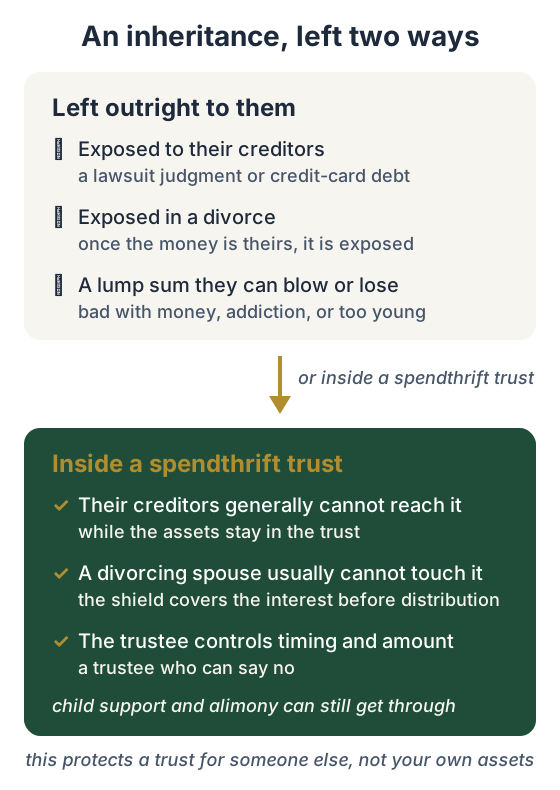
The same comparison in words:
| An inheritance left outright | Inside a spendthrift trust |
|---|---|
| Their creditors and a lawsuit judgment can reach it | Creditors generally cannot reach it until money is actually distributed |
| Exposed in a divorce, because the money is theirs | A divorcing spouse usually cannot touch the trust principal |
| A lump sum they can blow or lose | The trustee controls the timing and amount |
Worried about how an heir will handle it?
A free 30-minute consult builds the protection into your plan.
Book your free consultThe Limits
Two things to know. Florida lets certain claims through even a spendthrift clause, notably child support and alimony. And a spendthrift trust protects a trust you create for someone else; you cannot use one to shield your own assets from your own creditors in Florida, that is the separate, limited world of asset protection. If your beneficiary receives public benefits, we use a special-needs trust instead, so the inheritance does not disqualify them.
Frequently Asked Questions
What Is a Spendthrift Trust?
It is a trust with a spendthrift clause, a provision that stops the beneficiary from selling, pledging, or giving away their interest, and shields that interest from the beneficiary’s creditors until money is actually distributed. The trustee controls when and how much the beneficiary receives. It is how you leave money to someone who is bad with money, has creditors or a lawsuit risk, struggles with addiction or gambling, or is simply too young or vulnerable to manage a lump sum, without leaving it exposed.
What Does It Protect Against?
While assets stay in the trust, a beneficiary’s creditors generally cannot reach them, a lawsuit judgment, credit-card debt, or a divorcing spouse usually cannot touch the trust principal. The protection applies to the beneficiary’s interest before distribution. Once the trustee hands money to the beneficiary, that money is theirs and is exposed, which is why a good spendthrift trust uses discretionary distributions and a thoughtful trustee.
What Can’t a Spendthrift Trust Do?
Two limits matter. First, Florida law lets certain claims through even a spendthrift clause, notably child support and alimony, and some governmental claims. Second, and this is the big one, a spendthrift trust protects a trust you set up for someone else; you cannot set up a spendthrift trust for your own benefit and shield your own assets from your own creditors in Florida. That is a different (and limited) area, asset protection, with its own rules.
Is It a Separate Trust or Part of My Plan?
Usually it is built into your existing plan: your revocable living trust can direct that a child’s or grandchild’s share stays in a protected, spendthrift subtrust rather than being paid out at once. It can also be a standalone irrevocable trust. We design it around the specific beneficiary you are worried about, and pair it with a special-needs trust if a beneficiary receives benefits.
Can the Beneficiary Be the Trustee of a Spendthrift Trust?
It weakens the design. The shield works because someone other than the beneficiary controls the timing and amount of distributions; a beneficiary who can write themselves checks is not being protected from much. Sound Florida planning pairs the spendthrift clause with an independent trustee who holds real discretion and can say no, even to a persistent heir. Most families name a trusted independent person, a professional, or a trust company, and we help you weigh those choices at the consult.
Sources of Law
- Florida Trust Code: spendthrift provisions §736.0502; exceptions (child support, alimony, certain claims) §736.0503; self-settled-trust limits §736.0505. (retrieved 2026-06-10)
Updated on July 12, 2026. Reviewed by Kevin D. Klagge, Esq., Fla. Bar No. 99502. Attorney Kevin Klagge represents families, businesses, and international clients in estate planning and international law, with a focus on Florida legal tools. He litigates estate and business issues in court. General information about Florida law, not legal advice. Do not send confidential information until we have agreed to represent you.