What Do I Do With a Lady Bird Deed After the Owner Dies?
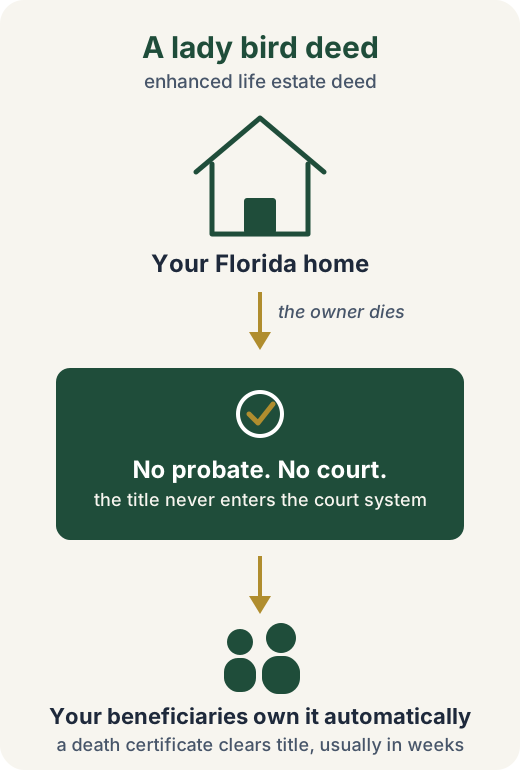
The question I get most about this is, "What do I do with the deed now that my mother has died?" The answer is that you record two documents and open no probate. When the owner of a lady bird deed dies, the property passes to the remainder beneficiaries automatically, outside probate. You are already the owner. What is left is a short, paperwork-only step, clearing the public record so a title company can confirm the transfer and insure a future sale. The step is usually two recorded documents, and it is not a court case.
The Steps to Clear the Title
In the county where the property sits, you record two things.
- A certified copy of the owner’s death certificate.
- An affidavit (commonly a continuous-marriage or survivorship affidavit, and sometimes a no-lien affidavit) that states the facts a title company needs, namely that the owner has died, who the beneficiaries are, and that no claims attach to the property.
Once those are on record, the beneficiaries hold clean, insurable title and can sell or refinance. A later sale then uses an ordinary warranty deed, like any Florida home sale. Recording costs $10 for the first page and $8.50 for each page after it in every Florida county, so the two documents together rarely cost more than $40 to record. We prepare and record them for you, so when you go to closing later, nothing snags.
You Do Not Open Probate for the Home
Skipping probate on the house is the whole reason the lady bird deed exists, and it delivers at death. The only time probate still comes up is for other assets the person owned in their own name that the deed did not cover. For the home itself, the recorded death certificate and affidavits do the job that a probate would otherwise do, in a fraction of the time and cost. If you are wondering what else needs handling, see what to do when a parent dies in Florida.
Inherited a home through a lady bird deed?
Book a no-cost 30-minute consult. We will clear the title for you, the right way, so you can sell or keep it without a hitch.
Book a no-cost consultDo the Owner’s Debts Follow the House?
Some do and some do not, and the title search tells you which. A mortgage stays on the house, so the beneficiaries take the home subject to the loan and either keep paying it or pay it off at the sale (the lady bird deed with a mortgage page covers the loan side). The same is true of any lien that attached to the property itself during the owner’s life, and the federal tax lien is the one families miss in the files I review, because it attaches to everything the taxpayer owns on the day the IRS assesses the tax, whether or not the IRS has recorded anything yet. A Florida judgment against the owner that the creditor never enforced against the house is treated differently. The Florida Bar’s title standards take the position that the beneficiaries take the home free of it, because a judgment against a person who has died becomes a claim against the probate estate, and the house is not in the probate estate. One more rule cuts the other way. A judgment against a beneficiary attaches to the house on the day the owner dies, so a child who owes an unpaid judgment inherits a home with a lien on it.
A 2024 decision from a federal court in Tampa shows what the tax lien rule costs. A woman in Spring Hill who had prepared other people’s tax returns for a living owed the IRS for five of her own tax years, 1997 through 2001. On April 10, 2014 she bought a house on Eldridge Road in her own name with money from a sinkhole insurance settlement on her son’s former house, and on July 2, 2014 she recorded a lady bird deed naming her son and daughter as the beneficiaries. She believed that when she died the debt would go away and the IRS could not reach the house or her children, and she admitted the deed was recorded at least in part to keep the IRS from collecting through the house. The IRS assessed the tax while the house was in her name alone, which put the lien on the house before the deed existed, and it recorded its notice of lien on July 14, 2014, twelve days after the deed. Her children had paid nothing for their interest, so they were not buyers who could take free of a lien that had not yet been recorded. The court wrote that she "has tried to prevent the IRS from collecting a valid tax liability by conveying a residence worth several hundred thousand dollars to her son and daughter via a Lady Bird Deed," held that she owed $433,601.33 as of March 1, 2024, and held that whatever interest the son and daughter claimed in the house was encumbered by the lien.
Practice pointer. A lady bird deed moves a house around probate and moves nothing around a lien. Before the beneficiaries list the house, I pull the title search and read every lien on it against the date it attached, because a lien that predates the deed is paid at closing out of the sale price whether anyone planned for it or not. If the lien is the IRS’s, the collection due process page explains what can still be done about the underlying debt.
The Tax and Medicaid Payoff
Because the home passed outside probate, it is beyond Florida Medicaid estate recovery, which only reaches the probate estate, and Florida has no estate or inheritance tax. You also get a stepped-up tax basis to the home’s value on the date of death, so if you sell soon after, you usually owe little or no capital-gains tax. This is the lady bird deed doing exactly what it was set up to do.
If a Beneficiary Died First
Start by reading the deed’s wording. A well-drafted lady bird deed has contingent or "per stirpes" language so a deceased beneficiary’s share passes to the survivors or that person’s children. Without it, that share can fall back into probate, the one outcome the deed meant to avoid. We review the deed and tell you precisely how title now stands and whether anything needs cleaning up before you sell.
Frequently Asked Questions
What to Do With a Lady Bird Deed After Death
Three things, in order. First, record a certified copy of the death certificate in the county where the property sits, because that is what shows the public record the life estate has ended. Second, record an affidavit identifying the deceased owner and confirming the remainder beneficiaries named in the deed, which is what a title company will look for when the home is later sold or refinanced. Third, notify the county property appraiser so the homestead exemption is handled correctly going forward. You do not open a probate for the home itself. The deed already moved it.
What Happens to a Lady Bird Deed When the Owner Dies?
The property passes automatically to the remainder beneficiaries named in the deed, outside probate, the moment the owner (the life tenant) dies. The beneficiaries become the legal owners. But "automatic" does not mean "nothing to do." Before they can sell or refinance, they have to clear up the public record so a title company can confirm the transfer and insure it. That clean-up is a short, paperwork-only process, not a probate.
Do I Have to Open Probate After a Lady Bird Deed?
No, not for the property the deed covers. Avoiding probate on the home is the entire point of a lady bird deed, and it works at death. The only time probate still comes up is for other assets the deceased owned in their own name that the deed did not cover. For the home itself, you clear the title with a few recorded documents instead of a court case.
How Do I Clear the Title After the Owner Dies?
Two main steps in the county where the property sits. Record a certified copy of the owner’s death certificate, and record an affidavit (often a continuous-marriage or survivorship affidavit, and sometimes a no-lien affidavit) that confirms the facts a title company needs, such as the owner’s death, the identity of the beneficiaries, and that no claims attach. Once those are recorded, the beneficiaries hold clean, insurable title. We prepare and record these for you so a future sale goes smoothly.
Can I Sell the House Right Away?
Generally yes, once the title is cleared. After the death certificate and affidavits are recorded, the beneficiaries own the home and can list and sell it, and a title company can insure the sale. Doing the clean-up promptly matters, because trying to sell before the record is squared away causes delays at closing. If you plan to sell, it is worth handling the title work first. No court order is needed, and some title companies also ask for an affidavit about the homestead and the surviving spouse.
Does the Owner’s Debt Follow the House After Death?
A mortgage does, and so does a federal tax lien that attached before the deed was recorded. In a 2024 case a federal court in Tampa held that a lady bird deed to a son and daughter did nothing to a $433,601.33 tax debt, because the lien had attached to the house when the tax was assessed and the children had paid nothing for their interest. An ordinary Florida judgment against the owner that was never enforced against the house is treated differently under the Florida Bar’s title standards, and the beneficiaries take the home free of it. Bring the title search to the consult and we will tell you which kind you are looking at.
What if One of the Beneficiaries Died Before the Owner?
It depends on the deed’s wording. A well-drafted lady bird deed includes contingent or "per stirpes" language so a deceased beneficiary’s share passes to the surviving beneficiaries or that person’s own children. Without it, that share can fall back into probate, the one scenario the deed was meant to avoid. We review the deed and tell you exactly how title now stands and what, if anything, needs to be cleaned up.
Does Medicaid or Estate Tax Take the Home After Death?
No, in the typical case. Because the home passed outside probate, it is beyond Florida Medicaid estate recovery, which only reaches the probate estate. And Florida has no estate or inheritance tax. The beneficiaries also receive a stepped-up tax basis to the home’s value on the date of death, which usually means little or no capital-gains tax if they sell soon after. These are the payoffs of the lady bird deed doing its job.
What Does It Cost to Have You Handle It?
We quote the title-clearing work at the consult, because it depends on the deed, the number of beneficiaries, and whether anything needs correcting, but it is a modest, paperwork-only matter, far less than a probate. The 30-minute consult is free, and we will tell you exactly what your situation needs and what it will cost before you commit.
Do I Keep My Parent’s Homestead Exemption and Low Taxes?
Only if you qualify on your own and apply on time. The homestead exemption and the Save Our Homes cap your parent had do not transfer with the home. If you move into the house as your permanent residence, apply for your own homestead exemption with the county property appraiser by March 1 of the year after you inherit. Do that and you get a fresh exemption and your own assessment cap going forward. Skip it, or use the home as a rental or second home, and the property is reassessed at full market value, which on a home that has been in the family a long time can mean a noticeably higher tax bill. It is the one post-death deadline worth putting on the calendar.
Does a Life Estate End When the Life Tenant Dies?
Yes, a life estate ends at the life tenant’s death, and the remainder beneficiaries own the property from that moment. Title passes by operation of law, with no probate and no court filing for the home. The family clears the public record by recording a certified death certificate and a short affidavit in the county where the property sits. The same is true of an enhanced life estate, the lady bird deed, as long as the deed was properly drafted and recorded.
My Father Was Canadian and Left Me a Florida House by Lady Bird Deed. Can I Record the Death Certificate Before the Form 706-NA Clearance?
Yes. Recording the death certificate and the affidavit is a county records step, and the Clerk’s recording office does not ask for IRS clearance. The clearance matters later. Form 706-NA is due nine months after death when a non-resident’s US assets top $60,000, and title companies and banks usually will not close a sale or release an account until the IRS issues its transfer certificate. A Canadian estate is usually taxed at zero under the treaty, but the filing and the certificate still decide when the house can be sold. See US estate tax for Canadians and US estate tax for non-resident aliens.
Do I Have to File Anything With the Court in Miami-Dade When the Owner of a Lady Bird Deed Dies?
No court filing is needed for the house. The certified death certificate and the affidavit are recorded with the Clerk’s recording office in the county where the property sits, which in Miami-Dade is the official records and not the probate division. Probate comes up only for assets the owner held in their own name that the deed did not cover. The recording takes a few weeks to arrange, mostly in waiting for certified copies.
Who Pays the Mortgage After the Owner of a Lady Bird Deed Dies?
The beneficiaries pay it, starting from the date of death, and a missed payment starts foreclosure like any other. Federal law bars a lender from calling a residential loan due only because the home passed to a relative on the borrower’s death, so the loan can stay in place on its existing terms. A beneficiary who is not a relative does not get that protection. The rules are laid out on lady bird deeds on a mortgaged home.
Will a Title Company Insure a Sale After a Lady Bird Deed?
Yes, when the deed was drafted to the Florida Bar’s Uniform Title Standards for enhanced life estates, which the Bar’s Real Property, Probate and Trust Law Section added in 2019, and when the death certificate and affidavit are recorded. A deed that leaves out the clause divesting the beneficiaries, or the reserved powers, gets questioned, and the sale waits while the title company decides what it needs. A lender’s or buyer’s title search is the quickest way to learn which kind of deed the family has.
My Mother Signed a Lady Bird Deed but Never Recorded It. Can I Record It Now That She Has Died?
You can record it, and recording it now does not settle the question a title company will ask, which is whether she delivered it while she was alive. A deed passes nothing until the owner delivers it, meaning she gave up the power to take it back, and a deed recorded during the owner’s life carries a presumption of delivery that a deed found in her papers afterward does not. The Florida Bar’s title standards tell an examiner who sees a deed recorded after the owner’s death to determine that it was delivered before the death. What she said and did decides it, such as handing you the deed, telling people the house was already yours, or keeping the deed in a box with her will for you to collect. Expect the title company to want affidavits from the witnesses or from people who heard her, and expect a sibling who was left out to argue the opposite. A 1978 Florida appeal over deeds kept in a bank box took four years after the father’s death to resolve, and it is retold on contesting a lady bird deed.
The Owner Is Still Alive but in a Nursing Home. Can I Sell the House Now?
Not as the beneficiary. Until the owner dies you hold a remainder the owner can cancel at any time, and you have no power to sell, mortgage or sign for the home. A sale while the owner is alive is signed by the owner, or by the owner’s agent under a durable power of attorney that specifically authorizes selling real property, signed before two witnesses and a notary and recorded in the county with the deed. Where there is no power of attorney, a court-appointed guardian can sell, homestead included, with a court order for the sale. The lady bird deed guide explains what the power of attorney has to say, and the house still passes to you at death with no probate whether or not it was sold first.
Do I Need to Tell the Homeowners Insurance Company When the Owner Dies?
Yes, and promptly. The policy was written for the owner, so the beneficiaries should call the insurer, report the death and ask in writing how the house is covered while it sits vacant or until it is sold. Insurers differ on how long they honor a policy for a deceased owner, which is why the written answer matters before any claim.
What Happens to the Cars After the Owner Dies?
A lady bird deed covers the home only. Vehicles stay titled in the owner’s name. Florida’s title statute lets an heir get a new title without a probate order in defined cases. When the owner died without a will, the heir files an affidavit at the tax collector stating that the estate owes no debts and that the spouse and heirs agreed on the division. When a will exists but is not being probated, the heir files a sworn copy of the will plus an affidavit that the estate owes no debts. A Florida attorney’s affidavit naming the rightful heirs also establishes ownership for the title office. Bring the certified death certificate and the old title. When the estate owes debts or the heirs disagree, the car goes through probate like any other asset. The firm prepares the affidavit for a flat fee quoted at consult.
Common Situations
A daughter sells within weeks. A daughter inherits her mother’s Naples home through a lady bird deed and wants to sell. We record the death certificate and a survivorship affidavit, the title company insures the sale, and she closes within weeks, no probate.
The title that was not cleared. A son tries to sell a home he inherited by lady bird deed but the closing stalls because the record was never updated after his father died. We record the missing documents and the sale proceeds.
One beneficiary died before the parent. One of three named children had died before the parent. Because the deed used per-stirpes language, that child’s share passed to the grandchildren, and we cleared title to all of them without a probate.
A tax lien turns up in the title search. Two children go to sell their father’s home and the title search shows a notice of federal tax lien recorded against him three years before he died. Because the lien attached before the deed, the closing pays the IRS out of the sale price and the children keep the balance, which is the outcome a title company will insure.
The refinance in the chain of title. Two brothers bring their father’s lady bird deed and death certificate to a closing, and the title examiner finds a refinance recorded after the deed. Because the owner keeps full power over the property for life, a later conveyance can override the remainder, so the examiner has to confirm the deed was still in effect at his death. A review of the chain shows the refinance added a new mortgage but no superseding deed, so the transfer stands. The brothers take the home subject to the loan, pay it off from the sale proceeds, and close.
Chapter 28 of Kevin D. Klagge’s free book, Are Florida Lady Bird Deeds Just for Women?, covers this question with every statute and case cited to its source.
Sources of Law
- Vehicles: Fla. Stat. §319.28(1)(b) and (c) (an heir of an owner who died without a will obtains a title on an affidavit that the estate is not indebted and the spouse and heirs have agreed on the division; where there is a will, a sworn copy and an affidavit, or a Florida attorney’s affidavit naming the rightful heirs). Retrieved 2026-10-22.
- A lady bird (enhanced life estate) deed passes the property to the remainder beneficiaries at the life tenant’s death by operation of the recorded deed, outside probate, as recognized by Florida common law and title-underwriting practice, retrieved 2026-06-08. Florida Bar Uniform Title Standards 6.10 to 6.12 (June 2019 revision, in the September 4, 2024 compilation) state the consensus of the Real Property, Probate and Trust Law Section on title after the life tenant’s death, including that a judgment against the life tenant that was never levied does not follow the property and that a judgment against the remainderman attaches at the life tenant’s death, and the standards themselves note the scant judicial authority behind the practice (retrieved 2026-09-03).
- Fla. Stat. §733.706: claims on judgments against a decedent are filed in the same manner as other claims, and the section does not prevent enforcement of mortgages, security interests, or liens encumbering specific property. Fla. Stat. §733.702(1) and (4)(a): the 3-month claims deadline, and the carve-out for a proceeding to enforce a mortgage, security interest, or other lien on property of the decedent.
- 26 U.S.C. §6321 (lien for taxes on all property and rights to property), §6322 (the lien arises at assessment), and §6323(a) and (h)(6) (the lien is not valid against a purchaser until notice is filed, and a purchaser is one who gives adequate and full consideration), retrieved 2026-09-03.
- The decision retold above: United States v. VoShelle, No. 8:23-cv-1293 (M.D. Fla. Apr. 4, 2024) (order on cross-motions for summary judgment; no reporter citation; read in full from the CourtListener text; corpus file reference/caselaw/deeds/voshelle-mdfla-2024.md). The parties were not clients of this firm.
- An unrecorded deed found after the death: Fla. Stat. §695.01(1) (an unrecorded conveyance is not good against creditors or purchasers for value without notice); Fla. Bar Uniform Title Standard 16.2 (where the grantor died before recording, the examiner determines that the deed was delivered before the death); Parramore v. Parramore, 371 So. 2d 123 (Fla. 1st DCA 1978) (constructive delivery of deeds kept in a bank safe deposit box; opinion read in full, corpus file reference/caselaw/deeds/parramore-v-parramore-371-so2d-123.md). (2026-10-18)
- Fla. Stat. §409.9101: Medicaid estate recovery, limited to the probate estate. IRC §1014: step-up in basis at death. Florida has no state estate or inheritance tax.
What the After-Death Files Show
What I have not seen a deed do is erase a debt that was attached to the house before the deed was signed. The common answer to this is not wrong so much as incomplete, and the missing part is the part that costs money. Every guide says the home passes without probate, and that part holds up in the files I review. The part the guides leave out is that the home arrives with everything that was attached to it, and the family usually learns that from the title company rather than from the deed.
In 14 years of law practice, I also litigate deeds after they fail, which enhances the practice of drafting deeds, and the after-death files reach me in two shapes. In the first, the family recorded nothing, listed the house, and learned from the closing agent that the file needs a certified death certificate and a survivorship affidavit, which costs them a closing date rather than the house. In the second, the family recorded everything and the title search came back with a mortgage or a lien that nobody at the funeral had mentioned. The Spring Hill case above is the second shape at its most expensive. The IRS assessed the tax while the house was in the owner’s name alone, recorded its notice of lien on July 14, 2014, twelve days after the deed, and ten years later the children held a remainder interest in a house that the court declared encumbered for $433,601.33 and rising. The deed I draft costs $399 and comes with a consult that is free, and the sentence that consult supplies is that a lady bird deed moves the house around probate and moves nothing around a lien. Heard in 2014, that sentence would have sent the family to the debt itself (an installment agreement or an offer in compromise are the usual routes) instead of into ten years of defending a deed that could never hold the IRS off.
In reviewing that case and the Florida Bar’s title standards on this deed, I have a few take-home points.
The first is the difference between a debt and a lien. A debt is owed by the person, so after death it becomes a claim against the probate estate with a filing deadline of 3 months after the notice to creditors is first published, and the house passed outside that estate. A lien is attached to the property itself, so a mortgage, a recorded construction lien, or a federal tax lien rides along to the beneficiaries. Practice pointer. Ask the title company for the date each item attached and compare it with the date of death, because that comparison decides who pays. Avoid the assumption that a clean deed means a clean title, which is the assumption the Spring Hill family made and the one I meet most often in the after-death files.
Second, the beneficiaries’ own debts matter from the day of death. Under the title standards, a judgment against a remainder beneficiary attaches to the house the moment the life tenant dies, so a parent who names a child with an unpaid judgment hands that child’s creditor a lien on the family home. Practice pointer. An owner can name the beneficiaries in a way that keeps a troubled child’s share out of that child’s creditors’ reach, usually by routing the share through a trust, and the time to do it is while the owner is alive and can still change the deed.
Third, the clean-up itself is short, and delay is what makes it expensive. The death certificate and the affidavit take a few weeks to obtain and record, a title company insures the sale only once both are in the record, and a contract signed before they are recorded waits on them. I would rather record the two documents in the month after the death than explain to a buyer’s lender why the file is not ready.
In my reading, the title standards are the consensus of the Florida Bar’s real property section rather than a statute, and the standards themselves say there is scant judicial authority behind the practice. Where a lien, a surviving spouse’s homestead rights and a lady bird deed all meet on one house, no Florida appellate court has answered every question, and when one of those questions is yours I will say so at the consult rather than supply an answer the cases do not support.
Kevin D. Klagge, Esq., admitted in Florida since 2012. The decision described above is a ruling of a federal court in Florida in another party’s matter rather than a matter handled by this firm, and it predicts nothing about any reader’s situation. Past results do not guarantee a similar outcome.
Updated on October 18, 2026. Reviewed by Kevin D. Klagge, Esq., Fla. Bar No. 99502. General information about Florida law, not legal advice, and no attorney-client relationship is created. Title requirements depend on your deed and the county. Do not send confidential information until we have agreed to represent you.
More Guides on Florida Lady Bird Deeds and Deeds
- Lady Bird Deed With Multiple Beneficiaries
- Lady Bird Deed vs. Living Trust in Florida
- Lady Bird Deed vs Will in Florida: Which Controls?
- Lady Bird Deed vs Transfer on Death Deed
- Florida Transfer on Death Deed: Does It Exist?
- Florida Lady Bird Deed & Medicaid
- Florida Lady Bird Deed Tax Consequences
Try the Florida Deed Selector.