The Short Answer
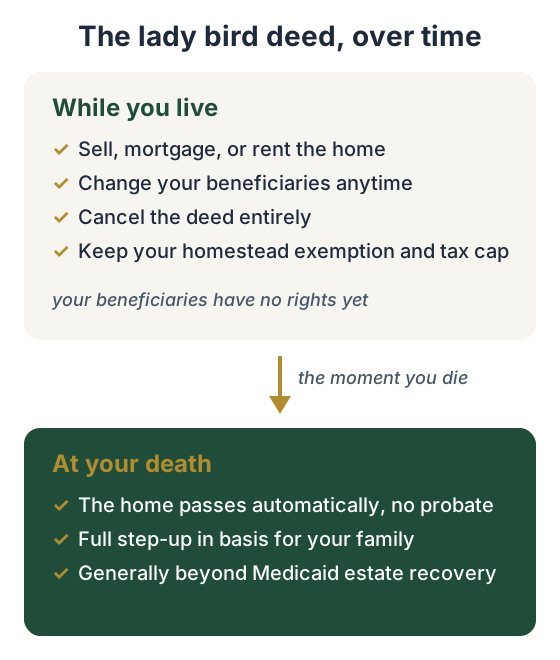
A lady bird deed passes a Florida home on terms that favor your family at almost every turn, precisely because it is not a completed gift while you are alive. That one fact avoids almost every tax trap that comes with deeding your home away outright. Your heirs get a full step-up in basis, you owe no gift tax, there is no documentary stamp tax, and your homestead and Save Our Homes cap stay intact for life. Florida has no state income, estate, or inheritance tax, so only the federal rules matter, and they fall in your favor.
Does a Lady Bird Deed Change Your Property Taxes in Florida?
A lady bird deed does not change your property taxes while you live in the home. Your homestead exemption and your Save Our Homes capped value stay with you, because the deed keeps a life estate for you, and Florida law treats a person who holds a life estate and lives in the home as entitled to the exemption. Recording the deed does not reset the assessment. Your county Property Appraiser can confirm before March 1 that nothing more is needed on your file.
The change comes at your death. The life estate ends, the exemption and the cap end with it, and the county reassesses the home at market value as of January 1 of the next year. The family member who receives the house does not inherit your capped value. A child who moves in and makes the home a permanent residence files a new homestead application with the county Property Appraiser by March 1, and a new cap starts from the reassessed value. Florida law keeps the existing assessment in place for a surviving spouse and for a dependent of the owner who lived in the home.
What the County Property Appraisers Say
Broward County. The Broward County Property Appraiser answers the question in its FAQ for an owner who deeds the future interest in the home to children or others and keeps a life estate, which is what a lady bird deed does. The owner keeps the homestead exemption and the existing Save Our Homes value. After the owner’s death the exemption ends, the home is reassessed at market value the following year, and a family member who moves in files a new homestead application.
Sarasota County. The Sarasota County Property Appraiser’s FAQ says that keeping a life estate for yourself while granting the future interest to your children leaves your homestead exemption and your Save Our Homes cap unaffected, and that those benefits do not pass to your children when you die. The same FAQ warns about a move that looks similar. Adding a child to the deed as a co-owner can cost part or all of the cap, depending on how the deed holds title and whether the new owner files for homestead.
Pinellas County. The Pinellas County Property Appraiser’s FAQ says a deed in which you keep a life estate or an enhanced life estate does not adjust your Save Our Homes cap, and that the people named to receive the house do not inherit your capped value.
Three offices on both coasts give the same answer, because every county applies the same state law. The Save Our Homes savings by county show what the cap is worth where you live, which is the amount your family should expect the tax bill to rise by after the reassessment.
Can You Still Move and Keep the Save Our Homes Benefit?
Portability still works with a lady bird deed. The deed keeps your power to sell the home without anyone else’s signature, and when you sell and set up a new Florida homestead, you can carry up to $500,000 of the Save Our Homes benefit to the new home. The new homestead has to follow within three years, counted from the last January 1 on which you held the exemption on the old home. Portability belongs to you as the homeowner and does not pass to the people named in the deed.
Is There a Homestead Rebate?
Some people search for a “lady bird deed homestead rebate.” Florida has no homestead rebate, and a lady bird deed neither creates one nor takes one away. Nothing is paid back to you. The homestead exemption lowers the taxable value of the home every year, the Save Our Homes cap holds yearly increases in assessed value to 3 percent or the rate of inflation if lower, and both continue after you sign the deed exactly as before. The dollar value of each benefit is worked out in how much the homestead exemption saves in Florida, and the filing rules are in the Florida homestead exemption guide.
Practice pointer. Check that the property appraiser did not treat the recording as a transfer, roughly sixty days after the deed goes on record. In the corrections I am asked to make, the deed was drafted correctly and a county office coded it wrong, and the assessment cap is far easier to restore in the same tax year than three years later.
1. Step-Up in Basis (the Big One)
Because you keep control and make no completed gift, your home passes at death with a basis stepped up to its date-of-death value. Your heirs can sell shortly after for little or no capital-gains tax, even if you bought it decades ago for a fraction of today’s value. Deeding the home to your children outright instead gives them your old low basis and can cost them tens of thousands in capital-gains tax. A home bought for $90,000 and worth $400,000 at death carries $310,000 of gain, which the step-up erases and a lifetime gift does not. More on the step-up →
2. No Gift Tax
Reserving the right to sell, mortgage, or revoke makes the transfer incomplete, so there is no gift while you are alive, nothing to report on a gift-tax return, and none of your lifetime exemption used. A plain deed to your kids, by contrast, is a completed gift the day you sign. See how gifts are taxed →
3. No Documentary Stamp Tax at All
Florida’s documentary stamp tax is measured by the consideration for a transfer, and a lady bird deed transfers nothing during your life. The Department of Revenue has ruled twice that the deed is not subject to the tax regardless of any consideration, and one of those two rulings involved a home with a mortgage on it. That matters because an ordinary deed of a mortgaged home is taxed on the loan balance, which runs to hundreds or thousands of dollars. In practice the deed is recorded with a nominal $0.70 stamp plus the usual recording fee. How the stamp tax works on a deed → · See the full cost →
Want the tax-friendly way to pass your home?
Book a no-cost 30-minute consult. We will set up the deed correctly so every one of these benefits actually applies.
Book a no-cost consult4. No Medicaid Transfer Penalty
One tax-adjacent benefit is worth knowing. Because nothing is transferred during life, a lady bird deed does not trigger Florida’s five-year Medicaid look-back the way a gift would. See how it protects the home for Medicaid →
If I Inherit a House Through a Lady Bird Deed and Sell It, Do I Pay Tax?
A common question I hear is, "If I inherit a house through a lady bird deed and sell it, do I pay tax?" The answer is that the tax applies only to the gain above the home’s value on the date the owner died, and a sale at that value produces none.
A parent who bought for $90,000 and died when the house was worth $400,000 leaves a basis of $400,000, so a $450,000 sale is taxed on $50,000 and not on $360,000. The family needs the date-of-death value in writing, and an appraisal as of that day is the usual proof. The step-up and the other rules above are why the deed must be drafted so the transfer stays incomplete during the owner’s life.
Frequently Asked Questions
What Are the Tax Consequences of a Lady Bird Deed in Florida?
Almost all of them are good. Because a lady bird deed is not a completed gift while you are alive, it avoids the tax problems that come with deeding your home away outright. Your heirs get a full step-up in basis, so capital-gains tax is minimized; you owe no gift tax and use none of your lifetime exemption; the documentary stamp tax does not apply; and your homestead exemption and Save Our Homes cap stay in place for the rest of your life. Florida also has no state income, estate, or inheritance tax, so the federal rules are all that apply.
Does a Lady Bird Deed Preserve the Step-Up in Basis?
Yes, and this is its biggest tax advantage. Because you keep full control and make no completed gift during life, your home passes at your death with a stepped-up basis equal to its fair-market value on the date you die. Your heirs can sell shortly after for little or no capital-gains tax, even if you bought the home decades ago for a fraction of its current value. Compare that to deeding the home to your children outright, which gives them your old low basis and can cost them tens of thousands in capital-gains tax.
Is a Lady Bird Deed a Gift for Tax Purposes?
No. Because you reserve the right to sell, mortgage, or revoke during your life, the law treats the transfer as incomplete, so there is no gift while you are alive and nothing to report on a gift-tax return. You do not use any of your lifetime gift and estate tax exemption, and there is no gift tax. This is a key difference from an ordinary deed to your children, which is a completed gift the day you sign it.
Do I Owe Documentary Stamp Tax on a Lady Bird Deed?
No. Florida charges documentary stamp tax on deeds based on the consideration paid, and the Department of Revenue has ruled that a lady bird deed transfers no present beneficial interest, so it is not subject to the tax regardless of any consideration. It ruled that way twice in 2020, once on a home that carried a mortgage. Recording fees still apply, usually $18 to $30, and the deed is normally recorded with a nominal $0.70 stamp.
Does a Lady Bird Deed Change Your Property Taxes in Florida?
No, not while you live in the home. A lady bird deed keeps a life estate for you, so your homestead exemption and your Save Our Homes capped value stay with you, and recording the deed does not reset the assessment. The Broward, Sarasota and Pinellas County Property Appraisers say the same in their own published FAQs. At your death the exemption and the cap end, the home is reassessed at market value as of January 1 of the next year, and a family member who moves in files a new homestead application by March 1. A surviving spouse is the main exception, because Florida keeps the existing assessment for a spouse.
Is There a Homestead Rebate for a Lady Bird Deed in Florida?
No. Florida has no homestead rebate, and a lady bird deed does not create one or take one away. Nothing is paid back to you. The homestead exemption lowers the taxable value of your home every year, the Save Our Homes cap limits how fast the assessed value can rise, and both continue after you sign a lady bird deed exactly as they did before.
Are There Any Tax Downsides?
Very few, and the ones that exist land after death. Your heirs receive the home with a stepped-up basis (good), but they take on the property going forward, including property taxes at whatever assessment applies to them. There is no Medicaid transfer penalty, because no transfer occurred. For the owner, a lady bird deed is about as tax-clean as a probate-avoidance tool gets in Florida, which is a big part of why we use it so often.
Can My Heirs Keep My Low Save Our Homes Tax Bill?
Not automatically. The Save Our Homes cap that held your assessed value down belongs to you, not to the house, so it does not pass to whoever inherits. Neither does Save Our Homes portability, which a homeowner can carry to their next home but cannot hand to an heir. After your death, the home is reassessed at market value as of January 1 of the following year. A beneficiary who lives in the home can apply for their own homestead exemption with the county property appraiser by March 1 of that year, and a fresh cap starts from the reassessed value. A beneficiary who does not qualify pays tax on the full market value with no exemption at all. On a long-held, appreciated Florida home, that reset can be a real jump, so it is worth warning the family in advance. The Save Our Homes savings by county show how large that jump is where the home sits. A surviving spouse is the main exception, because Florida keeps the existing assessment for a spouse.
Who Pays the Property Taxes on a Life Estate?
The life tenant pays the property taxes on a life estate, along with the insurance and upkeep, for as long as the life tenant lives. The remainder beneficiaries take on those costs only when they own the property at the life tenant’s death. With a lady bird deed the owner is the life tenant and keeps the homestead exemption and the Save Our Homes cap, because signing the deed is not a change of ownership. After the owner’s death, a beneficiary who moves in has to apply for a new homestead exemption by March 1 of the following year.
Do I Lose My Veteran’s Property Tax Exemption if I Sign a Lady Bird Deed?
No. The total exemption for a permanently and totally disabled veteran attaches to the veteran’s own homestead, and a lady bird deed leaves the veteran as sole legal owner for life, so the exemption stays. If the veteran dies first and the surviving spouse holds title and lives in the home, Florida carries the exemption over to the spouse until the spouse remarries or sells. A beneficiary other than the spouse does not receive it. Adding a spouse to the title as a co-owner is a different step, and the county property appraiser should confirm that one in writing before the deed is signed.
Is There Transfer Tax on a Lady Bird Deed When It Is Signed and When the Owner Dies?
No tax is due when the deed is signed. The Department of Revenue says a lady bird deed in which the owner keeps full rights and a life estate is not subject to documentary stamp tax, and the deed is recorded with the nominal $0.70 stamp. When the owner dies, the beneficiaries record a death certificate and a short affidavit and sign no new deed. One treatise cites an unpublished 2000 letter for a stamp tax at death, and no public Department document supports it, so treat any figure quoted for that event as unverified.
If I Inherit a House Through a Lady Bird Deed and Sell It, Do I Pay Tax?
Only on the gain above the home’s value on the date the owner died. Federal law resets the basis of inherited property to that date-of-death value, so a house worth $400,000 at death and sold for $400,000 produces no taxable gain, even if the owner paid $90,000 for it decades earlier. A sale above $400,000 is taxed on the difference, and a sale below it produces a loss. The step-up is the main tax reason to use a lady bird deed instead of a lifetime gift.
Do I Pay Tax on the House if I Keep It and Do Not Sell?
No income tax is due on a house a beneficiary inherits and keeps. The property tax bill continues, and it is reset at the home’s market value as of the next January 1 after the owner dies, because the owner’s exemption and Save Our Homes cap end with the owner. A beneficiary who moves in applies for a new homestead exemption by March 1 of the following year. Florida has no state inheritance tax, so nothing is due to the state for receiving the house.
The House Needs Repairs. How Is the Stepped-Up Basis Set, and What if It Takes Five Years to Sell?
The basis is the home’s fair market value on the date of death, and an appraisal dated as of that day is the usual proof. Capital improvements made after death, such as a new roof, add to the basis, while routine upkeep does not, and the family’s accountant sorts which is which. Gain or loss is measured from the date-of-death number whenever the sale happens, so a five-year wait changes the result only by what the market did in those five years.
I Sold the Inherited House. Will I Get a Tax Form?
Usually yes. The closing agent reports the gross sale price to the IRS on Form 1099-S, and the form shows the price and not the gain. The gain or loss is worked out on the seller’s own return from the stepped-up basis, so the appraisal as of the date of death belongs in the file before the closing and not after the form arrives.
Does Amendment 3 Change Anything for a Lady Bird Deed Beneficiary?
As of October 6, 2026, Amendment 3 is on the November 3 ballot and needs 60 percent to pass. It would end county, city and special district tax on the first $250,000 of a homestead’s assessed value by 2028, with $150,000 in 2027, and school tax would not change. Signing a lady bird deed is not a change of ownership, so the owner keeps today’s exemption and would take the larger one. A beneficiary gets no exemption or cap from the owner and files a new application by March 1 of the year after moving in. A beneficiary who was not a Florida resident on December 31, 2026 would, if the measure passes, receive today’s exemption and wait until the fifth year of exemption for the larger amount. See what Amendment 3 says and what it saves.
Common Situations
The appreciated home. A widow bought her home for $60,000; it is worth $500,000. With a lady bird deed, her children inherit it at the stepped-up $500,000 basis and sell with almost no capital-gains tax. Deeding it to them now would have handed them a $440,000 taxable gain.
The "will my taxes go up?" worry. A retiree fears recording the deed will reset his Save Our Homes cap. It does not; his assessment and exemption stay put for life.
The Tax Benefit People Give Away by Accident
I see this all the time, and it is almost always the same conversation in the same order. A parent wants the house to reach the children without probate, somebody at a family gathering says just put their names on it, and a deed gets signed for fifty dollars. The probate goal is met. The tax result is the opposite of the one on this page.
What makes the step-up worth protecting is that it is the largest number in most of these files and the only one nobody can see. Probate cost is visible, recording fees are visible, and the capital-gains tax that a family will owe in nine years is invisible on the day the deed is signed. A house bought in 1988 for $90,000 and worth $400,000 today carries $310,000 of gain. Inherited, that gain disappears. Given away during life, it follows the children to closing.
In my practice the moment this becomes real is the phone call after a sale, when somebody's accountant has asked what the parent paid for the house in 1988 and nobody can find out. Nothing on the deed records the answer, the parent has died, and the tax turns on a number the family now has to reconstruct from a closing file that may not exist.
The property tax question is the one people actually ask first, and it is the easier answer. Recording this deed does not reset your assessment or cost you your homestead exemption, because Florida does not treat it as a change of ownership while you are alive. What I do check is whether the county coded it correctly afterward, since the deed being right and the record being right are two separate things.
Avoid treating a deed as a tax decision that can be made quickly because the document is short. Every benefit described on this page depends on the transfer being incomplete during your life, and the words that make it incomplete are the same words a form deed leaves out.
Kevin D. Klagge, Esq., admitted in Florida since 2012. General information about Florida law and federal tax, not legal or tax advice. Illustrative figures; your basis and gain are confirmed at consult.
Chapter 12 of Kevin D. Klagge’s free book, Are Florida Lady Bird Deeds Just for Women?, covers this question with every statute and case cited to its source.
Sources of Law
- IRC §1014 (step-up in basis at death); the lady bird deed is an incomplete gift (no completed lifetime transfer). Fla. Stat. §201.02 (documentary stamp tax on consideration); Fla. DOR Technical Assistance Advisements 20B4-003 and 20B4-004 (both Oct. 16, 2020), holding an enhanced life estate deed is not subject to the tax regardless of any consideration, 20B4-003 on mortgaged property (retrieved 2026-09-07). Fla. Const. Art. VII §4/§6 (Save Our Homes assessment cap and homestead exemption). Fla. Stat. §193.155(1) (assessment cap), (3)(a) (reassessment at just value as of January 1 after a change of ownership; exceptions for a transfer between legal and equitable title with no additional homestead applicant, a surviving spouse, and a dependent permanent resident) and (8) (portability, up to $500,000, new homestead within 3 years); Fla. Stat. §196.041(2) (a beneficial interest for life is “equitable title to real estate” for the homestead exemption) (retrieved 2026-09-11). County Property Appraiser FAQs, paraphrased, not quoted, as read for the firm’s county research on 2026-09-29 (the offices’ sites refused an automated read on 2026-10-01): Broward County Property Appraiser, FAQ, life estate and homestead; Sarasota County Property Appraiser, FAQs; Pinellas County Property Appraiser, Frequently Asked Questions. Florida has no state income, estate, or inheritance tax. (retrieved 2026-06-08)
- Fla. Stat. §196.081(1), (3): total exemption for a permanently and totally disabled veteran and its carryover to a surviving spouse who holds title and resides in the home (read 2026-09-21). Fla. Dept. of Revenue FAQ ID 1696: a ladybird deed in which the grantor retains full rights, including a life estate, is generally not subject to documentary stamp tax (retrieved 2026-09-07). Amendment 3 (CS/HJR 1F, 2026F): see our Amendment 3 page for the ballot text and sources (as of 2026-10-06).
Updated on October 6, 2026. Reviewed by Kevin D. Klagge, Esq., Fla. Bar No. 99502. General information about federal and Florida tax law, not tax or legal advice, and no attorney-client relationship is created. Tax outcomes depend on your facts; consult a tax professional for your situation. Do not send confidential information until we have agreed to represent you.
More Guides on Florida Lady Bird Deeds and Deeds
- Lady Bird Deed After Death
- Lady Bird Deed With Multiple Beneficiaries
- Lady Bird Deed With a Mortgage in Florida: Does It Work?
- Can a Lady Bird Deed Be Contested in Florida?
- Lady Bird Deed vs. Living Trust in Florida
- Lady Bird Deed vs Will in Florida: Which Controls?
- Lady Bird Deed vs Transfer on Death Deed
- Florida Transfer on Death Deed: Does It Exist?
Try the Florida Deed Selector.