The 10-second answer
Lady bird deed = one Florida home → adult beneficiaries; lowest cost, full lifetime control, avoids probate on that house, and keeps it clear of a Medicaid claim when it is going to someone outside your own heirs. Revocable living trust = everything else, including multiple or out-of-state assets, incapacity management, minors/special-needs/blended family, staggered gifts, and privacy. Many complete Florida plans use a trust as the backbone and a lady bird deed on the homestead.
What Each Tool Actually Is
A lady bird deed (enhanced life estate deed) is a single deed on one Florida property. You keep a life estate with enhanced powers (sell, mortgage, revoke) and name who receives the home at your death. The deed rests on Florida common law and the Bar’s Uniform Title Standards 6.10 to 6.12, and no lady bird deed statute exists. See the full lady bird deed guide →
A revocable living trust is a container built under Florida’s Trust Code. You fund it by re-titling assets into it during life, you’re usually your own trustee, and it’s fully revocable. When you die or become incapacitated, your successor trustee manages and distributes everything in it, without court.
Searched for a "lady bird trust"? No such instrument exists, because a lady bird deed is a deed rather than a trust. What a lady bird trust actually means →
The Side-by-Side Comparison
Swipe the table sideways to compare the deed and the trust.
| Factor | Lady Bird Deed | Revocable Living Trust |
|---|---|---|
| What it covers | One Florida property | Any asset you re-title in (FL + out-of-state realty, accounts, business) |
| Cost (this firm) | $399 / $449 + recording | $3,200 individual / $4,500 couple (incl. will, POA, directives, one deed) |
| Multi-state property | No (FL real estate only) | Yes (avoids a second, ancillary, probate) |
| Incapacity management | No | Yes (successor trustee steps in) |
| Minors / special needs | Poor fit | Stronger fit (sub-trusts, staggered gifts) |
| Blended family / timing | No (outright at death) | Yes (life estate then over, conditions) |
| Step-up in basis | Yes (§1014) | Yes (§1014) |
| Medicaid estate recovery | Already unreachable if the home goes to your spouse or heirs. The deed adds protection when it goes to someone outside that group | No shield by itself |
| Creditor protection (yours, in life) | None (homestead’s own protection) | None (assets reachable, §736.0505) |
| Main failure mode | A later refi can silently override it | Not funding it |
Where They Agree
Both avoid probate on what they cover, both are revocable and keep you in full control, and both preserve the step-up in basis at death. Neither protects assets from your own creditors during life, and neither by itself qualifies you for Medicaid or saves estate tax. Both still need the rest of an incapacity plan, a durable power of attorney and health-care directives.
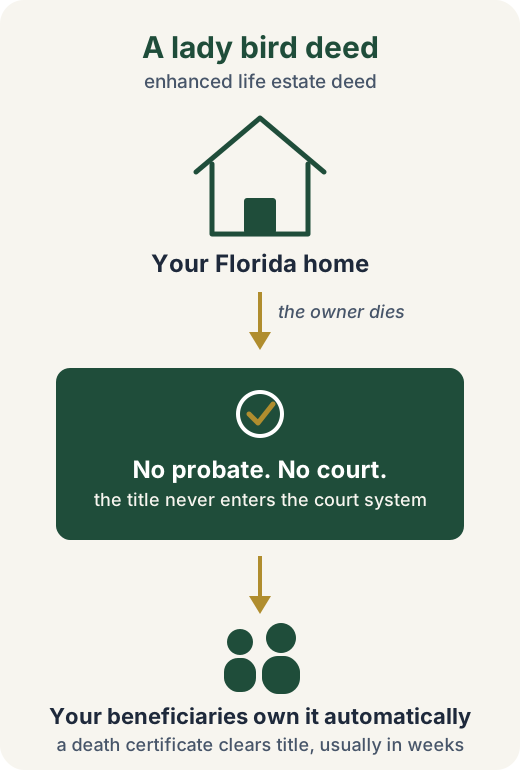
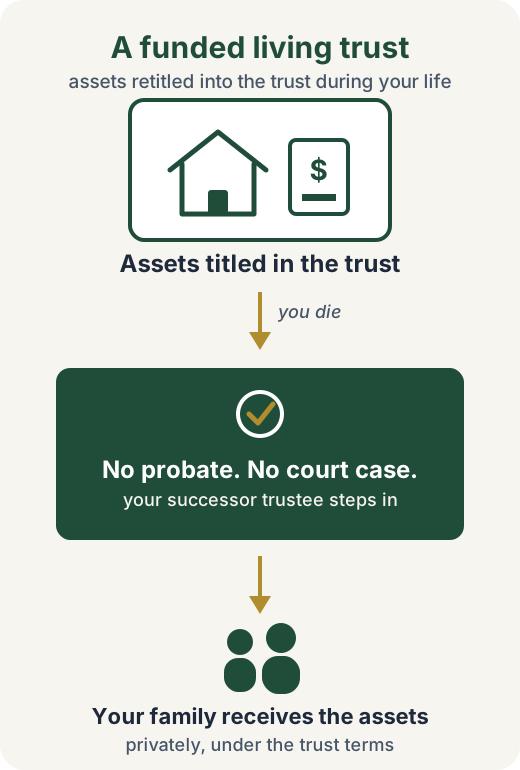
Is It Better to Put a Florida Home in a Trust or Use a Lady Bird Deed?
Neither one is better in the abstract, and four facts decide it. Whether you own property outside Florida, whether you need someone to act for you during your life, what the probate would actually have cost, and what happens to the homestead on the way through.
The multi-state problem. A lady bird deed touches only Florida real estate. Own a cottage up north, and that property still triggers a separate “ancillary” probate in that state. A funded revocable trust holds title to all of it and skips the second probate, often the single fact that decides it.
Incapacity. A deed does nothing if you can’t manage your affairs. A trust’s successor trustee can step in immediately with a certification of trust. Banks resist powers of attorney far more than they resist a trustee.
Cost, in real numbers. A lady bird deed is $399 / $449 + recording; a trust-based plan is $3,200 / $4,500. The counterweight is what probate costs on assets a deed doesn’t cover, since Florida’s statutory fee schedule runs around 6% of the estate combined for attorney and personal representative. As a rough illustration, a trust often pays for itself once the probate estate it avoids climbs past a few hundred thousand dollars. The comparison is context, not a promise. Estimate the probate it would avoid →
The trust you already have from another state. Somebody who moves to Florida with a California or New York trust asks me whether to deed the Florida house into it or record a lady bird deed instead, and the cost answer is a wash, because either route is one Florida deed prepared and recorded in the county where the property sits. What is not a wash is what the out-of-state document says. A trust drafted in a state with no homestead devise restriction can direct the house somewhere Florida will not allow it to go, and the homestead tax exemption survives the funding only because Florida counts a trust beneficiary’s equitable title. So the question I ask first is what the trust already says about the house, not which instrument is cheaper. Where the trust holds property in two states, funding it usually still wins, because the deed reaches only the Florida parcel.
Homestead, and whether it survives the transfer. Both keep the homestead tax exemption and the Save Our Homes cap, though by different routes. A trust qualifies because the beneficiary’s equitable title counts under Fla. Stat. §196.041(2) and a legal-to-equitable transfer is excepted by §193.155(3)(a)1.b. A lady bird deed rests on §193.155(3)(a)1.c instead, because the deed does convey a remainder in legal title, and it holds only while no additional grantee applies for homestead on the property. The constitutional creditor protection also survives inside a revocable trust, though that authority is at the appellate-court level, not the Florida Supreme Court. The rule that you can’t leave homestead away from a spouse or minor child, and that a spouse must join, applies to both.
Choose a lady bird deed when…
One Florida home, adult beneficiaries who get along, lowest-cost probate avoidance, full lifetime control, and your other assets already pass by beneficiary/POD. The deed also skips the court petition to determine homestead at death, and shields the house from a Medicaid claim when a beneficiary sits outside your own heirs.
Choose a trust when…
Property in more than one state, several asset types, you want a successor trustee for incapacity, minors / special-needs / blended family, staggered or conditional gifts, or privacy across the whole plan.
Use both when…
A lady bird deed on the homestead (cheap, and it skips the homestead petition at death) plus a trust for everything else. Many complete Florida plans look exactly like this.
If You Own One Home, Is a Trust or a Lady Bird Deed Better?
For one Florida home passing to adult beneficiaries, the lady bird deed is usually the better buy, at $399 for one owner or $449 for two, against $3,200 or $4,500 for a trust plan. The deed keeps that home out of probate, keeps you in full control for life, and preserves the step-up in basis, which is everything a trust would do for that one asset. Three facts about the rest of your estate change the answer. The first is money outside the house, because a bank or brokerage account with no beneficiary named goes through probate whether or not the house does, and the trust is what catches it. The second is a beneficiary who should not take outright, such as a minor, a child on government benefits or a child in a divorce, because the deed hands the home over the day you die with nothing in between. The third is incapacity, because a deed gives nobody the power to act for you while you live. If none of the three applies, the deed is enough, and the consult says so.
Do I Still Need a Trust If I Have a Lady Bird Deed?
Maybe, and the deed itself cannot tell you, because it covers one Florida property and nothing else. Ask three questions about everything the deed does not touch. Does every account carry a beneficiary designation, since an account without one goes through probate on its own? Do you own land in another state, since that parcel needs a second probate there unless a trust holds it? Who signs for you if you lose capacity, since the deed names nobody and a bank resists a power of attorney far more than it resists a trustee? An account with no beneficiary, a parcel in another state or nobody named to act for you each means the deed has done its one job and a trust is still needed for the rest. The two instruments also work together. The deed can name your revocable trust as its beneficiary, so the home skips probate under the deed and then lands in the trust, where a trustee handles whatever comes next.
Does a Lady Bird Deed Have a Trustee?
No. A lady bird deed has no trustee, because it is a deed and not a trust, and nobody holds or manages the home for anyone else under it. You hold the title in your own name and act for yourself while you live. At your death the home passes directly to the beneficiaries named in the deed, who own it outright from that day with no one in charge of it for them. A trust is the opposite arrangement, with a trustee who holds title, pays the bills, sells when a sale is needed and distributes on the terms the trust sets. When a family needs someone in charge after the owner dies, the usual fix keeps the deed and names the revocable trust as the beneficiary, so the trustee takes charge of the home at that point and not before.
Do I Have to Tell the Mortgage Holder If the Trust Is the Beneficiary?
No, because nothing transfers while you live, so there is no event to report and no clause in the mortgage for the deed to trigger. You stay the borrower and the owner on the same terms, and the lender’s due-on-sale clause needs a transfer to act on. The question that deserves attention is the transfer at death. Federal law stops a lender from calling a residential loan due when the home passes to a relative on the borrower’s death, and separately when the home goes into a revocable trust in which the borrower stays the beneficiary and occupant. A trust that takes the home only at death sits between those two rules, so I read the loan documents before promising anyone that the loan stays in place. The page on lady bird deeds with a mortgage covers what the beneficiary does with the loan after the owner dies.
Deed, trust, or both?
We sort out the right mix at your No-Cost Phone Consult, and quote a flat fee either way.
Book a no-cost consultOne number shows how the two tools differ in the public record. On the 2026 property roll, 600,542 Florida homes are held in trust, because a trust takes title in the trustee’s name. No roll counts lady bird deeds, because a lady bird deed leaves the title in the owner’s own name until death. The trust figures by county are in Florida homes held in trust by county.
Frequently Asked Questions
Is a Lady Bird Deed Better Than a Living Trust in Florida?
Neither is “better”; they do different jobs. A lady bird deed is the lowest-cost way to keep one Florida home out of probate while you keep full control. A revocable living trust covers your whole estate, manages things if you become incapacitated, and handles minors, special needs, blended families, out-of-state property, and privacy. For many families the right plan uses both.
Can I Have Both a Lady Bird Deed and a Revocable Trust?
Yes, and it’s common to see a lady bird deed on the homestead plus a trust for everything else. We make sure they don’t conflict. For example, the deed shouldn’t name the trust as remainderman unless that’s intended.
Which Is Cheaper, a Lady Bird Deed or a Living Trust?
A lady bird deed is far cheaper upfront, at this firm $399 (individual) / $449 (joint) plus recording, versus a trust-based plan at $3,200 (individual) / $4,500 (couple). The trade-off is that a trust does much more, and probate on the assets a deed doesn’t cover can run a percentage of the estate under Florida’s statutory fee schedule.
Do I Need a Trust if I Already Have a Lady Bird Deed?
Maybe. The deed handles the house. Ask what happens to everything else, like accounts without beneficiary designations, out-of-state property, a forgotten asset, or the second spouse’s death. If any of those apply, a trust fills the gap the deed leaves.
Does a Revocable Trust Avoid Probate in Florida?
Yes, but only for assets actually re-titled (“funded”) into it. An unfunded trust still goes through probate. A pour-over will catches stray assets, but those still probate.
Will a Living Trust Protect My Home From Creditors or Medicaid?
A revocable trust does not protect assets from your creditors (they remain reachable, §736.0505), and its assets are countable for Medicaid. Your Florida homestead keeps its constitutional creditor protection even inside a revocable trust (Engelke v. Estate of Engelke), but the trust itself adds no asset protection. On Medicaid estate recovery, be careful with what you read elsewhere. Florida recovers only against the probate estate, it cannot enforce a claim against property the state constitution exempts, and it cannot force the sale of protected homestead (§409.9101(7) and (10)). A home passing to your spouse or to your own heirs is therefore already out of reach with no deed at all. A lady bird deed earns that point when the home is going to someone outside that group, such as a stepchild, a partner, a friend, or a charity.
Does a Lady Bird Deed Work for Out-of-State Property?
No. It only works on Florida real estate. Out-of-state land triggers a separate “ancillary” probate in that state, which a properly funded revocable trust avoids.
If I Become Incapacitated, Does a Lady Bird Deed Help?
No. A deed does nothing if you can’t manage your affairs; you’d rely on a power of attorney or, worst case, a court guardianship. A revocable trust’s successor trustee can step in immediately, which is one of the strongest reasons people choose a trust.
Can a Lady Bird Deed Leave My Home to My Minor Child?
Not cleanly. Florida homestead can’t be devised away from a minor child, and minors can’t hold title well. This is a situation that calls for a trust, not a deed.
Which Is More Private?
Both keep things out of the public probate file. A trust keeps your entire plan (who gets what) private; a lady bird deed only keeps that one property out of court.
What Is a Lady Bird Trust?
Florida has no legal instrument called a lady bird trust. The term mixes up two probate-avoidance tools, the lady bird deed and the revocable living trust. People who use the term usually want the lady bird deed, and sometimes mean a lady bird deed that names a revocable trust as the beneficiary so the home flows into the trust at death. The deed costs $399, or $449 for a couple, and a full revocable living trust plan costs $3,200, or $4,500 for a couple.
Is a Lady Bird Deed a Trust?
No, a lady bird deed is a deed and not a trust. The deed passes one Florida property at death while the owner keeps full control, and nobody manages the property for anyone else. A revocable living trust is a separate document in which a trustee holds and manages assets for the beneficiaries, during life, through incapacity and after death. A lady bird deed can name a revocable trust as the beneficiary, which sends the home into the trust at the owner’s death.
If My Lady Bird Deed Names My Revocable Trust as Beneficiary, Do I Need to Tell My Mortgage Company?
Nothing in Florida law requires it, because the deed transfers nothing while you live and the loan does not change. Federal law (the Garn-St. Germain Act) limits what a lender can do when a home moves into a revocable trust in which the borrower stays a beneficiary and keeps occupancy, and when it passes to a relative at death. A trust that takes at death sits between those two rules, so the loan documents should be read before anyone promises the result. The page on the lady bird trust explains how the deed and the trust fit together.
Does a Lady Bird Deed Have a Trustee?
No. A lady bird deed has no trustee, because it is a deed and not a trust. You hold title and control the home while you live, and at your death the home passes to the beneficiaries named in the deed with nobody managing it for them. A trust has a trustee who holds, manages and sells property for the beneficiaries. When someone needs to be in charge after your death, the deed can name your revocable trust as the beneficiary so that the trustee takes charge of the home.
One of My Children Is Bad With Money and Lives in the House. Deed or Trust?
A trust. The deed hands the house outright to the beneficiary at your death, so a child who spends carelessly or has creditors owns the house with nothing between the two. A trust can hold the house for that child, let the child live there, and put a trustee in charge of taxes, insurance and any sale. The lady bird deed can still be used in the same plan by naming the trust as the beneficiary. A deed alone fits the child who handles money well.
We Want the House to Go to a Grandchild. Will, Trust or Lady Bird Deed?
A deed or a trust, and never the will alone, because a will sends the house through probate. A minor grandchild cannot manage property, so a minor needs a trust or a custodian to hold it. If you leave a spouse or a minor child, Florida homestead rules also stop the home from passing to a grandchild by deed at your death. The form page explains the minor child rule. A trust is the usual choice when the grandchild is under 18.
Common Situations
”Just the house.” Dolores, 78, Cape Coral. Widow, one paid-off Florida home, two adult kids who get along, a bank account already set to pass to them on death, an IRA with both named. No out-of-state property, no minors. The answer is a lady bird deed. A $3,200 trust would be over-engineering. The deed keeps the home out of probate for about $400. Her children are her heirs, so a Medicaid claim could not have reached the house in any event, and what she is really buying here is the probate.
”Florida home plus the lake house up north.” The Petersons. A Miami homestead, a North Carolina cottage, brokerage accounts, and a daughter with a disability. The right plan is a revocable trust as the backbone, holding both homes to avoid a second ancillary probate, with a special-needs sub-trust for the daughter, and optionally a lady bird deed on the Florida homestead so that house never enters probate at all. A deed alone can’t touch the NC house or protect the daughter’s benefits.
”The blended family.” Robert, remarried. He wants his spouse to live in the home and use his accounts for life, with the remainder to his own children. A lady bird deed would pass the house outright at death and runs into homestead limits on leaving the home away from a spouse. The right tool is a revocable trust with a marital structure. A blended family is where a deed quietly fails to do what the client actually wants.
Chapter 34 of Kevin D. Klagge’s free book, Are Florida Lady Bird Deeds Just for Women?, covers this question with every statute and case cited to its source.
Sources of Law
- Fla. Stat. Ch. 736 (Florida Trust Code): §736.0505 (annotated) (settlor’s creditors / homestead exemption inside a revocable trust), §736.1017 (annotated) (certification of trust), §736.1109 (annotated) (homestead devise limits), §736.0403 (annotated) (will-formality execution). flsenate.gov
- Fla. Stat. §196.041(2) (equitable title → homestead tax exemption); §734.102 (ancillary administration); §733.6171 / §733.617 (statutory probate fees).
- Engelke v. Estate of Engelke, 921 So. 2d 693 (Fla. 4th DCA 2006): homestead in a revocable trust keeps constitutional creditor protection (DCA-level authority).
- Medicaid estate recovery: Fla. Stat. §409.9101(3), (7) and (10) (debt runs to the probate estate, no enforcement against constitutionally exempt property, no forced sale of protected homestead); §732.103 (the heir class); Snyder v. Davis, 699 So. 2d 999 (Fla. 1997) (a devisee within that class takes the homestead exemption with it).
- Homestead limits: Fla. Const. Art. X §4(c); §732.4015; §732.7025. Step-up: IRC §1014. (retrieved 2026-06-05)
What Goes Wrong When Somebody Owns Both
In 14 years of law practice, the deed and the trust stop being an either-or question long before somebody calls me. The caller already has one of them, and they are about to sign the other without checking how the two fit together.
A common question I hear is, "If I already have a trust, do I still need a deed?" My answer depends on something most people cannot tell me off the top of their head, which is who holds title to the house at this moment.
In one case I have reviewed, a husband and wife set up a living trust and deeded two Florida properties into it. Ten years later, after his wife died, the husband sat down with an attorney and signed lady bird deeds on both properties. The deeds described him as an un-remarried widower conveying his own land. He did not own the land. His trust had owned it since 2006, and he had been holding it as trustee the whole time. Nobody pulled the title before the deeds were drawn.
The family did get it fixed. A court reformed both deeds, and it said plainly that ordinary carelessness by the owner would not defeat reformation. What stays with me is how long the answer took to arrive. The question went through a summary judgment motion and an appeal before anybody knew whether the deeds worked.
Practice pointer. Pull the current recorded deed before signing a new one, every time, including when the client is certain they know what it says. Somebody who moved a house into a trust ten years ago remembers the trust and forgets the deed, and the deed is the part that decides who is allowed to sign.
Avoid treating the trust and the deed as competing purchases. An owner with a funded trust who then records a lady bird deed on the same house has two instruments pointing at one property, and which one controls is a question somebody will litigate after the owner is gone.
Kevin D. Klagge, Esq., admitted in Florida since 2012. Any case described above is a decision of a Florida court rather than a matter handled by this firm. Past results do not guarantee a similar outcome.
Updated on October 19, 2026. Reviewed by Kevin D. Klagge, Esq., Fla. Bar No. 99502. General information about Florida law, not legal advice, and no attorney-client relationship is created.
More Guides on Florida Lady Bird Deeds and Deeds
- Lady Bird Deed vs Will in Florida: Which Controls?
- Lady Bird Deed vs Transfer on Death Deed
- Florida Transfer on Death Deed: Does It Exist?
- Florida Lady Bird Deed & Medicaid
- Florida Lady Bird Deed Tax Consequences
- Lady Bird Deed After Death
- Lady Bird Deed With Multiple Beneficiaries
- Can a Lady Bird Deed Be Contested in Florida?
Try the Florida Deed Selector.