How Do I Record a Lady Bird Deed in Florida?
The full sequence runs from signing through recording to keeping your copy. First, sign the deed in the presence of two witnesses and a notary. Florida law requires two subscribing witnesses for any deed, and those witnesses may appear by video if a Florida online notary is handling the signing. Second, check that the deed meets the clerk’s requirements. Every signature needs a printed name and address beneath it, including the witnesses and the notary. The grantees (the people named as beneficiaries) must have their names and addresses printed on the deed. The preparer’s name and address must appear. The first page must have a 3-inch by 3-inch blank space at the top right corner, and each later page must have a 1-inch by 3-inch blank strip there.
Third, pay the recording fee and any documentary stamp tax. Recording runs $10 for the first page and $8.50 for each additional page, so $18.50 for a two-page deed or $27 for three pages. A lady bird deed is not subject to documentary stamp tax under Florida Department of Revenue guidance, though a deed reciting nominal consideration such as ten dollars may draw the 70 cent minimum.
Fourth, file the deed in the recording office of the county where the land sits. Fifth, keep your recorded copy. When the firm handles recording, the firm records electronically in every Florida county and sends you the deed with the book and page stamped on it. You keep the signed original. The flat fee is $399 for one owner or $449 for a married couple, plus recording.
Does a Lady Bird Deed Have to Be Recorded?
A deed takes effect between the owner and the beneficiary (the person named to receive the property at death) when the owner signs it and delivers it. Recording is what protects the deed against a later buyer or a creditor who did not know about it. Florida’s recording statute says no conveyance of real property is good in law or equity against creditors or subsequent purchasers for value without notice unless the deed is recorded. An unrecorded deed found after death becomes a lawsuit about whether the owner delivered it.
Fred Parramore of Gadsden County signed deeds in May 1963 giving life estates in his farmland to himself and his wife with the remainders to his four children. He kept the deeds in a bank box in Quincy with his will and told the children to pick them up at his death. He died in November 1974. One son argued his siblings’ deeds were never delivered. The trial court found the father’s words and acts were enough, and in 1978 the First District Court of Appeal affirmed. The court said, “Delivery is ‘the life of a deed’; without it no deed is good.” The court also noted that in Parramore “there was no recordation, and consequently no ‘presumption.’” Proving delivery after the fact cost the family years and a trial. Recording when the deed is signed avoids that fight.
Where Do I Record a Lady Bird Deed in Florida?
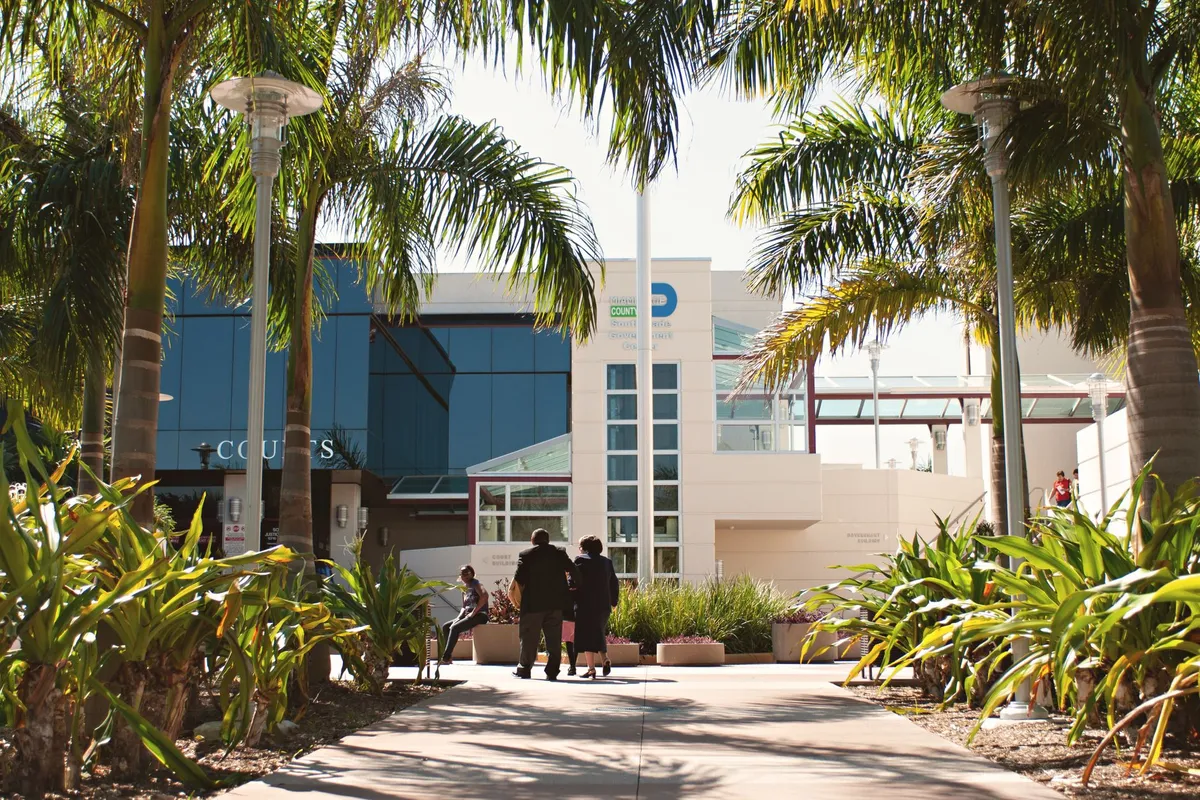
The recording office is in the county where the land sits, and it is not always the Clerk of Courts. Some counties have a separate comptroller or a county recording division.
In Miami-Dade County, deeds are recorded by the Office of County Recorder, run by the Clerk of the Court and Comptroller, on the fifth floor of the Osvaldo N. Soto Miami-Dade Justice Center at 20 NW 1st Avenue, Miami. The Clerk reviews each e-recorded document before it becomes public, which usually takes 1 to 3 business days, and recommends in-person recording for time-sensitive documents.
In Broward County, deeds are recorded by the county itself, not the Clerk of Courts. The Recording Office of the Records, Taxes and Treasury Division is in Room 114 of the Broward County Governmental Center at 115 South Andrews Avenue, Fort Lauderdale. Broward runs a free Recording Notification Service that emails a subscriber whenever a document is recorded under a name or parcel being watched.
In Hillsborough County, the recording counter is in Room 140 of the Pat Collier Frank Courthouse at 419 Pierce Street, Tampa, not the Edgecomb Courthouse where the probate counter is. In Orange County, deeds are recorded by the Orange County Comptroller, not the Clerk of Courts. In Volusia County, deeds are recorded only in DeLand. In St. Lucie County, the Port St. Lucie annex does not record deeds; recording is in Fort Pierce.
| County | Office | Note |
|---|---|---|
| Miami-Dade | Office of County Recorder, Soto Justice Center, 5th floor | E-recorded deeds reviewed in 1 to 3 business days |
| Broward | Records, Taxes and Treasury Division, Room 114 | Not the Clerk of Courts; free notification service |
| Hillsborough | Clerk of Court Recording Dept., Room 140, 419 Pierce St. | Not the Edgecomb Courthouse |
| Orange | Orange County Comptroller | Not the Clerk of Courts |
| Volusia | DeLand only | Other courthouses do not record |
| St. Lucie | Fort Pierce only | Port St. Lucie annex does not record |
The consultation covers your situation and tells you whether the deed is ready to record.
A free consultation covers your facts, the fee and the timeline.
Book a free consultationHow Much Does It Cost to Record a Lady Bird Deed in Florida?
The recording fee is the same in every Florida county because state law sets it. The charge is $10 for the first page, $8.50 for each additional page, $1 for each name past four names on the deed, and $1 per page plus $2 to certify a certified copy. A lady bird deed is usually two pages, so recording runs $18.50. A three-page deed costs $27.
Documentary stamp tax does not apply to a lady bird deed. The Florida Department of Revenue has said that a lady bird deed does not transfer any present beneficial interest and is not subject to documentary stamp tax. That guidance covers a deed on a mortgaged property as well as a deed without a mortgage. A deed that recites nominal consideration such as ten dollars may draw the 70 cent minimum stamp at the counter, but that is the floor.
The firm’s flat fee of $399 for one owner or $449 for a married couple covers drafting, homestead and spouse review, the signing appointment, and electronic recording. Recording is additional, passed through at cost.
What Does the Clerk Check Before Recording My Deed?
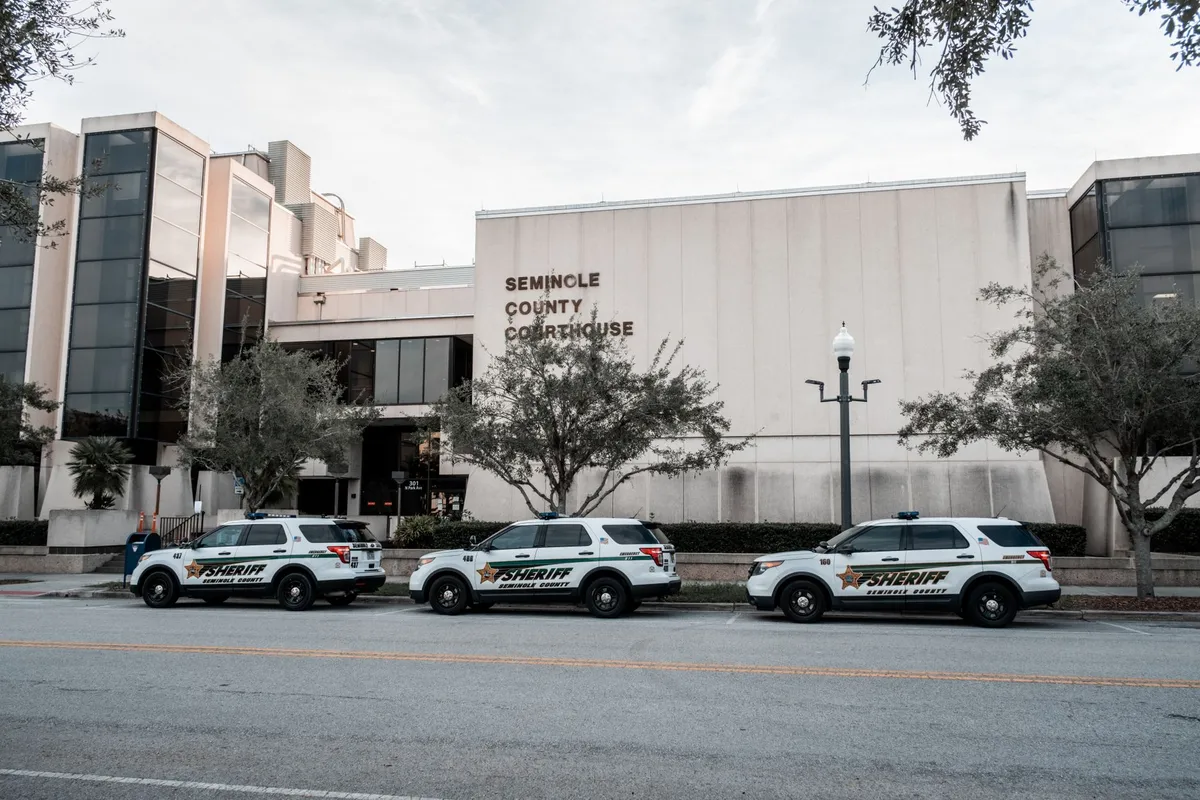
The clerk reviews the face of the deed for the items Florida law requires. A deed missing any of these is rejected. The most common reason a self-prepared deed comes back is a missing printed name or address.
Florida’s recording statute requires that the name of each person who signed the deed be printed beneath the signature, along with that person’s address. The name of each witness must be printed beneath the witness’s signature, with the witness’s address. The name and address of each grantee (the person receiving an interest) must appear. The name and address of the person who prepared the deed must appear. The first page must have a blank 3-inch by 3-inch space at the top right corner reserved for the clerk’s use, and each later page must have a 1-inch by 3-inch strip there.
A deed signed outside Florida is exempt from the format requirements. Florida law says the rule does not apply to an instrument executed, acknowledged, or proved outside of this state. That exemption matters for out-of-state owners who sign before a local notary, though the firm’s signing appointment by video uses a Florida online notary and the deed still includes all the format items.
Can I Sign a Lady Bird Deed From Another State?
A Florida online notary may notarize for a signer regardless of where the signer is located, as long as the notary is physically in Florida. The two witnesses may appear on the same video call and must confirm they are physically located in the United States at the time of signing. A deed is not on the list of documents that require special screening questions about capacity, so the process is the standard remote online notarization.
The firm’s signing appointment works this way. You meet the notary and two witnesses by video, confirm your identity, sign the deed on screen, and the notary and witnesses add their signatures. The firm then records the deed electronically and sends you the recorded copy.
Alternatively, you can sign before a notary in your own state. Florida’s acknowledgment statute says a deed may be acknowledged outside Florida before any notary public having a seal. If the out-of-state notary does not affix a seal, it is enough for the notary to write on the deed, “I am a Notary Public of the State of (state), and my commission expires on (date).” A deed signed outside Florida is also exempt from the Florida format rules, though any deed the firm prepares includes the printed names and addresses regardless.
How Long Does It Take to Record a Deed in Florida?
Recording time depends on whether you file in person or electronically. A deed handed across the counter is stamped and returned the same day. E-recorded documents go through a review before they become public, and the timing varies by county.
Miami-Dade County’s Clerk reviews each e-recorded document before it appears in the official records. The Clerk’s own guidance says the process usually takes 1 to 3 business days, and the office recommends in-person recording for time-sensitive documents.
The firm records every deed electronically through an approved e-recording service and sends you the stamped deed when the county returns it. You receive a recorded copy showing the official records book and page or instrument number the county assigned. That stamped copy is proof your deed is in the public records, and you can use it to confirm the recording in the county’s online search.
A deed is effective between you and your beneficiary from the moment you sign and deliver it. Recording adds the protection against later buyers and creditors. Waiting a few days for the county to finish its review does not change what the deed does for your estate plan.
Do I Need the Original Deed After It Is Recorded?
The signed original stays with you. Recording creates an image in the county’s official records, and that image is the public proof of the deed. Anyone can look up your deed by name in the county’s online official records search and open the recorded image.
Certified copies are available from the recording office for $1 a page plus $2 to certify. Broward County’s Recording Office of the Records, Taxes and Treasury Division in Room 114 at 115 South Andrews Avenue handles certified copies for deeds recorded there. Other counties follow the same fee because the charge is set by state statute.
When you sign electronically through a Florida online notary, the original is the electronic record. The firm sends you the recorded electronic file with the county’s stamp, and that file is your original. You do not need to request a paper copy unless you want one, and the county’s online search will show the deed indefinitely.
Some owners ask whether they should keep the original in a safe deposit box or give it to the beneficiary. The recorded image in the official records is what matters to title companies and to courts. Keeping the original in a safe place is sensible, but losing it does not undo the recording.

Does the Property Appraiser Need a Copy of My Lady Bird Deed?
Recording carries notice to the county property appraiser automatically. Florida’s recording statute says the fee includes “required notice to property appraiser where applicable,” and the county sends that notice as part of processing your deed.
Your homestead exemption and your Save Our Homes assessment cap continue after a lady bird deed is recorded. A lady bird deed does not change your ownership while you live, so the appraiser has no reason to remove your exemption. Some property appraisers send a letter asking you to confirm the exemption is still in effect, and the firm tells you when the county does.
Florida voters approved Amendment 3 on November 3, 2026, with about 62 percent voting yes. The amendment raises the homestead exemption for taxes other than school taxes to $150,000 in 2027 and $250,000 in 2028, indexed after that. It also lowers the yearly cap on assessment increases for non-homestead property from 10 percent to 5 percent, effective January 1, 2027.
Broward County offers a free Recording Notification Service that emails a subscriber whenever a document is recorded under a name or parcel number being watched. You can use this to monitor your own property and confirm when your deed posts.
What Happens If My Lady Bird Deed Has a Mistake?
A mistake on the face of a recorded deed can be expensive to fix. The Hirschenson case from Miami-Dade illustrates the problem. A son deeded a home to his mother by an enhanced life estate deed so she could take a reverse mortgage. One paragraph said “grantor” where it meant “grantee,” so read literally she had no power to mortgage without her son’s consent. After she died the lender foreclosed, the son argued she had no power, and the trial court reformed the deed after a bench trial. Florida’s Third District Court of Appeal affirmed in 2023. One wrong word took a lawsuit and an appeal to fix.
Florida’s scrivener’s-error cure statute lets a single legal-description error in a lot, block, unit or fractional-section description be fixed by recording a sworn curative notice. The statute excludes quitclaim deeds, metes-and-bounds descriptions and deeds with more than one error. Otherwise the fix is a corrective deed at $250 plus recording, or a reformation suit.
A deed signed with one witness and a notary is a witness short. Florida law requires two subscribing witnesses. Florida law cures a missing witness five years after recording, absent fraud, but until then the deed is open to challenge. The firm never uses a beneficiary as a witness, though the Second District Court of Appeal held in Ross (1966) that witnesses need not be disinterested.
Can I Record a Lady Bird Deed Myself?
The clerk’s counter accepts any deed that meets the format requirements and is accompanied by the recording fee. The clerk does not check whether your deed says what you meant it to say, whether you have a spouse who needed to sign, or whether your reserved powers are complete.
Recording yourself means you are responsible for drafting, for knowing when Florida’s homestead rules require your spouse to join, for finding two witnesses and a notary, and for checking that every name, address and blank space is correct. If the clerk rejects your deed, you fix it and try again. If the deed records with a defect, you may need a corrective deed or a lawsuit.
The firm’s flat fee from $399 covers drafting, the homestead and spouse review, the signing appointment by video, and the electronic recording. You receive the recorded deed with the county’s stamp. The price is $399 for one owner or $449 for a married couple, plus recording.
A full estate plan with a lady bird deed is also available. The Secure Will Estate Plan costs $1,200 or $1,950 for a couple and includes a will, a durable power of attorney, a health-care surrogate designation, a living will, a HIPAA authorization, and a lady bird deed on your home, with recording additional.
How Does the Beneficiary Record the Death After the Owner Dies?
The beneficiary records a certified death certificate in the same recording office where the deed was recorded. Most counties also require a short affidavit stating that the beneficiary is the person named in the deed and that the owner has died. No new deed from the owner’s estate is needed, and no probate is required for the house.
Recording the death certificate updates the public records to show the transfer. The beneficiary’s name will appear in the official records index, and title companies rely on that chain of documents when the beneficiary sells or refinances.
The recording fee for a death certificate and affidavit follows the same schedule as any document. A one-page affidavit plus a one-page death certificate would cost $10 for the first page and $8.50 for the second, totaling $18.50.
The beneficiary should also notify the property appraiser and apply for a new homestead exemption by March 1 of the year following the owner’s death. The exemption does not transfer automatically. The firm’s guide to the steps after a death explains each step in detail.

Frequently Asked Questions
Does a lady bird deed have to be recorded?
A lady bird deed takes effect between owner and beneficiary when it is signed and delivered, so technically recording is not required for the transfer itself. Recording protects the deed against a later buyer who does not know about it and against a creditor. Without recording, a deed found after death can mean a trial over whether delivery happened. The safe practice is to record the deed and keep the recorded copy.
What happens if a lady bird deed is not recorded?
Florida’s recording statute says an unrecorded deed is not good against creditors or later buyers for value who have no notice. If the owner sells to someone else and records that sale first, the buyer wins. If a deed is found after death without having been recorded, a lawsuit over delivery is possible. A Florida appeals court in 1978 affirmed that deeds kept in a bank box with the will were constructively delivered, but it took a trial.
Where do I record a lady bird deed in Florida?
You record in the county where the land is located, not where you live. The recording office is usually the Clerk of the Circuit Court, but some counties differ. In Orange County deeds go to the Comptroller. In Broward County deeds go to the Records, Taxes and Treasury Division, not the Clerk of Courts. In Volusia County recording is only in DeLand. In St. Lucie County recording is in Fort Pierce, not the Port St. Lucie annex.
How much does it cost to record a lady bird deed in Florida?
Every county charges the same fee because the amount is set by state statute. The first page costs $10 and each additional page costs $8.50, so a two-page deed records for $18.50 and a three-page deed for $27. Each name past four names adds $1. Documentary stamps are not owed on a lady bird deed according to the Florida Department of Revenue, though a deed reciting nominal consideration may draw the 70 cent minimum.
Can I sign a Florida deed out of state?
Yes. A Florida online notary may notarize for a signer regardless of where the signer is located. The two witnesses required by Florida law may appear on the same video call and must be physically located in the United States at the time of signing. Alternatively, a notary in another state may take the acknowledgment, and if that state does not require a seal the notary may print a sentence giving the state of commission and the expiration date.
How long does it take to record a deed in Florida?
Electronic recording returns a stamped deed within a few business days in most counties. Miami-Dade’s Clerk reviews each e-recorded document before it becomes public, which usually takes 1 to 3 business days. Counter recording at the courthouse is same day. The firm records electronically and sends the recorded deed with the book and page number when the county returns it.
How do I get a certified copy if the deed was filed electronically?
The recorded deed appears in the county’s online official records search, where anyone can look it up by name and open the image. A certified copy is ordered from the recording office and costs $1 a page plus $2 to certify. With electronic signing the signed original is an electronic record. With paper signing the signed original stays with the owner and should be stored safely.
What is the 3 inch space at the top of a deed for?
Florida’s recording statute requires a blank 3-inch by 3-inch space at the top right corner of the first page and a 1-inch by 3-inch space at the top right corner of each later page. The clerk uses this space to stamp the recording information. A deed missing the blank space will be rejected at the counter.
Can I mail my deed to the clerk?
Many recording offices accept mailed deeds along with the recording fee. Confirm with your county’s office. Before mailing, check that the deed has printed names under every signature, addresses for the signer, witnesses and grantees, the preparer’s name and address, and the required blank spaces. Include payment and a return envelope.
Does the property appraiser need a copy of my lady bird deed?
The recording carries notice to the property appraiser by statute. The owner’s homestead exemption and Save Our Homes cap continue after a lady bird deed is recorded because the owner’s own ownership does not change while the owner lives. Some county property appraisers ask the owner to confirm the exemption after a deed records, and the firm tells the client when that applies.
Do both spouses have to sign in front of the notary at the same time?
Florida law requires the deed to be signed in the presence of two subscribing witnesses and a notary. Each signature needs two witnesses, though they may be the same two or different witnesses for each signer. Spouses may sign at the same appointment, which is the usual practice, or at separate appointments. Remote online notarization lets spouses in different locations sign on the same video call with witnesses present remotely.
Can a deed be recorded after the owner dies?
A deed signed and delivered during the owner’s lifetime can be recorded after death. Recording sooner is safer because it protects against a later buyer or creditor and avoids a dispute over whether delivery happened. After the owner dies the beneficiary records a certified death certificate and, in most counties, a short affidavit to clear the title. No new deed from the estate is needed.
Common Situations
A daughter in California needed to witness her mother’s lady bird deed on a Florida home. The signing appointment was a video call with a Florida online notary. Before the daughter signed as a witness, the notary asked her to confirm that she was a resident of and physically located within the United States. She confirmed, signed on screen, and the notary completed the acknowledgment. The deed was recorded electronically, and the mother received the stamped copy by email.
A man in Hillsborough County tried to record a lady bird deed he had prepared himself. The clerk’s counter rejected it the first time because the witness signatures had no printed names beneath them. He added the names and returned, and the counter rejected it again because the blank 3-inch square at the top right was filled with typed text. After two trips he called the firm, which prepared a new deed for a flat fee, handled the signing appointment, and recorded it electronically.
Sources of Law
- Fla. Stat. §695.01(1) (recording and notice); §695.26(1) and (3)(c) (what the clerk requires on the face of the instrument; instruments executed outside Florida excepted); §695.03(1) and (2) (acknowledgment in Florida, in another state, and the sealless-notary sentence); §689.01(1) and (2) (two subscribing witnesses; witnessing by audio-video technology); ch. 117 part II, §§117.209(3), 117.265(1), 117.285(1), (4) and (5) (online notarization regardless of the signer's location; remote witnesses in the United States; the special-questions list, which does not include a deed); §28.24(4)(b), (6)(a) and (13) (certified copies and recording charges; with the §28.24(12)(e) technology charge every clerk posts $10 and $8.50); §95.231(1) (five-year cure of a missing witness or defective acknowledgment absent fraud); §689.041 (curative notice for a single scrivener's error, excluding quitclaim deeds and metes-and-bounds descriptions). Text compared with the 2026 Florida Statutes on 2026-11-08.
- Documentary stamps: Fla. Stat. §201.02(1)(a); Florida Department of Revenue Technical Assistance Advisement 20B4-003 (2020) and FAQ item 1696 (a lady bird deed is not subject to documentary stamp tax). Property tax: Fla. Const. art. VII, §6 as amended by Amendment 3 (approved November 3, 2026; effective January 1, 2027).
- Recording offices, each read from the office's own website on 2026-09-29 and kept in the firm's city files: Miami-Dade Clerk of the Court and Comptroller, Office of County Recorder (Soto Justice Center, 20 NW 1st Avenue); Broward County Records, Taxes and Treasury Division, Room 114, 115 South Andrews Avenue; Hillsborough County Clerk of the Circuit Court and Comptroller, Recording Department, Room 140, 419 Pierce Street; Orange County Comptroller; Volusia County Clerk (DeLand); St. Lucie County Clerk (Fort Pierce).
- Cases, read in full from the corpus files under
reference/caselaw/: Parramore v. Parramore, 371 So. 2d 123 (Fla. 1st DCA 1978) (constructive delivery of deeds kept in a bank box); Hirschenson v. Compu-Link Corp., 389 So. 3d 574 (Fla. 3d DCA 2023) (reformation of a one-word error); Ross v. Richter, 187 So. 2d 653 (Fla. 2d DCA 1966) (witnesses to a deed need not be disinterested). - Advertised fees are honored for 90 days from the posted date. Government costs are additional and passed through at cost. Fees are not a prediction of outcome.
Related Guides
Florida Lady Bird Deed, Florida Lady Bird Deed Form, Can I Do My Own Lady Bird Deed?, Florida Lady Bird Deed Cost, What to Do With a Lady Bird Deed After Death, How to Find the Legal Description of Your Property.
What I Have Seen at Recording Counters
In 14 years of law practice, I have watched clients bring me deeds that came back from the recording counter for a missing address or a missing space, and I have taken cases where an unrecorded deed found after death led to litigation among siblings. I also litigate deeds after they fail, which enhances the practice of drafting deeds.
I have a few take-home points.
The first is delivery. Fred Parramore of Gadsden County signed deeds in May 1963 giving himself and his wife life estates in his farmland with remainders to his four children. He kept the deeds with his will in a bank box in Quincy and told the children to pick them up at his death. He died in November 1974. One son sued his siblings. After a trial the First District Court of Appeal affirmed in 1978 that the father’s words and acts were a constructive delivery. The court said, “Delivery is ‘the life of a deed’; without it no deed is good.” The lesson is to record.
The second is the face of the deed. The clerk checks printed names under every signature, addresses for the signer and the witnesses and the grantees, and the blank corner space. A deed missing one of these comes back.
Avoid signing with a beneficiary as a witness. Florida allows it, but I do not use one. A witness who stands to inherit has a reason to see the deed stand, and that fact can feed a challenge.
One honest limit is that the five-year cure statute does not fix everything. A witness shortage or a defective acknowledgment heals five years after recording if no fraud occurred, but a metes-and-bounds description error needs a corrective deed or a court.
Kevin D. Klagge, Esq., admitted in Florida since 2012. General information rather than advice on your situation.

Updated on November 12, 2026. Reviewed by Kevin D. Klagge, Esq., Fla. Bar No. 99502.
General information about Florida law, not legal advice, and no attorney-client relationship is created. Do not send confidential information until we have agreed to represent you.
More Guides on Florida Lady Bird Deeds and Deeds
- What Is a Remainderman?
- Does a Lady Bird Deed Get a Step-Up in Basis?
- Does a Lady Bird Deed Override a Will?
- Florida Lady Bird Deed Pros and Cons
- Florida Lady Bird Deed Attorney
- Florida Lady Bird Deed Online
- Lady Bird Deed Now vs. a Florida Attorney
- Florida Enhanced Life Estate Deed
Try the Florida Deed Selector.